Vets Use Harm Reduction Machines
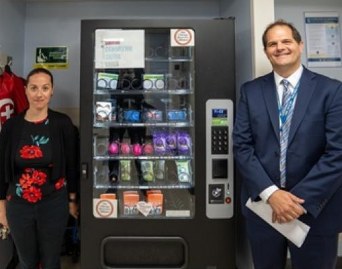
PHOTO CAPTION: Illustrative file photo. A Department of Veterans Affairs harm reduction vending machine provides veterans access to health and harm reduction supplies. A new JAMA Network Open study examined similar machines placed inside six permanent supportive housing buildings for veterans in California, where supplies included sterile syringes, overdose prevention materials, drug testing supplies, condoms, wound care products and hygiene items. (Department of Veterans Affairs photo
Veterans living in supportive housing are receiving syringes, naloxone and other harm reduction supplies from vending machines installed through a San Francisco VA linked program, according to newly highlighted research that is likely to spark strong debate over how the government handles addiction and homelessness among former service members.
The study examined an eight month rollout of 15 harm reduction vending machines placed across VA health care and supportive housing settings.
Researchers said the system reached 281 veterans, and 70.8% of those veterans accessed at least one product from a machine.
In total, the machines dispensed 3,567 products during the study period.
The supportive housing sites accounted for most of that activity.
According to the study, 61.5% of all dispensed items came from supportive housing settings rather than traditional health care settings.
Researchers also found much heavier after hours use in the supportive housing locations, suggesting the machines were being used when normal offices and programs were closed.
The most frequently accessed products included syringes, hygiene kits, condoms and wound care kits.
The study said the machines dispensed 422 syringes, 350 hygiene kits, 337 condoms and 312 wound care kits.
The machines were not limited to drug use supplies.
Researchers said 44.8% of participating veterans accepted naloxone, the overdose reversal drug.
Some also accepted overdose education, referrals to substance use treatment, infection testing or treatment resources, and other harm reduction materials.
The program was tied to a broader effort to reduce overdose deaths and infectious disease risks among veterans, especially those facing homelessness, substance use disorders and weak engagement with the health care system.
Researchers argued that vending machines can reduce some of the barriers that keep people from seeking help in person, including stigma, limited hours, transportation problems and the need to ask staff face to face for sensitive supplies.
That argument will not convince everyone.
For many readers, the controversy will be obvious: why are vending machines in veteran supportive housing dispensing syringes at all.
For supporters of harm reduction, the answer is also obvious: they see sterile syringes, naloxone and wound care supplies as practical tools that reduce overdose deaths, infections and other health damage among people who are already using drugs.
Either way, the study shows this was not theoretical.
Veterans in supportive housing actually used the machines, and they used them heavily enough to make the program a real policy flashpoint.
(Source: OAF Nation)