Glock Challenges Connecticut Handgun Law
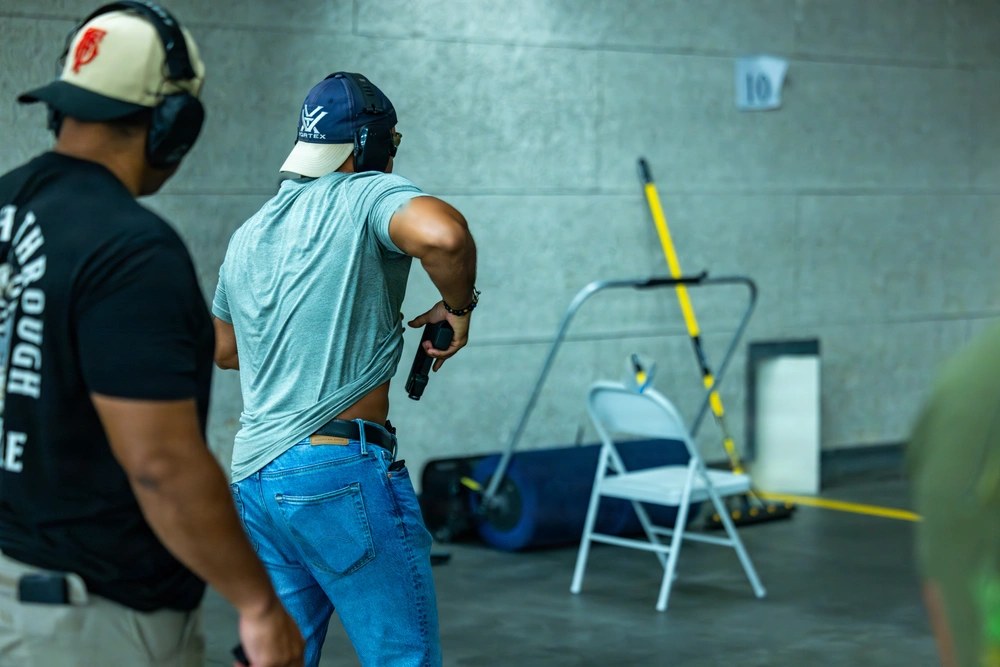
PHOTO CAPTION: Illustrative file photo. A U.S. Army Special Forces soldier draws a Glock 19 Gen 4 pistol during training at Eglin Air Force Base, Florida, in August 2026. Glock and firearms industry groups filed separate federal lawsuits Sept. 21 challenging Connecticut’s new restrictions on certain pistols the state classifies as convertible. (U.S. Army photo by Staff Sgt. Joshua Taeckens)
Glock and firearms industry groups have filed separate federal lawsuits challenging a new Connecticut handgun law just days before it is scheduled to take effect.
Glock Inc. filed its case Monday in U.S. District Court for the District of Connecticut and also asked the court for emergency relief that would block enforcement while the lawsuit proceeds. Federal docket records show Glock filed both a request for a temporary restraining order and a motion for a preliminary injunction on Sept. 21.
A separate lawsuit was filed the same day involving the National Shooting Sports Foundation, handgun manufacturer Shadow Systems and Connecticut firearms retailer Blue Trail Range Corporation. That case also seeks to stop enforcement of the new law.
The lawsuits target Public Act 26 41, a Connecticut law scheduled to take effect Oct. 1.
The law creates new restrictions for what Connecticut defines as “convertible pistols.”
Under the state’s legislative analysis, the restriction generally applies to covered pistols manufactured on or after Oct. 1, 2026. It makes it a Class D felony to knowingly import one into Connecticut or knowingly advertise, sell, offer or expose one for sale.
A Class D felony can carry up to five years in prison and a fine of up to $5,000.
The law focuses heavily on certain semiautomatic pistols using a cruciform trigger bar.
Connecticut lawmakers said those designs can be readily altered using an illegal machine gun conversion device, commonly called a switch.
Federal law already treats those conversion devices as machine guns, even when the device is not installed on a firearm.
Glock argues the Connecticut law is unclear about which of its current and upcoming pistols will actually be covered.
The company is asking the federal court to determine whether several of its newer designs, including its Slimline, V Series and Gen 6 pistols, fall outside the state’s definition.
Glock also argues that if those pistols are prohibited, the law violates the Second Amendment.
The separate NSSF case makes a broader Second Amendment challenge.
NSSF argues that cruciform trigger pistols are commonly owned semiautomatic handguns used for lawful purposes, including self defense, and that Connecticut cannot prohibit their sale because criminals can illegally modify them with conversion devices.
The organization filed a motion for a preliminary injunction and asked, as an alternative, for a temporary restraining order preventing the law from taking effect while the court considers that request.
Shadow Systems, which manufactures pistols using a similar operating design, and Blue Trail Range Corporation joined that challenge.
Connecticut officials defend the law as a public safety measure aimed at preventing handguns from being converted into fully automatic weapons.
When the legislation was announced, Gov. Ned Lamont said the state was responding to the increasing use of illegal conversion devices that can turn semiautomatic pistols into automatic firearms.
Connecticut Attorney General William Tong said Monday that his office will defend the statute in court.
Tong described Connecticut’s gun laws as lawful public safety measures and said the state would oppose the lawsuits.
The cases arrive with very little time before the new restrictions are scheduled to begin.
Unless a federal judge intervenes, the relevant provisions take effect Oct. 1.
That means the immediate question is no longer just whether the law will survive a longer constitutional challenge.
The first question is whether a court will stop Connecticut from enforcing it while those challenges are litigated.
(Source: OAF Nation)