USAF Pilots' Flight Rates Drop
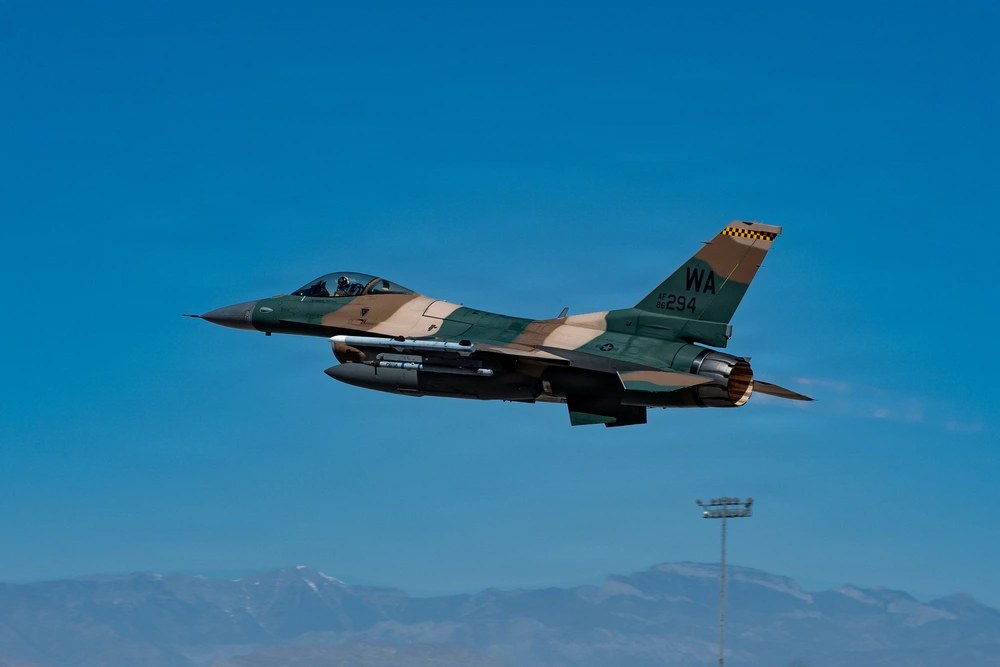
PHOTO CAPTION: A U.S. Air Force F-16C assigned to the 64th Aggressor Squadron takes off for a training mission at Nellis Air Force Base, Nevada, June 9, 2026. A retired Air Force fighter pilot says some nondeployed fighter pilots are now getting roughly one flight per month. U.S. Air Force photo by Airman 1st Class Jasmine Thomas.
Some U.S. Air Force fighter pilots are reportedly getting only about one flight per month in nondeployed units — a rate far below past levels associated with maintaining combat readiness.
The estimate comes from retired Air Force Col. John “JV” Venable, a former F-16 pilot and senior fellow at the Mitchell Institute for Aerospace Studies.
Speaking during a Mitchell Institute roundtable Friday, Venable said conversations with commanders and line pilots indicate fighter pilots assigned to nondeployed aircraft in the United States and other locations are currently being given the opportunity to fly roughly one sortie per month.
In plain English, a sortie is a single aircraft flight or mission.
So the claim amounts to some fighter pilots getting into the cockpit and flying roughly once every four weeks.
That would represent a significant decline from the last publicly reported Air Force figure.
According to Air Force Times, the service last publicly reported average fighter-pilot sortie rates in fiscal 2023, when pilots were flying approximately 5.5 sorties per month.
Past Air Force statements have put the average level needed to maintain combat-mission readiness at roughly nine to 10 sorties per month, depending on circumstances and aircraft.
The current one-flight figure is not an official new Air Force statistic.
It is Venable’s estimate based on his conversations with commanders and pilots, and that distinction matters because the Air Force has not released comparable current sortie-rate data publicly.
Venable said that makes it difficult to independently measure exactly how far fighter-pilot flying rates have fallen.
But broader Air Force readiness problems are well documented.
A Government Accountability Office report released in May found growing delays at Air Force aviation depots responsible for maintaining aircraft including the F-16. GAO said those delays were reducing aircraft availability for both operations and training and pointed to shortages in critical maintenance personnel.
The Air Force itself is now asking Congress for a major increase in readiness spending.
Its fiscal 2027 budget request includes funding for approximately 1.1 million flying hours, which service officials describe as the maximum executable level, along with billions of dollars for aircraft sustainment and maintenance.
The issue has become more consequential as U.S. fighter aircraft remain heavily involved in operations overseas.
Venable pointed to the difference between deployed combat forces and pilots back at nondeployed units, arguing that a relatively small portion of the fighter force is carrying the current operational burden while crews at home may be getting far fewer repetitions.
He also compared current U.S. training rates with those of Israeli fighter pilots, whom he said are flying substantially more frequently.
The debate goes beyond simply logging hours.
Fighter pilots train for air-to-air combat, weapons employment, close air support, electronic warfare, formation flying and other missions that require repeated practice.
Air Force training regulations themselves describe recurring flying programs as the minimum training necessary for pilots to maintain assigned readiness status.
Simulators can supplement that training, but even readiness experts who strongly support advanced simulation argue that it cannot completely replace actual flying.
Mitchell Institute analysts have previously warned that reduced aircraft availability and maintenance capacity can create a cycle in which units fly less, pilots receive fewer repetitions and readiness deteriorates further.
The Air Force has faced fighter-pilot shortages for years as well.
Venable said the official shortage is approximately 2,000 pilots, although he believes the real number may now be closer to 2,400 based on conversations within the force. That higher figure is also anecdotal rather than an official service count.
Venable brings an unusual amount of firsthand experience to the argument.
During a 25-year Air Force career, he accumulated more than 4,400 flying hours, including more than 300 combat hours, flew F-16s around the world and commanded both squadron- and group-level organizations.
The Air Force’s current publicly available budget documents show the service trying to put significantly more money into flying hours, maintenance and readiness.
What they do not publicly provide is a current fighter-pilot sortie average comparable to the fiscal 2023 figure.
That leaves the central claim coming from pilots and commanders rather than an official Air Force report:
Some nondeployed fighter pilots may now be flying only about once a month — at a time when past readiness benchmarks called for many times that amount.
(Source: OAF Nation)