AIRMAN'S MEDIA APPEARANCE CONTROVERSY
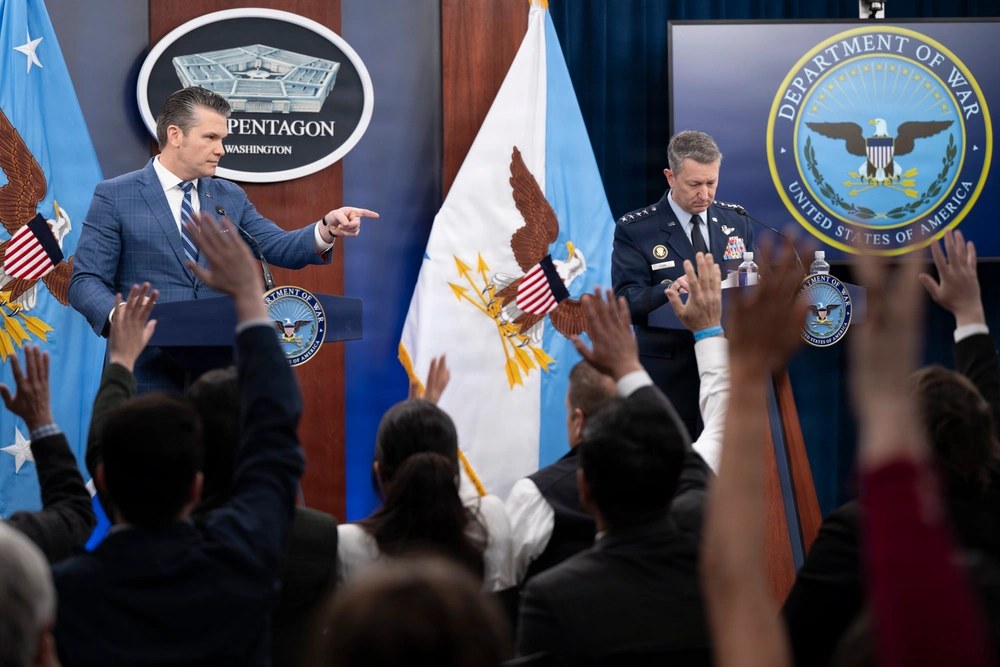
PHOTO CAPTION: Secretary Pete Hegseth and Joint Chiefs Chairman Gen. Dan Caine brief reporters on Operation Epic Fury at the Pentagon on April 8, 2026. New reporting says Hegseth later personally met with the two airmen rescued after an F-15E was shot down over Iran as officials sought their participation in a “60 Minutes” interview. (U.S. Navy photo by Petty Officer 1st Class Eric Brann)
One of the two Air Force officers rescued after their F-15E was shot down over Iran reportedly became concerned that he could be ordered to appear on national television as Pentagon officials pushed for both men to participate in a “60 Minutes” story about their rescue.
But that order never came.
Instead, after both airmen initially expressed reservations about participating, Defense Secretary Pete Hegseth personally met with them and ultimately gave them a choice, according to reporting published over the weekend by CNN.
One agreed.
The other declined.
The Pentagon strongly disputes CNN's characterization that the airmen were pressured, setting up an unusual argument over where the line sits between a voluntary media appearance and a request coming from the highest levels of the military.
The story began months earlier over Iran.
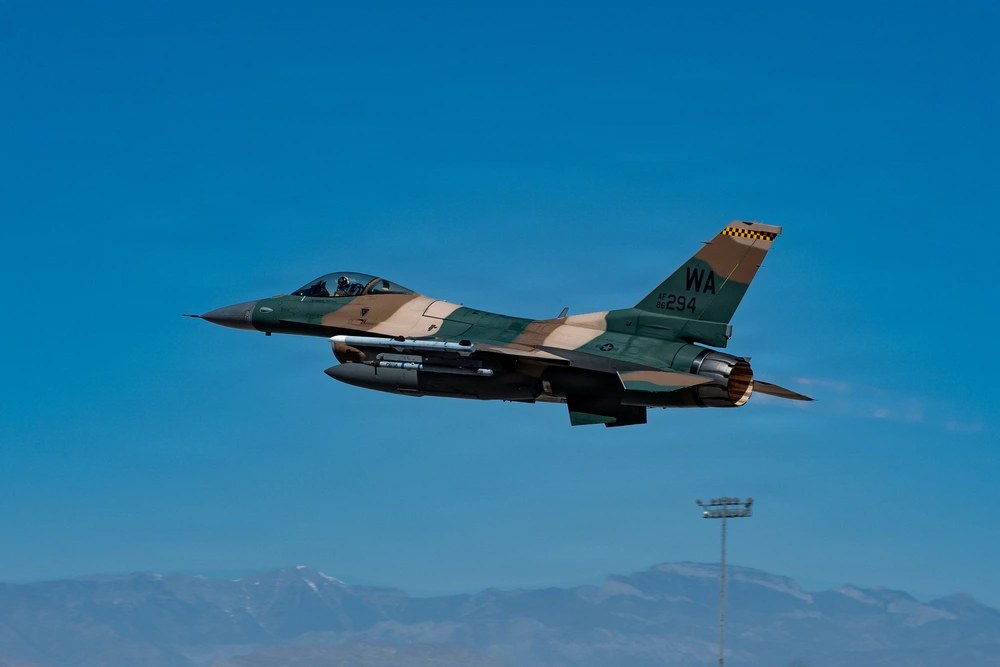
U.S. Central Command said an American F-15E Strike Eagle was shot down during a combat mission on April 2. The two crew members ejected and were recovered during separate search-and-rescue missions completed April 4.
The pilot has since been referred to publicly by his mission call sign, “Alpha.” The weapons systems officer is known as “Bravo.” Their identities have not been publicly released.
The full scale of what happened to Bravo became much clearer Sunday night.
During an interview that aired on “60 Minutes,” Bravo said the missile strike felt like being hit by a freight train. Damage to his parachute caused him to fall hard enough that he estimated he struck the ground at between 70 and 100 mph.
He suffered a broken back, arm and shoulder along with an injured ankle, according to the broadcast.
Despite those injuries, Bravo moved through the Iranian mountains toward a roughly 7,000-foot ridgeline while Iranian forces searched the area. U.S. officials told CBS that Iranian personnel at one point came within several hundred meters of his location.
Alpha was recovered first during a daylight mission roughly six hours after the shootdown.
Bravo remained behind.
His recovery eventually involved U.S. special operations forces, aircraft, intelligence support and approximately 90 American troops entering Iran, according to details disclosed during the CBS broadcast. Bravo was finally brought back to friendly territory roughly 50 hours after the aircraft went down.
Months later, CBS wanted the two men to tell the story.
That's where the new controversy begins.
CNN reported Saturday that Hegseth and political appointees in his office pushed for both airmen to participate in the “60 Minutes” segment. According to three sources cited by CNN, both men initially had reservations.
One of them reportedly became concerned about the possibility that he could be ordered to participate.
CNN also reported that some military officials were uncomfortable with how much information about the rescue might be discussed publicly while U.S. forces remained engaged in combat operations against Iran. Political appointees nevertheless wanted both crew members interviewed, according to the report.
But the story did not end with either airman being forced in front of a camera.
CNN's sources said Hegseth met privately with the two men after their concerns surfaced and asked whether they wanted to participate.
Bravo said yes.
Alpha said no.
Alpha did not appear in Sunday's “60 Minutes” interview.
The Pentagon says that sequence proves the men weren't coerced.
Chief Pentagon spokesman Sean Parnell called CNN's account a “complete lie” and said the decision belonged to the individual airmen. He also said the department took precautions to protect operational security and sensitive sources and methods.
That leaves an unusual distinction at the center of the story.
There is no reporting that either airman was actually ordered to appear on television.
There is reporting that one became worried that could happen while officials were pushing for the interviews.
And ultimately, when Hegseth spoke with them directly, one service member apparently felt free enough to decline.
Bravo chose differently.
His appearance Sunday produced the first detailed public account of what happened during his approximately two days behind enemy lines—and showed why military and political officials were eager for Americans to hear the story.
But the events leading up to that interview raise a separate question familiar to anyone who has spent time in uniform:
When somebody at the very top of the chain of command really wants you to volunteer for something, how voluntary does it feel?
(Source: OAF Nation)