U.S. Warns Allies of Iran Strikes
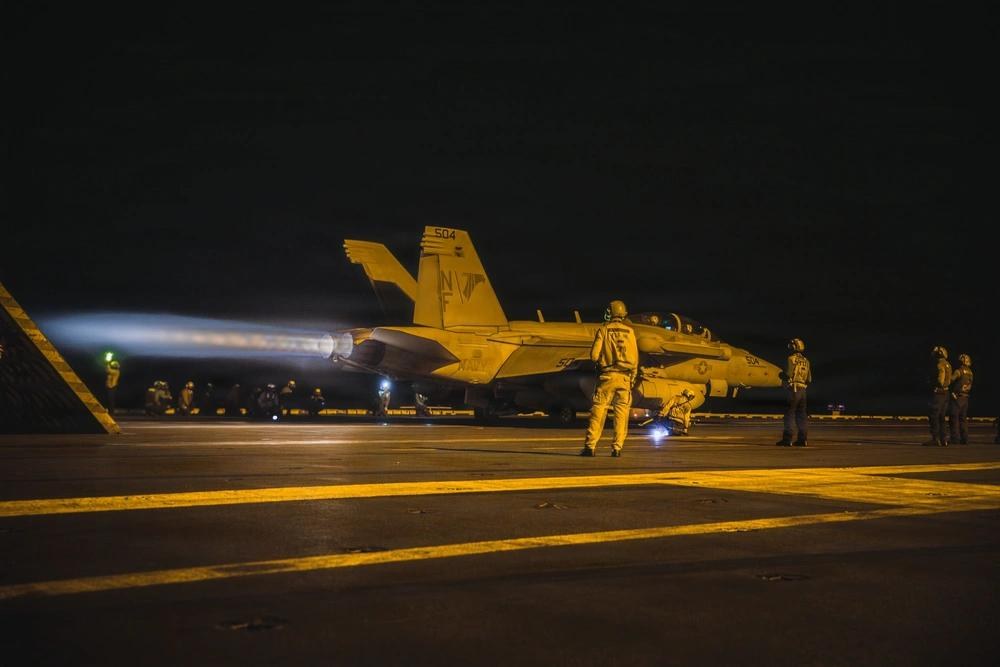
PHOTO CAPTION: A U.S. Navy EA-18G Growler launches from the aircraft carrier USS George Washington during flight operations in the Middle East on September 1, 2026. U.S. officials have warned regional allies to prepare for possible renewed strikes against Iran after the November 3 midterm elections and potential Iranian retaliation. President Trump has not authorized new attacks. (Archival U.S. Navy photo / U.S. Central Command)
American officials have warned several Middle Eastern governments to prepare for possible renewed U.S. military strikes against Iran after the November 3 midterm elections, including potential Iranian retaliation against regional energy facilities and critical infrastructure.
The warnings were delivered through diplomatic and military channels, according to separate reports published October 28 by The Associated Press and The Wall Street Journal.
Two diplomats briefed on the discussions told AP that American officials had advised regional allies to prepare for another round of military operations that could last several days.
However, President Donald Trump has not made a final decision to authorize additional strikes.
The warnings come as the Pentagon reinforces its military presence in the Middle East and the administration considers whether renewed attacks could pressure Tehran into accepting an agreement over its nuclear program.
Allies Warned of Potential Iranian Retaliation
The latest American communications go beyond planning for possible military strikes.
According to AP, U.S. officials have specifically urged regional governments to take precautions against Iranian retaliation targeting energy facilities and other critical infrastructure.
American officials indicated that an initial military campaign could last several days, but allied governments are concerned that Iranian forces and Tehran-backed armed groups could respond with attacks extending the conflict.
Those concerns are particularly significant for Gulf countries that host American military installations, operate major oil and gas facilities and depend on shipping routes that have already been disrupted by the war.
The conflict has expanded beyond direct American and Iranian military operations.
Iran-backed Houthi forces in Yemen have struck Saudi oil infrastructure and airports, while a Saudi-led coalition has carried out retaliatory strikes against Houthi-controlled territory.
The possibility of additional American attacks raises concerns that a renewed conflict could involve multiple countries and place military personnel, civilian populations and economic infrastructure at risk.
The White House and U.S. officials declined to comment on the latest warnings reported by AP.
Pentagon Moves Additional Forces Into Region
The warnings come alongside a substantial American military buildup.
According to AP, the Pentagon deployed the aircraft carrier USS Theodore Roosevelt and several amphibious ships carrying Marines from San Diego toward the Persian Gulf in late September.
The deployment involves approximately 9,000 military personnel.
A U.S. official said at the time that the additional forces could bring the region's naval presence to more than 20,000 sailors and Marines, along with hundreds of military aircraft.
The Wall Street Journal separately reported that American forces have been replenishing munitions, preparing bombers and fighter aircraft and repositioning personnel away from installations considered vulnerable to Iranian attacks.
The newspaper also reported preparations to reinforce regional missile defenses, including the movement of additional Patriot air defense capabilities.
Those measures would provide military commanders with additional options if Trump authorizes a new operation.
They could also help protect American personnel and allied facilities against retaliation.
However, the deployments and preparations do not establish that an attack has been ordered or that a final operational schedule exists.
AP reported that the military's readiness to begin another campaign immediately after Election Day remains uncertain.
Trump Has Discussed New Strikes After Midterms
Trump has repeatedly raised the possibility of additional military action while campaigning ahead of the November 3 elections.
During a campaign appearance in Lubbock, Texas, on Tuesday, the president said he believed the conflict could be brought to an end within weeks.
He also suggested that additional military pressure could be necessary to secure an agreement preventing Iran from obtaining a nuclear weapon.
The United States and Israel launched major military operations against Iran in late February.
Although a subsequent reduction in direct hostilities eased some fighting, the confrontation has continued through economic sanctions, a U.S. naval blockade, regional attacks and unresolved diplomatic negotiations.
The United States has not carried out a reported direct strike against Iran since early September, according to AP.
A renewed offensive could represent a significant escalation from the administration's more limited military and economic pressure during recent months.
The White House has not announced whether Trump intends to pursue another military campaign or continue negotiations.
Iran Says Diplomacy Remains Possible
Iranian officials have continued to signal an interest in diplomatic negotiations while warning against renewed military action.
On Wednesday, Iranian Foreign Minister Abbas Araghchi said Tehran remained willing to pursue diplomacy and was working with mediators to consider proposals for a return to a ceasefire.
Iran has sought to revive elements of an earlier proposal that the Trump administration rejected last month.
The United Arab Emirates also urged the parties to avoid further escalation.
In a statement Wednesday, its foreign ministry called for political solutions that could prevent the conflict from returning to full-scale military operations.
The competing positions illustrate the uncertainty facing regional governments.
American military preparations are continuing while diplomatic proposals remain under discussion, and neither side has announced a new agreement.
War Has Already Cost Billions
The possibility of renewed strikes comes after months of expensive American military operations.
According to a recent Pentagon estimate provided to Congress, the conflict has cost approximately $47.1 billion through mid-October, including projected spending to replace expended weapons and lost military equipment.
A substantial portion of that figure involves replenishing precision-guided munitions and other weapons consumed during the conflict.
The cost of repairing American military installations damaged by Iranian attacks is not fully included in the estimate.
Additional major military operations could further increase replacement requirements and place demands on U.S. weapons inventories.
Meanwhile, disruptions to Middle Eastern energy production and transportation have contributed to higher fuel prices and broader economic pressure.
No Final Decision on Renewed Attacks
Despite the warnings and military preparations, the most consequential decision remains unresolved.
Trump has not publicly authorized a new offensive, and American officials have not announced a date for potential strikes.
The warnings reported by AP and The Wall Street Journal indicate that the United States is preparing regional governments for possible escalation and urging precautions against an Iranian response.
They do not establish that warplanes have received orders to attack.
For American service members already deployed throughout the Middle East, the coming days could bring additional defensive preparations and heightened operational readiness.
Whether those preparations lead to another round of combat or renewed negotiations will depend on decisions that have not yet been publicly announced.
(Source: OAF Nation)