U.S. Army Prepares for Taiwan Conflict
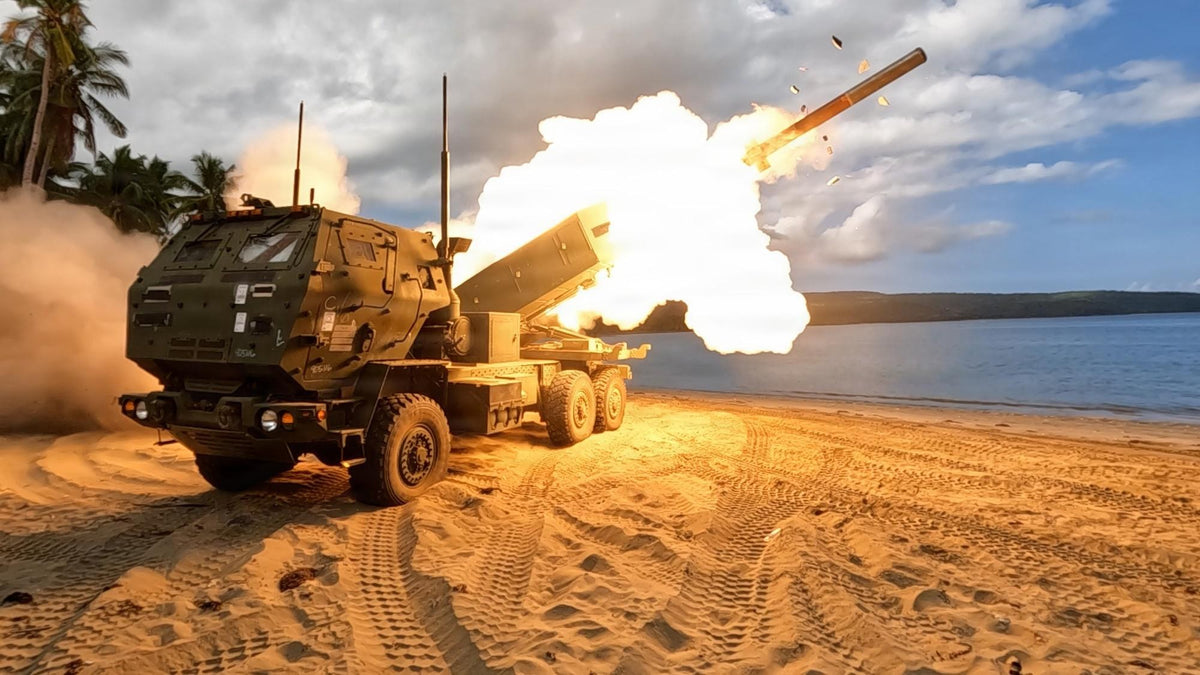
PHOTO CAPTION: A U.S. Army HIMARS rocket launcher fires during Exercise Balikatan 2026 in Palawan, Philippines, on April 27, 2026. Gen. Ronald Clark, commander of U.S. Army Pacific, says American forces are positioning equipment and personnel across the Pacific to prepare for a possible Chinese military move against Taiwan in 2027. U.S. intelligence assesses that China has no fixed invasion timeline. (Archival U.S. Army photo by Staff Sgt. Brandon Rickert)
The U.S. Army is positioning troops, equipment and military supplies across the Pacific as commanders prepare for the possibility that China could have the capability and potentially the intention to invade Taiwan in 2027.
Gen. Ronald Clark, commander of U.S. Army Pacific, said Tuesday that the military continues to treat next year as an important readiness benchmark despite a U.S. intelligence assessment finding that Chinese leaders have no current plan to launch an invasion in 2027.
Speaking October 27 at the TechNet Indo-Pacific conference in Honolulu, Clark said the Army still considers the so-called Davidson window relevant to its preparations for a potential conflict with China.
"The answer for us at USARPAC is yes," Clark said when asked whether the timeline remains significant.
His comments, reported by Stars and Stripes on October 28, provide new details about how American forces are preparing for a possible confrontation over Taiwan.
However, Clark emphasized that 2027 is a military planning benchmark, not a prediction that war will begin next year.
Army Positions Forces Across Pacific Island Chains
Clark said U.S. Army Pacific has adopted a strategy called Army Ready Forward to prepare the region for potential military operations.
The approach involves positioning military equipment, personnel and supplies on a rotational basis west of the international date line, particularly along island chains closer to China.
The objective is to establish forces and resources in locations that could support military operations if a regional conflict occurs.
By maintaining equipment and personnel forward, the Army aims to reduce the time required to respond to a crisis rather than relying entirely on forces arriving from the continental United States.
Clark described the preparations as necessary to ensure Army Pacific can respond to a potential Chinese military move against Taiwan.
The strategy also reflects the geographic challenges of operating across the Pacific, where American forces could face long distances, vulnerable supply routes and contested communications.
The United States has expanded military exercises and cooperation with allies and partners across the region, including Japan, Australia and the Philippines.
In April, American soldiers deployed HIMARS rocket launchers to remote Philippine islands during Exercise Balikatan, demonstrating how long-range fires could be rapidly transported and positioned in the region.
Those exercises are separate from Clark's October announcement but illustrate the type of distributed operations American forces have been practicing.
Why Military Planners Focus on 2027
The 2027 timeline originated in 2021 when Adm. Philip Davidson, then commander of U.S. Indo-Pacific Command, warned Congress that China could develop the capability to seize Taiwan within six years.
That period became known as the Davidson window.
The warning helped shape American military planning, investment and force modernization across the Pacific.
In 2023, then-CIA Director William Burns said U.S. intelligence indicated that Chinese President Xi Jinping had instructed the People's Liberation Army to be prepared for a successful invasion by 2027.
However, Burns also distinguished being militarily ready from making a decision to invade.
Clark reaffirmed that distinction during his October 27 remarks.
According to Defense One, he told conference attendees that the Army was working toward a readiness benchmark intended to deter conflict, not because commanders expected war to begin on a particular date.
He said Army Pacific would continue modernizing and positioning forces well beyond 2027.
U.S. Intelligence Says China Has No Fixed Invasion Plan
The Army's preparations come despite a different assessment of Chinese intentions from the U.S. intelligence community.
In its March 2026 Annual Threat Assessment, the Office of the Director of National Intelligence stated that Chinese leaders did not currently plan to invade Taiwan in 2027.
The assessment also found that Beijing had no fixed timetable for achieving unification with the self-governed island.
Intelligence officials said China continues developing military capabilities for a possible invasion while generally preferring to achieve its political objectives without armed conflict if possible.
The report described Chinese military progress as steady but uneven.
It also warned that an amphibious invasion of Taiwan would be extremely challenging, particularly if American forces intervened.
The distinction is significant.
The U.S. intelligence community assesses whether China currently intends to launch an invasion. Army Pacific must prepare for military scenarios that could occur even without a confirmed Chinese decision to attack.
Those responsibilities can produce different planning assumptions without necessarily representing conflicting conclusions.
China Continues Military Pressure Around Taiwan
China considers Taiwan part of its territory and has repeatedly stated that it reserves the option of using force to bring the island under Beijing's control.
Taiwan maintains its own democratically elected government, armed forces and political institutions.
The United States provides Taiwan with defensive weapons and maintains a policy of strategic ambiguity concerning whether American forces would intervene directly in a Chinese attack.
Beijing has expanded military exercises around Taiwan, including naval operations, air patrols and activities intended to demonstrate its ability to surround or isolate the island.
Taiwan's government has condemned the military pressure and maintains that its future must be determined by its own population.
The U.S. intelligence community has warned that Beijing's military modernization could also make American intervention more difficult.
Potential Chinese operations could involve missile attacks, attempts to blockade the island, cyber operations or an amphibious assault.
However, no such invasion has been announced or confirmed as imminent.
Army Focuses on Drones and Affordable Weapons
Clark also identified a major equipment challenge facing American forces in the Pacific.
The Army must balance expensive, sophisticated military systems against less costly alternatives that can be produced in much larger numbers.
He specifically highlighted autonomous systems as an area where that balance matters.
The concern reflects the potential demands of a prolonged conflict against a technologically advanced military.
High-end weapons can provide decisive capabilities, but replacing expensive systems quickly during sustained operations may prove difficult.
Smaller unmanned systems and other affordable technologies could help military units operate across dispersed islands while reducing dependence on a limited number of costly platforms.
Defense One also reported that Clark raised concerns about the delayed fiscal year 2027 defense budget, warning that temporary funding could interfere with modernization and experimentation programs.
Those concerns add another challenge as the Army approaches its readiness benchmark.
What Happens Next?
Army Pacific is continuing its forward-positioning strategy while expanding military exercises, developing autonomous capabilities and coordinating with allied forces.
The Pentagon's preparations are intended to deter a potential Chinese attack and ensure American forces have options if tensions escalate.
There is no confirmed Chinese decision to invade Taiwan in 2027, and U.S. intelligence does not currently assess that Beijing has established such a timetable.
Nevertheless, Clark's remarks make clear that the Army is preparing for the possibility rather than waiting for an invasion decision to become evident.
For American forces stationed across the Pacific, the approaching 2027 benchmark is influencing where equipment is positioned, how units train and what military capabilities commanders are prioritizing.
(Source: OAF Nation)