Sandy Hook Families Urge AR-15 Ban
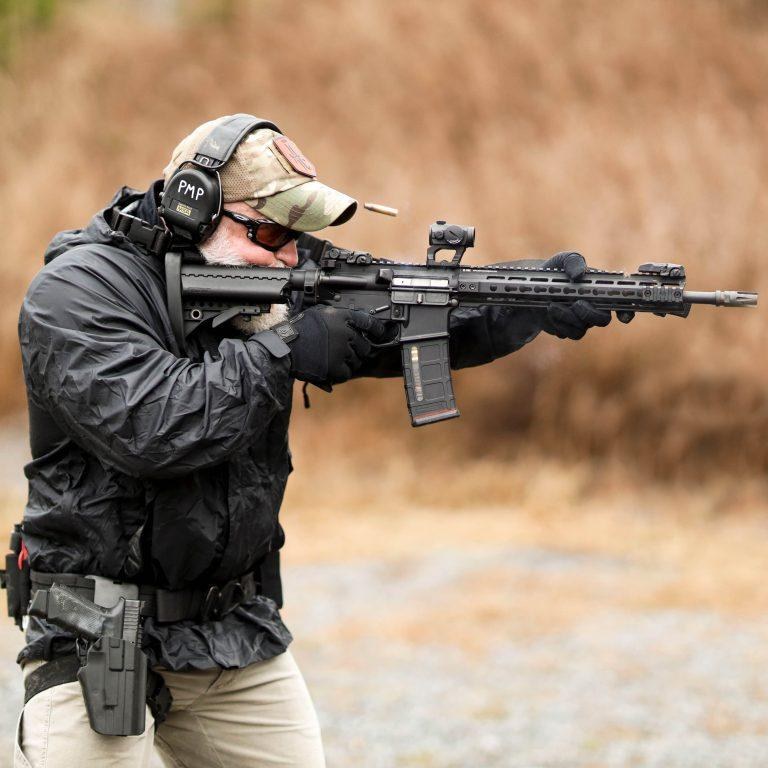
PHOTO CAPTION: A U.S. Fish and Wildlife Service special agent carries an AR-15-style rifle at a Connecticut firing range. Families of Sandy Hook shooting victims filed new Supreme Court briefs on October 28, 2026, urging the justices to uphold restrictions on AR-15-style rifles. Oral arguments are scheduled for December 2. (Illustrative file photo: U.S. Fish and Wildlife Service)
Families who lost children and loved ones in the 2012 Sandy Hook Elementary School shooting have urged the U.S. Supreme Court to uphold restrictions on AR-15-style rifles as the justices prepare to consider a major Second Amendment challenge with consequences for gun laws across the country.
In new legal briefs submitted October 28, the families argue that states must retain the authority to restrict certain semiautomatic rifles to protect their communities from mass shootings.
The filings come ahead of December 2 oral arguments in two consolidated cases challenging firearms restrictions in Connecticut and Cook County, Illinois.
The central constitutional question is whether the Second and Fourteenth Amendments protect the possession of AR-15-platform and similar semiautomatic rifles.
Gun owners and firearms advocacy organizations challenging the restrictions argue that the rifles are widely owned for lawful purposes and cannot constitutionally be prohibited.
The Trump administration supports their challenge.
The Supreme Court's eventual decision could affect similar restrictions in numerous states, although no ruling has been issued.
Sandy Hook Families Bring Personal Accounts to Supreme Court
Sandy Hook Promise, a nonprofit founded by relatives of victims of the December 14, 2012, shooting, filed a friend-of-the-court brief Wednesday supporting Connecticut's restrictions.
The shooting killed 20 first-grade students and six educators at Sandy Hook Elementary School in Newtown, Connecticut.
The gunman used a Bushmaster XM15-E2S semiautomatic rifle, an AR-15-style firearm, and fired 154 rounds in approximately four minutes, according to the organization's filing.
The families argue that the attack demonstrates why states should be able to regulate weapons they consider unusually dangerous.
Their brief maintains that Connecticut's restrictions are consistent with the nation's historical tradition of firearm regulation and the authority of elected lawmakers to protect public safety.
A separate brief filed by 13 relatives of Sandy Hook victims describes the devastating consequences for the families and urges the justices to uphold the challenged laws.
The filings do not ask the Supreme Court to establish a nationwide firearms ban. Instead, they ask the justices to preserve state and local authority to enforce the restrictions already being challenged.
Fifty-Six Military Veterans Also File Brief
Another significant October 28 filing came from 56 veterans of the U.S. Armed Forces who support the restrictions.
The group includes former service members from the Army, Marine Corps, Navy and Air Force.
Drawing on their military experience, the veterans argue that civilian AR-15-style rifles share important design and operating characteristics with military M16 and M4 rifles.
Their brief focuses particularly on semiautomatic fire.
The veterans contend that military personnel are trained to use semiautomatic firing modes in most circumstances and that the additional automatic or burst-fire capabilities available on some military service rifles do not eliminate the similarities between those weapons and civilian AR-15s.
They argue that those similarities are relevant to assessing whether the challenged firearms restrictions are constitutional.
The brief was submitted by the veterans in their individual capacities. It does not represent the official position of the Defense Department or any military service.
Their submission adds a military perspective to a constitutional dispute that has also drawn filings from gun owners, firearms organizations, public health groups, police officials and state governments.
Gun Owners Argue AR-15s Are Constitutionally Protected
The legal challenge involves two cases: Viramontes v. Cook County and Grant v. Higgins.
In the Illinois case, residents and gun rights organizations are challenging a Cook County ordinance restricting possession, sale and transfer of certain semiautomatic firearms.
The Connecticut case challenges restrictions strengthened after the Sandy Hook shooting in 2013.
Connecticut's law prohibits certain semiautomatic rifles based on specified models and characteristics, subject to statutory exceptions and grandfathering provisions.
Gun owners and advocacy groups argue that these laws violate the Second Amendment because AR-15-style rifles are commonly possessed for lawful purposes, including self-defense, recreational shooting and other activities.
They contend that the rifles fall within the constitutional protection traditionally afforded to firearms owned by ordinary Americans.
In their Supreme Court filings, the challengers argue that the popularity of AR-15-platform rifles is an important reason the government cannot categorically prohibit them.
The Trump administration has filed a brief supporting the challengers' constitutional position.
State officials defending the restrictions maintain that the Second Amendment allows legislatures to regulate weapons they consider unusually dangerous, even when those firearms are widely owned.
Supreme Court to Revisit Major Second Amendment Question
The cases arrive at the Supreme Court following years of litigation over how the Second Amendment applies to commonly owned semiautomatic rifles.
In 2008, the Court recognized an individual right to possess firearms for lawful purposes, particularly self-defense in the home, in District of Columbia v. Heller.
In 2022, the Court expanded constitutional protections for public firearm carrying in New York State Rifle & Pistol Association v. Bruen.
That decision established that gun restrictions generally must be consistent with the nation's historical tradition of firearm regulation.
The current cases require the justices to apply that constitutional framework to restrictions involving AR-15-style and similar semiautomatic rifles.
The central disagreement concerns how courts should evaluate weapons that are widely possessed but that states argue present exceptional dangers in mass shootings.
The challengers emphasize common ownership and lawful use.
Connecticut, Cook County and supporting organizations emphasize historical regulations of dangerous weapons and the government's authority to protect public safety.
The justices will decide how those competing constitutional arguments apply to the laws under review.
Ruling Could Affect Gun Laws Across the Country
The Supreme Court agreed on June 30 to hear the Connecticut and Cook County challenges together.
The cases are scheduled for one hour of consolidated oral argument on December 2.
A ruling could have implications beyond those jurisdictions because other states have enacted restrictions covering AR-15-style rifles and similar firearms.
A decision recognizing broader constitutional protection for those rifles could place comparable state and local laws under increased legal scrutiny.
A decision upholding the challenged restrictions could clarify the circumstances under which governments may regulate or prohibit particular semiautomatic firearms.
The precise effect would depend on the reasoning and scope of the Court's eventual opinion.
For now, the October 28 filings bring additional legal arguments and personal testimony into a case that could become one of the Supreme Court's most consequential Second Amendment decisions in years.
A ruling is expected before the Court concludes its current term in the summer of 2027.
(Source: OAF Nation)