Trump Suggests Venezuelan Statehood
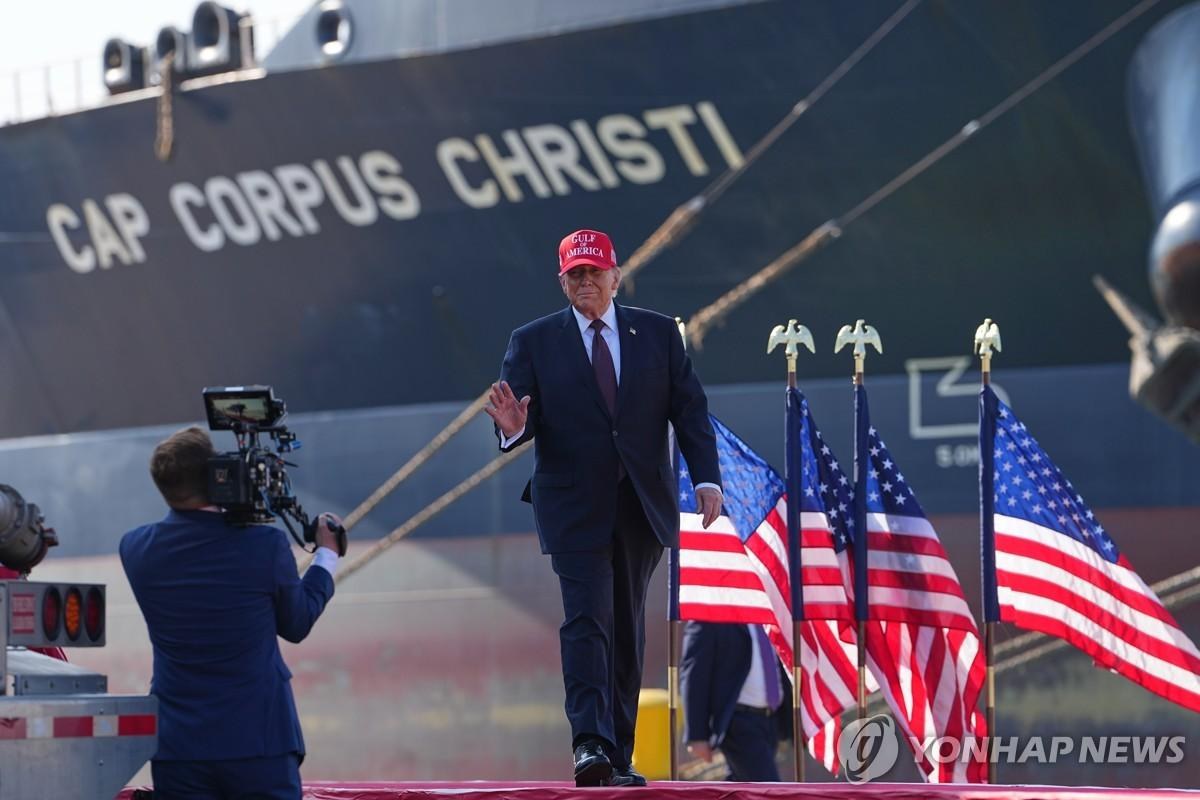
PHOTO CAPTION: President Donald Trump appears at a campaign rally at the Port of Corpus Christi, Texas, on October 27, 2026, with the oil tanker Angerona nearby. During the event, Trump suggested Venezuela could become the 51st U.S. state, months after American forces captured former Venezuelan President Nicolás Maduro. (Photo by Kevin Lamarque / Reuters)
President Donald Trump suggested Tuesday that Venezuela could become the 51st state of the United States, raising the possibility of replacing the South American country's president with an elected governor months after American forces captured its former leader in a military operation.
Speaking at a campaign rally in Corpus Christi, Texas, on October 27, Trump floated the idea while celebrating the arrival of approximately 1 million barrels of Venezuelan crude oil.
"Let's make it the 51st state. And instead of a president, we'll have an election for a governor," Trump told the crowd.
He returned to the suggestion moments later while addressing American oil executive Harold Hamm, saying he supported the idea.
The remarks were not accompanied by a formal annexation proposal, legislation or any announced government action to change Venezuela's status as an independent country.
Trump Celebrates Venezuelan Oil Shipment
Trump made the comments at the Port of Corpus Christi, where a tanker carrying Venezuelan crude served as a backdrop for his campaign appearance.
The president described the arrival as a major economic victory resulting from the U.S. military operation that removed Venezuelan President Nicolás Maduro from power in January.
Trump told the crowd that the tanker was carrying 1 million barrels of oil from Venezuela and said the shipment would benefit American refineries and consumers.
He also characterized the oil as being provided to the United States without cost to American taxpayers.
Reuters confirmed that the first shipment under an agreement between the United States and Venezuelan oil producer NABEP had arrived in Texas.
The company confirmed delivering 1 million barrels of crude. A White House official told Reuters that the oil would be sold by the U.S. government to refineries operated by Exxon Mobil and Citgo Petroleum.
The arrangement is part of a broader agreement granting the United States a 35% stake in NABEP's parent company and discounted access to its oil production.
The Washington Post reported that the agreement included a provision allowing the United States to purchase a share of production at $30 per barrel. However, NABEP subsequently updated its description of the initial shipment to say it was supplied at no cost to U.S. taxpayers.
The differing descriptions leave the financial treatment of the shipment an important distinction from the broader commercial agreement.
U.S. Military Captured Maduro in January
Trump's remarks come nearly 10 months after U.S. military forces conducted a major operation in Venezuela on January 3, capturing Maduro and his wife, Cilia Flores.
Both were transported to the United States to face federal criminal charges involving narcotics and weapons offenses.
The operation removed Maduro from power and significantly altered relations between Washington and Caracas.
Maduro's former vice president, Delcy Rodríguez, subsequently assumed the role of acting president.
The Trump administration has supported a political and economic transition while negotiating agreements intended to expand American access to Venezuela's substantial petroleum resources.
Secretary of State Marco Rubio has described the administration's approach as involving stabilization, economic recovery and an eventual political transition.
The January operation also prompted legal questions about the use of American military force against another sovereign nation.
International law experts questioned whether the administration's stated justification provided sufficient legal authority for the intervention.
At Tuesday's rally, Trump praised American service members who participated in the operation, describing the military action as a demonstration of U.S. capabilities.
Trump Has Floated Venezuelan Statehood Before
The October comments were not Trump's first suggestion that Venezuela could become part of the United States.
In March, he raised the possibility of statehood in social media posts following Venezuela's victory in the World Baseball Classic.
He returned to the idea in May, posting an image depicting Venezuela under an American flag.
At the time, acting President Rodríguez indicated that Venezuela had no plans to become an American state.
The latest remarks differed in their setting and context.
Rather than responding to a sporting event or posting a social media image, Trump raised the idea during a public campaign speech while promoting the economic benefits of American involvement in Venezuela.
He also explicitly described replacing the Venezuelan presidency with a governorship.
However, his comments did not establish that the administration had begun pursuing statehood through official channels.
Could Venezuela Actually Become the 51st State?
Turning Venezuela into an American state would involve substantial constitutional, diplomatic and legal obstacles.
Article IV, Section 3 of the U.S. Constitution gives Congress the authority to admit new states into the Union.
The president cannot independently admit another country as a state.
Because Venezuela is already an internationally recognized sovereign nation, any incorporation into the United States would also require resolving questions of Venezuelan consent, self-determination and compliance with international law.
The United Nations Charter recognizes the sovereign equality of member nations and prohibits the use of force against their territorial integrity or political independence.
No verified proposal has been introduced to Congress to admit Venezuela as the 51st state.
There is also no announced timetable, referendum or formal agreement between the two governments concerning statehood.
What Happens Next?
For now, the Trump administration's concrete actions concerning Venezuela remain centered on the aftermath of Maduro's removal, the country's political transition and expanded economic cooperation involving oil production.
The president's latest remarks add another public suggestion of American statehood, but they do not change Venezuela's legal status.
Trump has not explained whether he intends to pursue the idea beyond his campaign rhetoric.
Venezuela remains a separate country governed by its acting president, even as Washington exercises significant political and economic influence following the January military operation.
Whether the 51st-state suggestion develops into any formal policy remains unclear.
(Source: OAF Nation)