Trump Defends Pentagon Amid Iran War Fallout
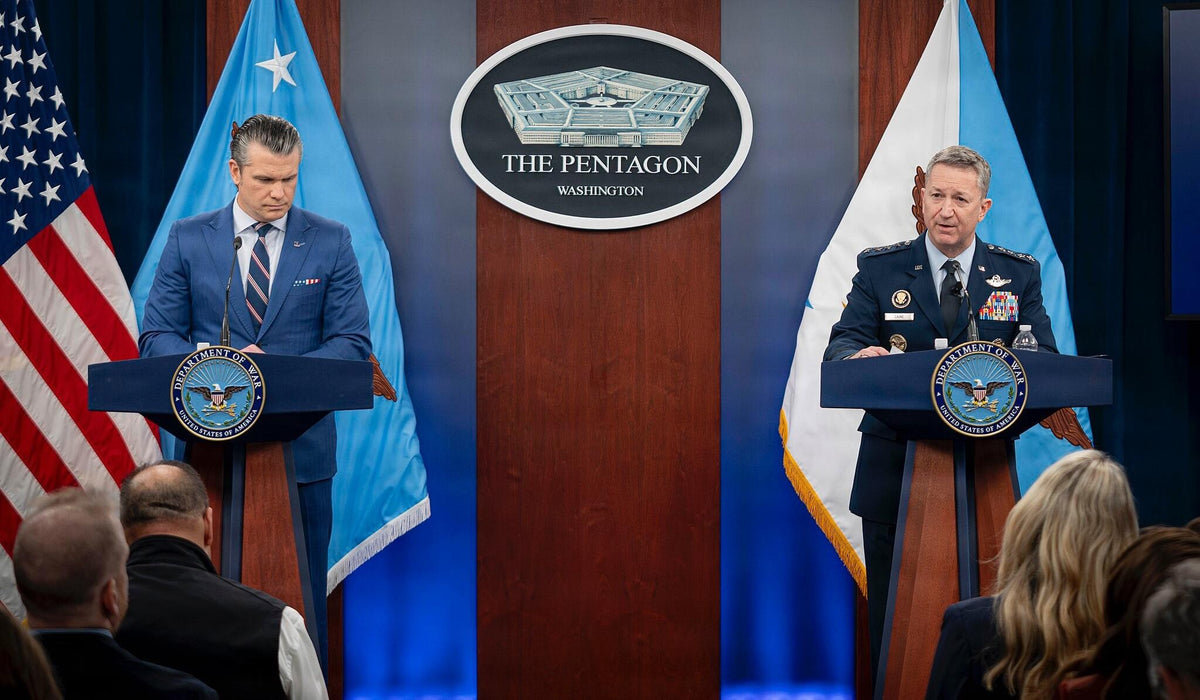
PHOTO CAPTION: Defense Secretary Pete Hegseth and Chairman of the Joint Chiefs of Staff Gen. Dan Caine brief reporters on U.S. military operations against Iran at the Pentagon on March 10, 2026. The administration now faces questions about the conduct and consequences of the war following the November midterm elections. (U.S. Navy photo by Petty Officer 1st Class Eric Brann. File photo.)
The political fallout from America's war with Iran has reached the Pentagon, with President Donald Trump reportedly questioning advisers about Defense Secretary Pete Hegseth's future, Vice President JD Vance blaming the conflict for Republican election losses, and incoming Democratic congressional leaders preparing to scrutinize military decisions.
The developments follow the November 3 midterm elections, in which Democrats won control of both the House and Senate.
The war, now in its ninth month, has become a central issue in Washington as the administration considers its military options and questions emerge about who should be held responsible for the conflict's duration, costs and consequences.
But despite growing speculation about changes in Pentagon leadership, Trump publicly defended Hegseth on Wednesday, saying the defense secretary was doing a very good job.
No decision to replace him has been announced.
Trump Privately Asks About Hegseth, Then Publicly Defends Him
According to reporting published November 4 by CBS News, Trump has been asking advisers and other Republicans whether Hegseth should remain defense secretary following his party's election losses.
Sources familiar with the conversations described growing discussion inside Republican circles about the Pentagon's leadership and the conduct of the Iran war.
One source said Florida Gov. Ron DeSantis had been mentioned as a possible replacement.
Other officials reportedly discussed whether senior military officers, including Chairman of the Joint Chiefs of Staff Gen. Dan Caine and U.S. Central Command commander Adm. Brad Cooper, might also face scrutiny.
However, Trump rejected the suggestion that he was planning to remove Hegseth when questioned by reporters Wednesday.
The White House said the president maintains full confidence in his defense secretary.
Pentagon spokesperson Sean Parnell also said Hegseth intends to remain in office through the end of Trump's presidency.
The distinction matters. Advisers discussing possible replacements does not mean the president has decided to fire anyone.
Vance Says the War Cost Republicans the Election
While Trump defended his Pentagon leadership, Vice President JD Vance offered a sharply worded explanation for the Republican losses.
In a November 4 social media post, Vance argued that the war with Iran was responsible for the party's defeat.
He acknowledged that supporters of the conflict could defend the decision to launch military operations, but argued that they also needed to recognize the political consequences.
The election results reflected dissatisfaction with several issues, including living costs, government accountability and the continuing conflict.
According to ABC News Voter Poll data, 34% of House voters described the Iran war as crucial to their vote.
That compares with 49% who identified the cost of living as crucial and 55% who said government corruption was crucial.
Those figures show that the war mattered to a substantial portion of voters, but they do not establish it as the sole cause of the election outcome.
The administration now faces questions about how the war was presented to the public, what military objectives remain and whether the expected benefits have justified the costs.
Could Military Leaders Take the Blame?
The reported discussions have raised a difficult question about responsibility for wartime decisions.
Under the American military chain of command, the president is commander in chief and determines national policy.
The defense secretary oversees the Department of Defense and the execution of military policy.
Senior uniformed officers advise civilian leaders, assess operational risks and command military forces within their assigned authority.
That division is important when examining responsibility for a prolonged conflict.
Military commanders can be held accountable for operational performance, compliance with lawful orders, and decisions within their authority.
Civilian leaders are responsible for the broader political decisions about when to use force, what objectives to pursue and whether to continue military operations.
Those responsibilities can overlap, but they are not interchangeable.
Removing a general or replacing a defense secretary would not, by itself, establish why the war lasted longer than anticipated or whether the initial decision to launch it was justified.
A meaningful review would need to examine the decisions made at multiple levels of government.
Democrats Prepare for Pentagon Investigations
The election results will also change who controls congressional oversight.
Democrats are preparing to lead the House and Senate when the new Congress convenes in January 2027.
Rep. Adam Smith of Washington, who is expected to lead the House Armed Services Committee, has identified aggressive Pentagon oversight as a priority.
Potential inquiries could address the administration's objectives in Iran, military spending, deployment demands, senior-officer dismissals and the legality of particular operations.
Congressional committees can request documents, question witnesses and use subpoena authority under applicable rules.
Lawmakers can also examine funding requests and seek changes to defense authorization and spending legislation.
The incoming majority could pursue investigations into Hegseth's leadership, but no finding of misconduct has been established by the election results themselves.
Congressional oversight and criminal accountability are separate processes, and an investigation does not automatically mean that anyone has broken the law.
What Would Accountability Actually Look Like?
There are several questions that a serious review of the conflict would need to address.
First, what objectives did civilian leaders establish before military operations began, and were those objectives clearly communicated?
Second, what assessments did military advisers provide concerning the likely duration, risks and resources needed?
Third, how have those assessments compared with the actual course of the conflict?
Fourth, what has the war cost in military resources, financial commitments, operational readiness and consequences for deployed personnel?
Finally, what conditions would the administration consider sufficient to conclude military operations?
Answers could come from congressional hearings, classified briefings, Pentagon investigations or independent reviews.
Any such inquiry would also need to distinguish disagreement over military strategy from evidence of misconduct, negligence or unlawful orders.
The purpose of oversight is not necessarily to establish that a particular leader deserves punishment. It is to determine what happened, why decisions were made, and whether corrective action is warranted.
What It Means for Troops Still in the Region
For American troops operating in and around the Middle East, changes in Washington do not immediately change their orders or end the conflict.
Military missions continue under the existing chain of command unless authorized leaders direct otherwise.
The election also does not automatically shorten deployments, reduce operational risks or eliminate the need for military funding.
However, congressional review could affect future military authorizations, spending decisions, force requirements and the public information available about the war.
Those decisions matter to service members carrying out the mission and families who have spent months dealing with deployment uncertainty.
A Political Reckoning Is Not the Same as a Military Review
The November 4 developments demonstrate that the Iran war is now reshaping Washington's political debate.
Vance has explicitly linked the conflict to Republican election losses.
Trump has reportedly sought advice about his defense secretary while continuing to defend him publicly.
Democrats are preparing to use their new congressional authority to question Pentagon decisions.
But determining who should be held accountable for the war requires more than identifying who might lose a job after an election.
It requires examining who made the decisions, what information they relied on, how military operations were conducted and what the United States intends to accomplish next.
For the troops still serving in the region, those unanswered questions have consequences that extend well beyond Washington politics.
(Source: OAF Nation)