Russia Bars Yabloko From Elections
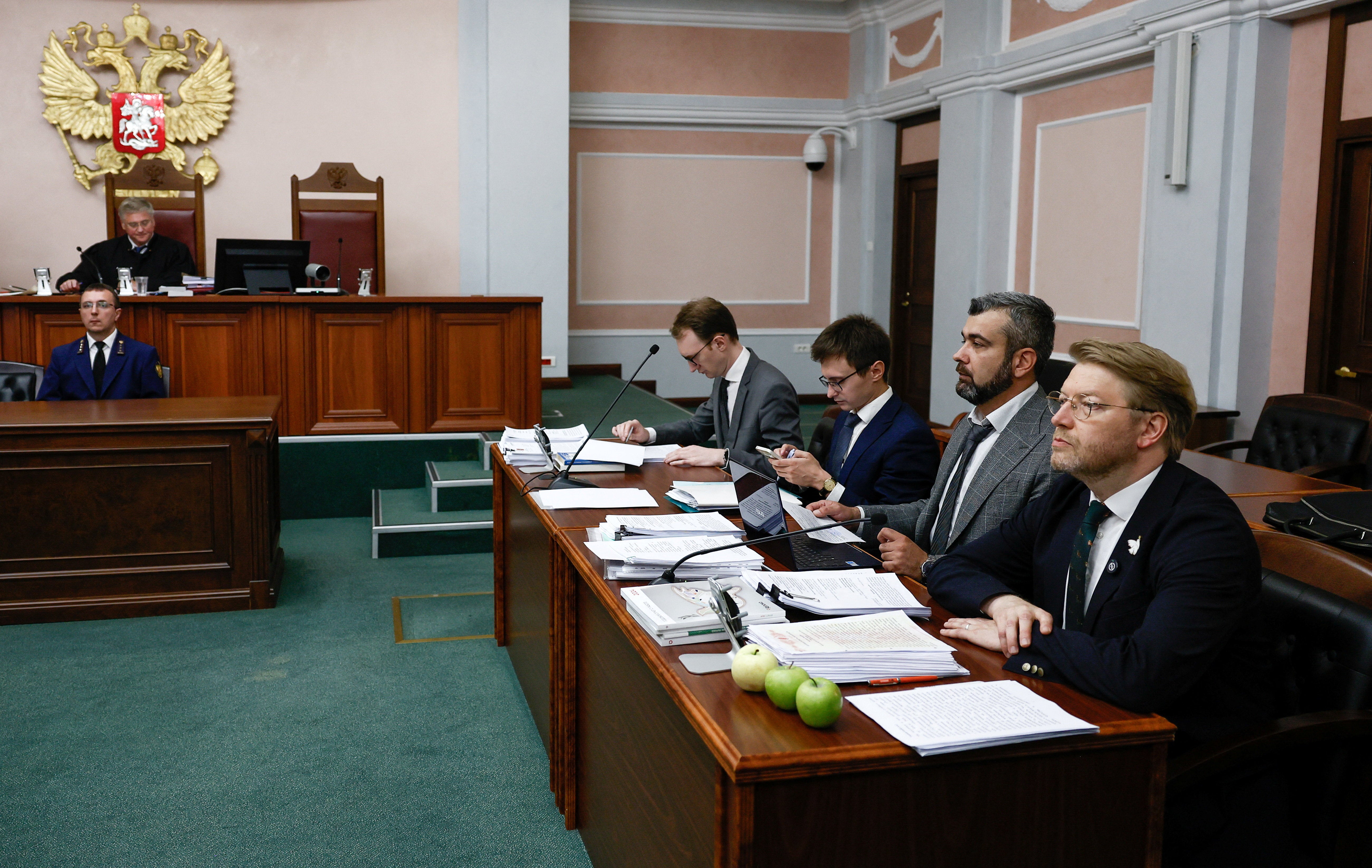
PHOTO CAPTION: Chairman of Russia's Yabloko political party Nikolai Rybakov sits next to lawyers during a hearing of the Supreme Court held to consider a lawsuit to bar the party from contesting the September parliamentary elections on the basis of alleged violations, including funding from foreign sources and breaches of campaigning rules, in Moscow, Russia, August 10, 2026. REUTERS/Yulia Morozova
LONDON, Aug. 10 — Russia’s Supreme Court on Monday barred the liberal Yabloko party from contesting September’s parliamentary elections, sidelining the only officially registered party that opposes Moscow’s war in Ukraine.
More than four years after Russia launched its full-scale invasion of Ukraine, the ruling further narrows the already limited space for anti-war political activity in Russia. Yabloko leader Nikolai Rybakov said the party would appeal.
“Excluding Yabloko from the election means refusing dialogue with people who ask questions that are uncomfortable for the authorities,” Rybakov said.
The court ruled in favor of a lawsuit brought by Rodina, a small pro-Kremlin nationalist party that sought to exclude Yabloko from the election. Rodina accused Yabloko of receiving undeclared campaign support, including from Western sources, as well as other alleged campaign-rule violations.
During the day-long hearing, Rybakov said there was no evidence to support the accusations and described the case as an unconstitutional attack on freedom of thought by political opponents seeking to remove a rival.
A few hundred supporters, many of them young, gathered outside the court as police stood nearby. Some carried apples as a reference to Yabloko’s name, which means “apple” in Russian, while one supporter wore a Russian flag as a cape.
Yabloko was once a leading liberal political force in post-Soviet Russia but now holds only a small number of regional seats and none in the national parliament. President Vladimir Putin’s United Russia party and other broadly pro-Kremlin parties are expected to retain their dominance after the September vote.
The campaign had given Yabloko a larger platform than usual for its call for Russia to sign a ceasefire agreement. The Kremlin has repeatedly rejected such a proposal, saying it wants a broader settlement that meets its conditions.
Outside the court, a supporter identified as Yevgeniya said she felt compelled to attend.
“We think it’s essential we show that there are lots of us, that we’re united in our support for this party, because we all want peace,” she said.
War weighs on political climate
Yabloko’s exclusion comes at a sensitive time for the Kremlin as elections approach and the effects of the war increasingly reach daily life inside Russia. Ukrainian long-range drones have repeatedly struck energy infrastructure and logistics hubs, disrupting fuel supplies and businesses.
Public opposition to the war is difficult to measure because of strict state controls on dissent. The share of Russians who said they supported the actions of the country’s armed forces in Ukraine fell to 66% in July, the lowest level since February 2022, according to the Levada Center, a non-governmental pollster that Moscow has designated a “foreign agent.”
“It is obvious that the demand for peace and freedom has proved significantly stronger today than the authorities had assumed,” Rybakov said.
Russian authorities, citing national security concerns, have used increasingly strict wartime censorship laws against people opposed to the conflict, prompting many activists and independent media organizations to leave the country.
Boris Nadezhdin, a politician who had sought to run for parliament on an anti-war platform, was designated a “foreign agent” last month and has since fled Russia.
(Source: Reuters)