Pentagon Renames AI Office
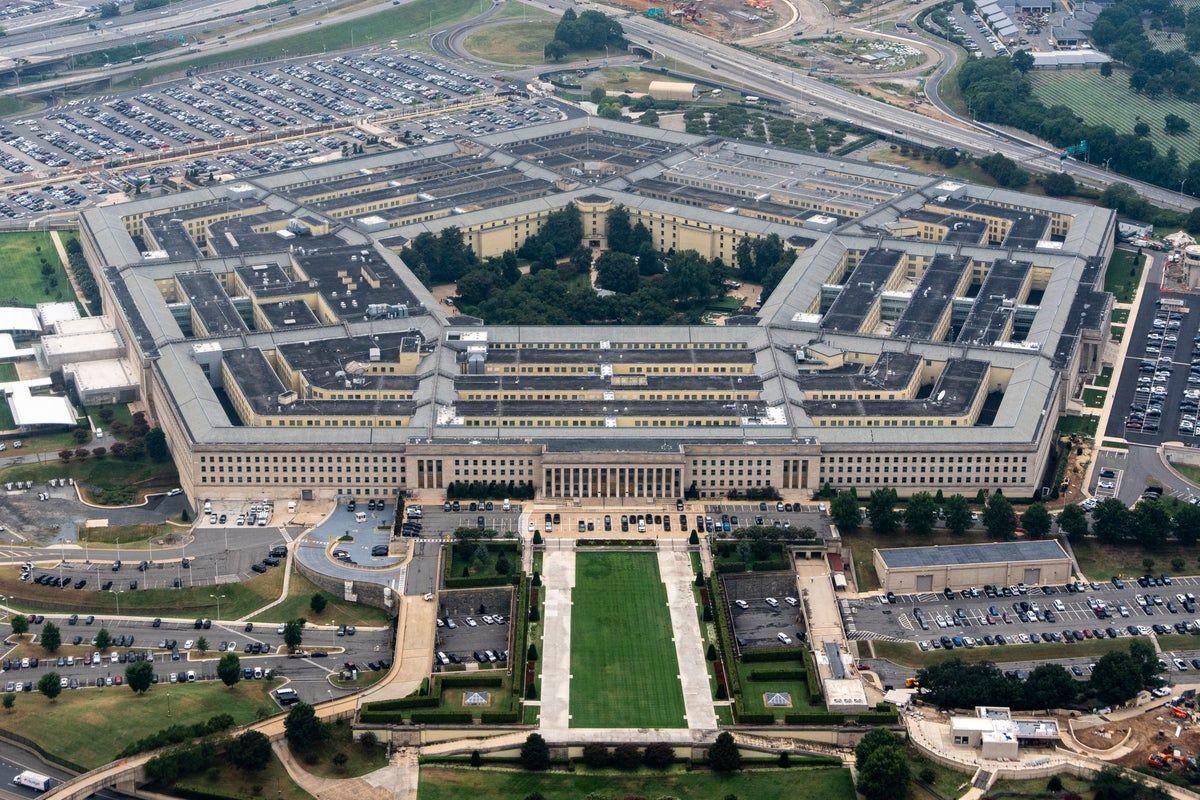
PHOTO CAPTION: The Pentagon in Arlington, Virginia. The military's Chief Digital and Artificial Intelligence Office was officially renamed the Super Intelligence Office in November 2026 following a presidential executive order directing federal agencies to adopt the new terminology. (U.S. Department of Defense file photo by Master Sgt. Ken Hammond, U.S. Air Force.)
The Pentagon has officially renamed its artificial intelligence office the "Super Intelligence Office," adopting new terminology ordered by President Donald Trump even though the technology commonly described as superintelligence does not yet exist.
The change replaces the Chief Digital and Artificial Intelligence Office (CDAO) with the Super Intelligence Office (SIO), the organization responsible for coordinating the military's use of artificial intelligence, data, and related technologies.
The Pentagon announced the redesignation on November 13, following a September executive order directing federal agencies to replace references to "artificial intelligence" and "AI" with "super intelligence" and "SI."
But the new name raises an obvious distinction: renaming existing technology does not automatically make it more capable.
Why the Pentagon Is Calling AI 'Super Intelligence'
On September 29, Trump signed Executive Order 14434, titled "Inaugurating the Era of Super Intelligence."
The order requires executive branch agencies, to the maximum extent permitted by law, to adopt the terms "Super Intelligence" and "SI" in official communications, websites, reports, and policy documents.
The administration argues that the phrase "artificial intelligence" no longer adequately captures the rapidly expanding capabilities of modern computing systems.
The executive order describes the newer terminology as a better reflection of the technology's potential to enhance human abilities, accelerate innovation, and solve increasingly complex problems.
The Pentagon subsequently applied that direction to one of its primary technology offices.
Cameron Stanley, the Pentagon's senior official responsible for applied AI critical technology, described the redesignation as a signal of the military's direction.
Stanley said the department intends to move beyond experimental prototypes and expand the operational use of these technologies across military activities.
But Is It Actually Superintelligence?
That is where the terminology becomes controversial.
In artificial intelligence research, the term "artificial superintelligence" typically refers to hypothetical systems capable of exceeding human intelligence across a broad range of cognitive tasks.
Current AI systems can perform remarkable tasks, including analyzing large datasets, generating software, processing information, and assisting human decision-making.
However, researchers continue to identify important limitations in reliability, reasoning, and the ability to operate independently across unfamiliar situations.
As Military Times reported on November 18, IBM cybersecurity expert Jeff Crume distinguishes between narrow artificial intelligence, artificial general intelligence, and artificial superintelligence.
Narrow AI refers to systems that perform particular types of tasks, even when they demonstrate impressive abilities.
Artificial general intelligence is generally understood as human-level capability across a broad range of intellectual activities.
Artificial superintelligence would exceed that level.
Neither general-purpose human-level AI nor artificial superintelligence has been conclusively demonstrated.
There is another important detail in the executive order: for federal terminology purposes, "Super Intelligence" is defined using the existing statutory definition of artificial intelligence.
In other words, the administration is changing what the government calls the technology, not declaring that every federal AI system has achieved capabilities beyond human intelligence.
What the Pentagon's Office Actually Does
The organization formerly known as the Chief Digital and Artificial Intelligence Office has played a central role in advancing the Pentagon's use of AI and data-driven technology.
Its work includes helping military organizations integrate AI systems, improve data capabilities, and move promising technology into operational use.
Potential applications range from analyzing intelligence information to improving logistics, planning, cybersecurity, and decision-making.
These capabilities are increasingly relevant as the U.S. military looks for ways to process information faster and maintain an advantage over technologically advanced adversaries.
Army Cyber Command leadership has emphasized that AI is intended to work alongside military personnel rather than simply replace them.
At an October military conference, Lt. Gen. Christopher Eubank described efforts to integrate AI-enabled agents into everyday workflows so personnel can accomplish tasks more efficiently.
That underlying mission remains important regardless of what the organization is called.
The November announcement identifies a new name and direction, but does not establish that the Pentagon has suddenly developed machines capable of superhuman intelligence.
Another Name Change Across the Military
The Super Intelligence Office redesignation is part of a broader federal effort to adopt the administration's preferred terminology.
The executive order applies across the executive branch rather than exclusively to the Pentagon.
Military organizations have already begun changing references to artificial intelligence in official communications and organizational titles.
The Marine Corps, for example, issued guidance in October directing organizations to transition from "Artificial Intelligence" terminology to "Super Intelligence" terminology where permitted by law.
For service members and veterans familiar with military administrative changes, the situation presents a recognizable question: how much does renaming an organization actually change what it accomplishes?
In this case, the terminology has changed, while the Pentagon's primary objectives of developing and integrating military AI capabilities remain recognizable.
Does the New Name Change Anything?
The administration argues that the terminology better reflects the importance and future potential of advanced computing systems.
Supporters of the change see the new language as a way to emphasize technological leadership and the expanding capabilities of AI.
Critics and technical experts question whether describing existing systems as "super intelligence" risks creating confusion about what the technology can actually accomplish.
The distinction matters particularly in military operations, where personnel need a realistic understanding of the capabilities and limitations of the systems they use.
An AI tool that can rapidly analyze information may still produce incorrect answers, misunderstand context, or require human oversight.
Changing its name does not eliminate those risks.
The Pentagon's newly designated Super Intelligence Office will continue pursuing advanced military technology under its new title.
But for now, the most concrete change is the one on the organizational chart.
The office has a new name. The technology still has to prove what it can do.
(Source: OAF Nation)