NAVY PILOTS FEAR MENTAL HEALTH IMPACT
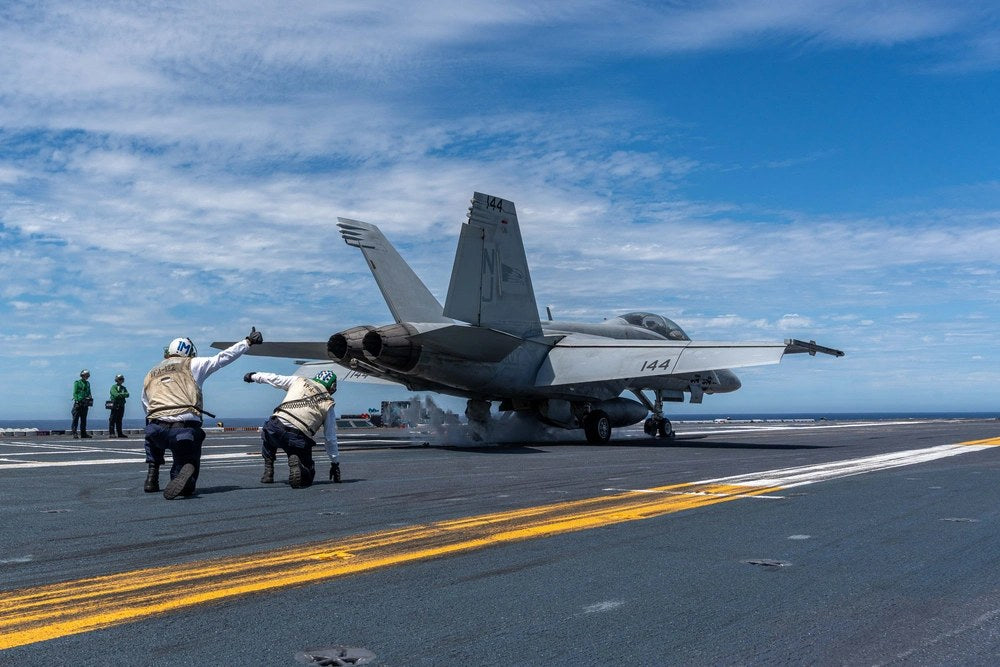
PHOTO CAPTION: U.S. Navy sailors direct the launch of an F/A-18E Super Hornet aboard USS Theodore Roosevelt on Sept. 7, 2026. A new House report is questioning whether the Navy has adequately studied the potential long-term neurological effects of naval aviation. (U.S. Navy photo by MC3 Alexander Bussman)
Naval aviators may be avoiding mental health treatment or downplaying symptoms because they fear losing their flight status or damaging their careers, according to a new House Oversight Committee staff report released Tuesday.
The Sept. 8 report also raises questions about whether years of high-G maneuvering, carrier catapult launches and other repeated physical stresses could contribute to long-term neurological problems — an issue investigators say the Navy has not comprehensively studied.
The report, titled Unseen Impacts: An Investigation into the Navy’s Response to Potential Traumatic Brain Injury and Mental Health Risks in Naval Aviation, follows a congressional investigation that began in 2025.
Investigators said senior Navy officials had previously been alerted to suicides and mental health concerns within the naval aviation community but did not initiate a formal investigation focused on possible neurological causes.
The committee also concluded that the Navy’s existing medical system is better structured to detect acute injuries tied to identifiable events than gradual problems that could accumulate over an aviator’s career.
One of the report’s central findings involves the culture surrounding mental health treatment.
According to the committee, aviators may avoid seeking care or underreport symptoms because of concerns that doing so could affect their ability to continue flying or hurt their careers.
The report cites Navy data showing 31% of aviation personnel reported severe or extreme stress, while 43% identified inadequate manning as the primary source of burnout and fatigue.
Investigators said the Navy has generally viewed those mental health problems through the lens of operational stress, manning and workload rather than determining whether the physical demands of aviation might also be contributing.
But the report does not establish that carrier launches, arrested landings or high-G flight are causing traumatic brain injuries.
In material provided during the investigation, the Navy said it had no evidence that naval aviators were suffering TBIs because of catapult launches, arrested landings or high-G maneuvering, and said available information did not show clinical symptoms in the fleet indicating neurological damage from those exposures.
The Navy also told investigators that the suicide rate among aviators was lower than the broader active-duty Navy population.
That disagreement is part of what the committee says needs further study.
Investigators found that the Navy has not conducted the kind of long-term, population-level research that could determine whether repeated exposure over an entire aviation career creates neurological risks that may not show up as an obvious single injury.
The report also examined Project Odin’s Eye, a Navy effort involving cognitive screening and performance monitoring.
The Navy told the committee that Odin’s Eye is not a formal research project and does not generate the long-term data necessary to evaluate chronic brain injury. Investigators said they also found no indication that the program had been formally implemented across naval aviation.
The committee is recommending that Congress require a longitudinal brain-health study of naval aviators and that the military establish a dedicated program focused on aviator brain and mental health.
For aviators themselves, however, the report identifies a more immediate problem: convincing personnel that seeking help will not automatically put their careers in jeopardy.
Until that barrier is addressed, investigators warned, the Navy may not even know the full scale of the mental health problems within its aviation community.
Sources: House Committee on Oversight and Government Reform; U.S. Navy
(Source: OAF Nation)