Pentagon Delays PFAS Cleanup Again
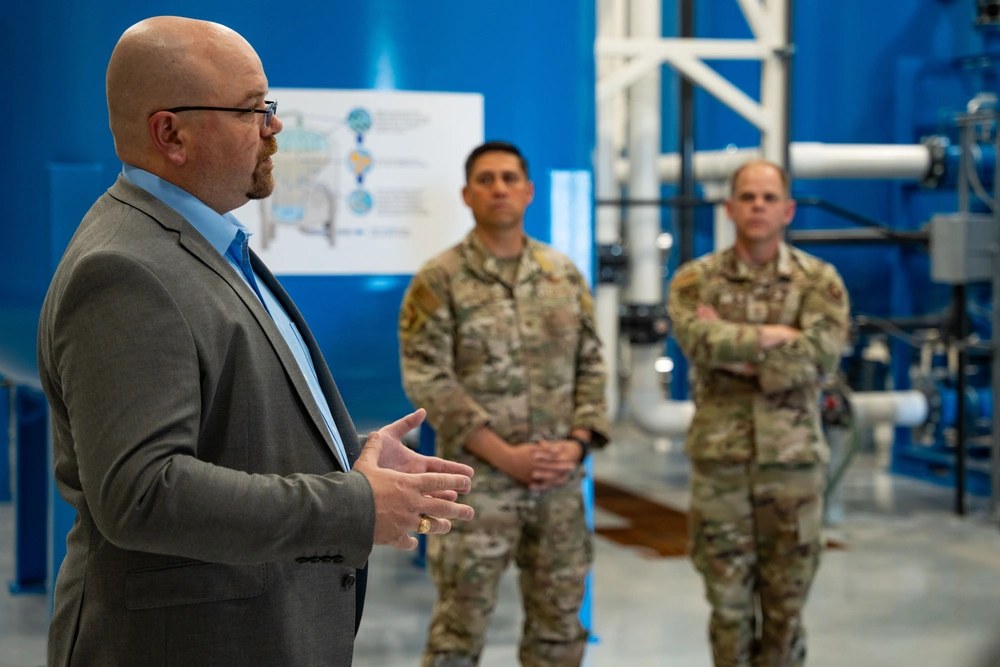
PHOTO CAPTION: U.S. Air Force officials tour a PFAS treatment facility at Cannon Air Force Base, New Mexico, May 20, 2025. The Pentagon has pushed back PFAS investigation and cleanup timelines at 243 military installations nationwide. (U.S. Air Force photo by Airman 1st Class Tori Shearn)
The Pentagon has pushed back PFAS cleanup timelines at 243 military installations, marking the third time in roughly a year that projected schedules for a key phase of the military’s nationwide “forever chemical” cleanup effort have been extended.
A senior Defense Department official acknowledged the new dates are later but disputed the idea that the military is backing away from the cleanup effort. The Pentagon says expanded investigations, changing regulatory standards and additional testing are causing the schedules to grow as officials learn more about contamination at individual sites.
The contamination is tied in large part to decades of military use of aqueous film-forming foam, or AFFF, which was widely used to fight fuel fires at airfields and training locations.
PFAS — short for per- and polyfluoroalkyl substances — are a large group of persistent chemicals that break down extremely slowly. EPA says exposure to certain PFAS at sufficient levels may be associated with increased risks of some cancers, developmental effects, immune-system impacts and other health problems.
The newest Pentagon schedule changes affect more than 40 installations where military-related PFAS contamination has already reached nearby drinking water, according to NOTUS.
Among the largest new extensions are Joint Base San Antonio, where the projected schedule was pushed back another 13 years, and Fairchild Air Force Base, where it moved another 12 years. The Pentagon attributed those changes to the need for additional testing and fieldwork.
The military says those longer investigation schedules do not mean all work at the affected locations has stopped.
Defense officials say interim measures continue while the larger environmental investigations move forward. Those actions can include removing contaminated soil, treating groundwater, installing filtration systems at homes and working with local water utilities.
“It’s not a pause in our efforts,” a senior Pentagon official told NOTUS, arguing that interim cleanup activity is actually increasing even as projected completion dates move farther into the future.
But the repeated schedule changes are drawing growing criticism from lawmakers and communities surrounding military installations.
Earlier this year, the Pentagon pushed timelines back at 178 military locations, in some cases by as much as 20 years. Two dozen senators subsequently demanded answers from Defense Secretary Pete Hegseth over the delays and the way the revised schedules had initially been published.
This time the Pentagon says it notified lawmakers before publishing the newest revisions and is directing installations to communicate changes through public meetings, restoration advisory boards, social media and local fact sheets.
One of the starkest examples surfaced again this week at Stewart Air National Guard Base in New York.
Rep. Pat Ryan’s office said Tuesday that a remedial investigation and feasibility study that had been expected to finish in September 2026 is now projected for completion in 2051 — a 25-year delay. New York environmental regulators have identified Stewart as the likely source of PFAS contamination that affected drinking-water supplies around Newburgh.
The Pentagon maintains that cleanup schedules under federal environmental law can shift as investigators determine how widespread contamination is, what media have been affected and what remediation will ultimately be required.
The department says it prioritizes locations based on risk and can take interim action before the years-long investigation process is complete when officials identify a more immediate threat to human health.
For military communities that have already watched projected cleanup dates move repeatedly, however, the latest update means the final solution at some installations could still be decades away.
(Source: OAF Nation)