Navy Base Admits Facebook Violation
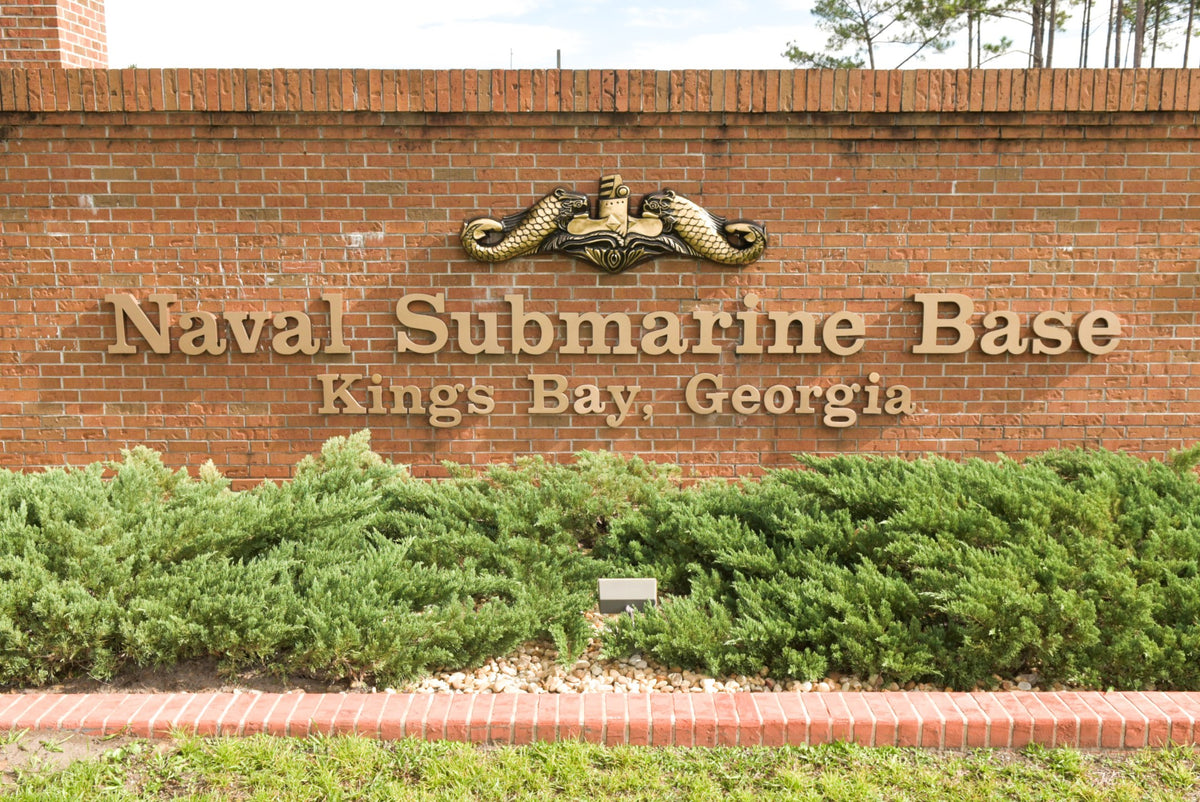
PHOTO CAPTION: The entrance to Naval Submarine Base Kings Bay, Georgia, is shown in a U.S. Navy file photo. The base has agreed that blocking a retired Army veteran from its official Facebook page violated his First Amendment rights. (U.S. Navy photo by Electrician's Mate 1st Class Mark Treen)
Naval Submarine Base Kings Bay has acknowledged that blocking a retired Army veteran from its official Facebook page violated his First Amendment rights, ending a federal lawsuit that began after the veteran questioned how the Navy was helping military families during a prolonged power outage.
Under a settlement announced Sept. 1, the Georgia submarine base also agreed to prohibit viewpoint-based censorship across its official social-media pages and publicly state that users will not be blocked or have comments removed because of the views they express.
The dispute traces back to August 2024, when a power outage left families at Kings Bay without electricity for more than 12 hours during the summer. Sergio Rodriguez, a retired Army veteran, military spouse and longtime military-family advocate, began using the base's Facebook page to ask what officials were doing for affected residents.
Rodriguez asked about temporary accommodations for families and how residents could seek reimbursement for food that spoiled during the outage. According to his lawsuit, the questions were persistent but did not contain threats or abusive language.
One concern was particularly immediate. Rodriguez told The Current that a military spouse had contacted him while sitting in a vehicle with her newborn because the family's home had become too uncomfortable without air conditioning.
Base personnel initially responded to some of Rodriguez's questions. But within hours, officials blocked him from the official Kings Bay Facebook page, and years of his previous comments and posts on the page disappeared, according to the lawsuit and subsequent federal court records.
Rodriguez sued Navy officials in July 2025, alleging the government had violated his First Amendment rights by excluding him from a public forum because he was criticizing the base's response.
The Navy later restored his access to the Facebook page and asked a federal judge to dismiss the lawsuit, arguing that the case was effectively over because Rodriguez was no longer blocked.
Senior U.S. District Judge Rebecca Beach Smith rejected that argument in March. Her ruling did not decide at that stage that the Navy had violated Rodriguez's First Amendment rights; instead, she found the Navy had not shown that the disputed conduct could not happen again and allowed the lawsuit to continue.
That distinction changed with the new settlement.
According to the Center for Individual Rights, which represented Rodriguez, Kings Bay agreed as part of the settlement that blocking him from the official Facebook page violated his First Amendment rights. The base also agreed that personnel will not ban members of the public or hide, delete or remove their comments from official social-media pages based on viewpoint.
Kings Bay's social-media pages must now include a public notice explaining that comments will not be removed or hidden because of the viewpoint expressed and that members of the public will not be blocked on that basis. The base must also link to the Navy's Social Media Handbook from its Facebook page.
The agreement extends beyond Rodriguez personally. Future revisions to the base's social-media policies must continue to preserve the prohibition against blocking users or removing comments based on viewpoint.
Rodriguez has spent years advocating for military families, particularly on housing issues. His work has earned recognition including the Armed Forces Insurance Navy Spouse of the Year award, and he has used official base social-media pages to track problems and communicate with military families around the country.
The settlement closes a case that began with a relatively straightforward question during a summer power outage: what was the Navy going to do for military families who had been without electricity for more than half a day?
Two years later, the answer produced a broader change in how one of the Navy's major submarine bases can manage criticism on its official social-media pages.
Sources: U.S. District Court for the Eastern District of Virginia, Center for Individual Rights, The Current
(Source: OAF Nation)