AIR FORCE PLANS REAPER REPLACEMENT
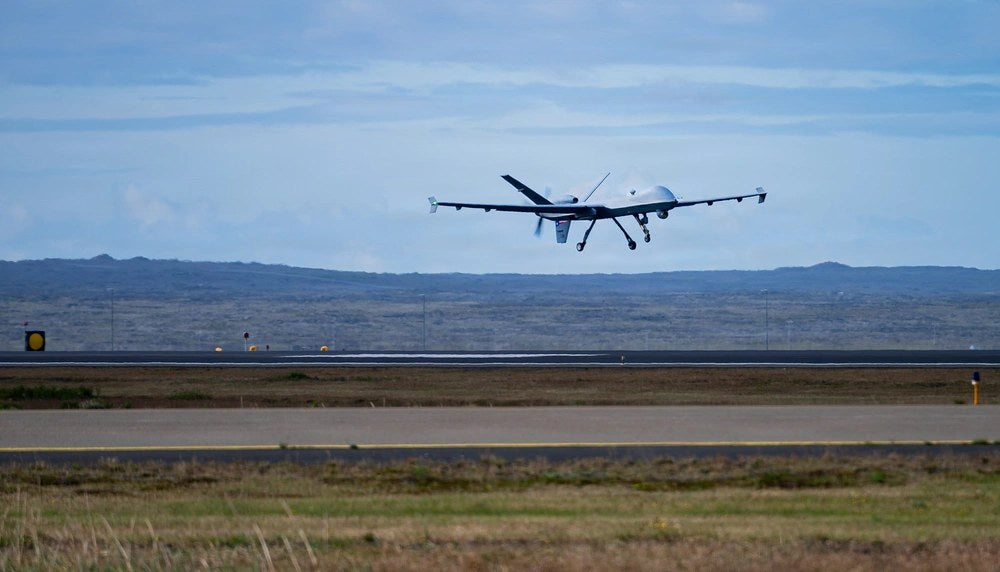
PHOTO CAPTION: A U.S. Air Force MQ-9 Reaper assigned to the 147th Attack Wing takes off from Keflavík Air Base, Iceland, during exercise Northern Viking 26 on Aug. 28, 2026. The Air Force says recent combat losses of the aircraft have reached a “concerning” rate. (U.S. Air Force photo by Senior Airman Edgar Grimaldo)
The Air Force is accelerating plans to replace the MQ-9 Reaper after combat losses reached a level senior service officials now describe as “concerning,” with recent reporting putting the number of lost aircraft at at least 45.
Lt. Gen. Christopher Niemi, the Air Force’s chief modernization officer, told reporters at the Pentagon Thursday that combat losses had accelerated discussions about what should eventually replace the long-serving Reaper.
“We are going through them at a rate that is concerning to us,” Niemi said, while stressing that the Air Force still has a substantial number of MQ-9As available.
The Washington Post reported Aug. 13 that the U.S. military had lost at least 45 MQ-9 Reapers during the war with Iran, citing three U.S. officials familiar with Pentagon data. That would amount to roughly one-quarter of the military’s prewar Reaper fleet.
The aircraft are not cheap. Depending on the sensors and weapons carried, an MQ-9 can cost between roughly $30 million and $50 million, according to Air Force figures cited in the reporting. The potential taxpayer value of the aircraft already lost exceeds $1.3 billion.
Not all of the Reapers were necessarily shot down. One U.S. official told The Washington Post that some crashed after operators lost communications links with the aircraft.
The losses have exposed a problem the Air Force is now trying to solve: the Reaper remains valuable for long-endurance surveillance and strike missions, but replacing large numbers of expensive aircraft during sustained combat is difficult.
The service is working with the Defense Innovation Unit on a new effort called Massed Modular Aircraft, or MMA, intended to produce a cheaper unmanned aircraft that can eventually take over some Reaper missions.
Air Force officials are aiming for an aircraft cost of roughly $10 million before sensors, weapons and other mission equipment are added. The service expects to buy at least 180 of the new drones.
Secretary of the Air Force Troy Meink has now directed officials to move the program faster because of the Reaper losses, according to Niemi. Earlier planning called for 20 operational aircraft by fiscal 2031, but officials are now looking at ways to field the system sooner.
Defense Innovation Unit officials said the broader goal is to reach a prototype within about a year and begin fielding the aircraft at scale within roughly three years.
The Air Force is also deliberately considering tradeoffs that would make the new aircraft cheaper and easier to replace. Officials said that could mean accepting a shorter service life or giving up some performance rather than building another unmanned aircraft that costs as much as the MQ-9.
Niemi said trying to duplicate every feature of the Reaper would likely produce another aircraft with a similar price tag. Instead, the service wants a system that can be built in larger numbers and lost in combat without creating the same financial and force-structure problem.
The Reaper remains one of the U.S. military’s most recognizable unmanned aircraft, capable of persistent surveillance as well as precision strikes. But the recent combat losses are now forcing the Air Force to confront how many expensive drones it can afford to risk in heavily defended airspace.
Sources: U.S. Air Force briefing reporting via DefenseScoop and Breaking Defense; The Washington Post
(Source: OAF Nation)