Air Force Faces $14B Parts Shortfall
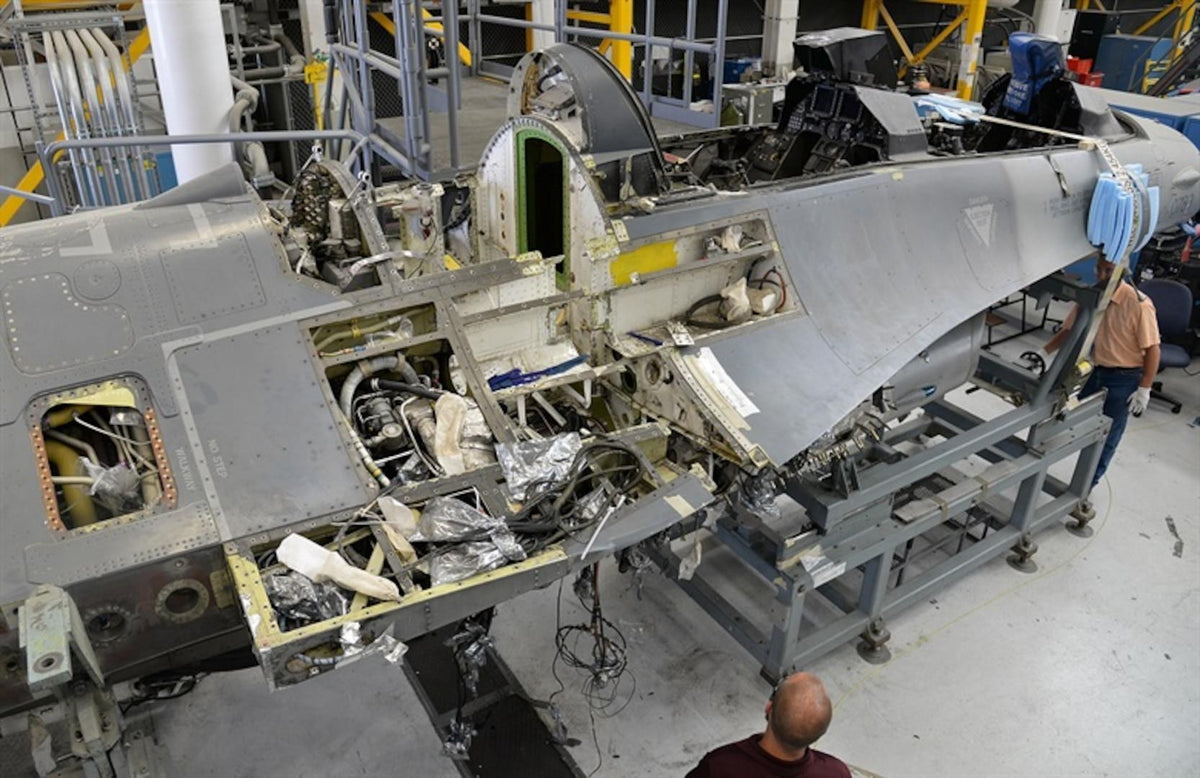
PHOTO CAPTION: U.S. Air Force maintainers dismantle a retired F-16 Fighting Falcon at Edwards Air Force Base, California, on August 24, 2026, salvaging usable components to support other aircraft. The Air Force faces an estimated $14 billion spare-parts shortfall as officials work to improve readiness across aging fleets. (U.S. Air Force photo by Lindsey Iniguez. File photo.)
The U.S. Air Force needs at least $14 billion to address shortages of aircraft spare parts as aging fighters, bombers and tankers struggle with declining readiness, according to military officials and new reporting published November 5.
The shortage affects some of America's most important military aircraft, including F-16 Fighting Falcons, B-52 Stratofortresses and KC-135 Stratotankers.
The Air Force has also been working to replenish spare parts for its F-35 stealth fighter fleet.
But the problem extends beyond individual aircraft. Military officials say years of supply shortages, aging equipment and maintenance backlogs have made it increasingly difficult to keep aircraft available for missions.
The central question is how the Air Force can maintain a powerful global presence when the aircraft it already owns are becoming harder to repair.
Air Force General Acknowledges $14 Billion Supply Gap
Lt. Gen. Linda Hurry, commander of Air Force Materiel Command, publicly disclosed the scale of the problem during an Air & Space Forces Association conference in September.
Hurry said the Air Force faced a $14 billion shortage in the funding needed to restore adequate spare-parts supplies.
The figure was highlighted again in November 5 reporting by Inside Defense, which identified additional needs across several major aircraft fleets.
The shortfall does not mean $14 billion worth of aircraft have been lost or that every aircraft awaiting a part is permanently grounded.
It represents the estimated investment needed to address accumulated shortages in the spare-parts system.
Those shortages can prevent maintenance crews from returning aircraft to operational service even when they have the personnel and facilities to perform the repairs.
Only Eight of 24 Fleets Meet Supply Readiness Standards
The Air Force's fiscal year 2027 budget justification provides a more detailed picture of the problem.
Of 24 aircraft fleets measured against the service's supply-related readiness standards, only eight met the required benchmarks.
Sixteen did not.
Five fleets missed their benchmarks by more than 10 percentage points, according to figures described in the budget documents.
The metric measures how often aircraft are unable to perform missions specifically because required parts are unavailable.
It is not the same as an overall mission-capable rate, which can also be affected by scheduled maintenance, mechanical failures and other conditions.
Still, the finding illustrates how widespread the shortage has become.
The Air Force is not confronting an isolated maintenance issue affecting a single aircraft model. It is dealing with supply problems across a substantial portion of its fleet.
Grounded Aircraft Waiting for Parts Are Increasing
Hurry reported in September that the rate of aircraft unavailable because of supply problems had increased approximately 87% over seven years.
That does not mean 87% of American aircraft are grounded.
It means the supply-related measure she described had deteriorated by that amount over the period.
She also said approximately 53% of Air Force aircraft were more than 30 years old, while 55% had exceeded their expected useful service life.
That aging fleet creates additional challenges.
Older aircraft often require components that are difficult to obtain, expensive to manufacture or no longer produced by their original suppliers.
Some parts must be repaired repeatedly. Others must be redesigned or produced through specialized contracts.
When a needed component is unavailable, maintenance crews may have to wait or temporarily remove compatible parts from another aircraft.
The latter practice, known as parts cannibalization, can help return one aircraft to service but creates additional maintenance requirements elsewhere.
The Air Force's own budget documents warn that reliance on cannibalization is placing an unsustainable workload on maintainers.
Bombers and Tankers Face Particular Challenges
Among the aircraft identified in the new reporting are two long-serving fleets: the B-52 bomber and KC-135 tanker.
Both aircraft types entered service during the 1950s, although they have received numerous upgrades and modifications since then.
The B-52 remains an important part of America's long-range bomber force.
The KC-135 provides aerial refueling capability, allowing fighters, bombers and other aircraft to operate at greater distances.
The Air Force's budget documents identify 36 planned engine maintenance inductions for these two fleets during fiscal years 2024 and 2025 that could not proceed because required parts were unavailable.
These were delayed engine maintenance actions, not a finding that 36 aircraft were permanently lost or unable to fly for the entire period.
Even so, the delays demonstrate how shortages can interfere with planned maintenance before an aircraft returns to operational service.
The F-16 fleet also needs additional parts investment, according to Inside Defense.
Meanwhile, the F-35 program has its own documented sustainment problems, including limited supplies of replacement components and difficulties repairing equipment quickly enough.
Air Force Requests Billions, but It Is Not the Full Amount Needed
The service's fiscal year 2027 budget includes a request of approximately $4.25 billion to replenish critical aircraft spare parts.
That represents less than one-third of the estimated $14 billion shortfall.
The proposed investment would support multiple fleets, including bombers, fighters and tankers.
According to the budget justification, approximately $895.7 million would support the B-2 bomber, while $424.7 million would be directed toward B-52 spare parts.
Other funding would address shortages affecting additional aircraft.
But receiving appropriations does not mean replacement components immediately become available.
The Air Force estimates that obtaining some newly funded parts could take approximately 18 to 36 months.
That delay reflects the time required to manufacture, acquire and deliver specialized aircraft components.
For units already struggling with shortages, a funding increase could therefore take years to produce its full effect.
Government Auditors Have Warned About Maintenance Delays
The Government Accountability Office has separately documented problems in the Air Force's aircraft maintenance system.
In a May 2026 report, GAO found that maintenance delays at the service's three major aviation depots had increased substantially since 2019.
Those depots support aircraft including F-16 fighters and C-17 transport planes.
Auditors found that maintenance completion targets were sometimes revised in ways that obscured the full extent of delays.
They also identified challenges hiring and retaining specialized mechanics and engineers.
Those workforce problems are separate from spare-parts shortages, but they contribute to the broader difficulties involved in maintaining an aging fleet.
The Air Force has been taking steps to modernize its depots and improve maintenance performance.
GAO nevertheless recommended additional changes to improve oversight and address workforce shortages.
What Does This Mean for Military Readiness?
The effects of limited aircraft availability can reach far beyond maintenance hangars.
Aircraft are needed for combat missions, training, refueling, transportation, reconnaissance and other military operations.
When fewer aircraft are available, commanders may have less flexibility to respond to unexpected requirements.
Maintenance personnel can also face additional pressure to keep available aircraft flying while waiting for replacement components.
That does not mean the Air Force is incapable of carrying out its assigned missions.
Mission readiness varies by aircraft type, unit and operational requirement, and officials have not publicly established that the $14 billion shortage has prevented a specific operation.
But the service's own budget documents warn that continuing the shortage could jeopardize its ability to meet combatant command requirements.
For American aircrews and maintainers, the difference between an aircraft that exists on an inventory sheet and one that can actually perform a mission is significant.
The Challenge Is Bigger Than Buying New Aircraft
The Air Force is investing in new aircraft and modern technologies, but its existing fleet will remain essential for years.
Fighters must still be maintained. Bombers must be prepared for missions. Tankers must remain available to support operations around the world.
New aircraft purchases do not eliminate the requirement to maintain older systems that are still in service.
The $14 billion shortfall highlights the financial and logistical challenge of supporting those aircraft.
The November 5 reporting also reinforces a concern officials have raised for years: the military's ability to conduct operations depends not only on the weapons it purchases, but on its capacity to maintain them.
For the Air Force, closing the spare-parts gap will require funding, manufacturing capacity, effective supply management and enough trained personnel to complete repairs.
Until those improvements reach the flight line, aging aircraft and missing parts will continue to present a readiness challenge.
(Source: OAF Nation)