Air Force Colonel's Ordeal in Iran
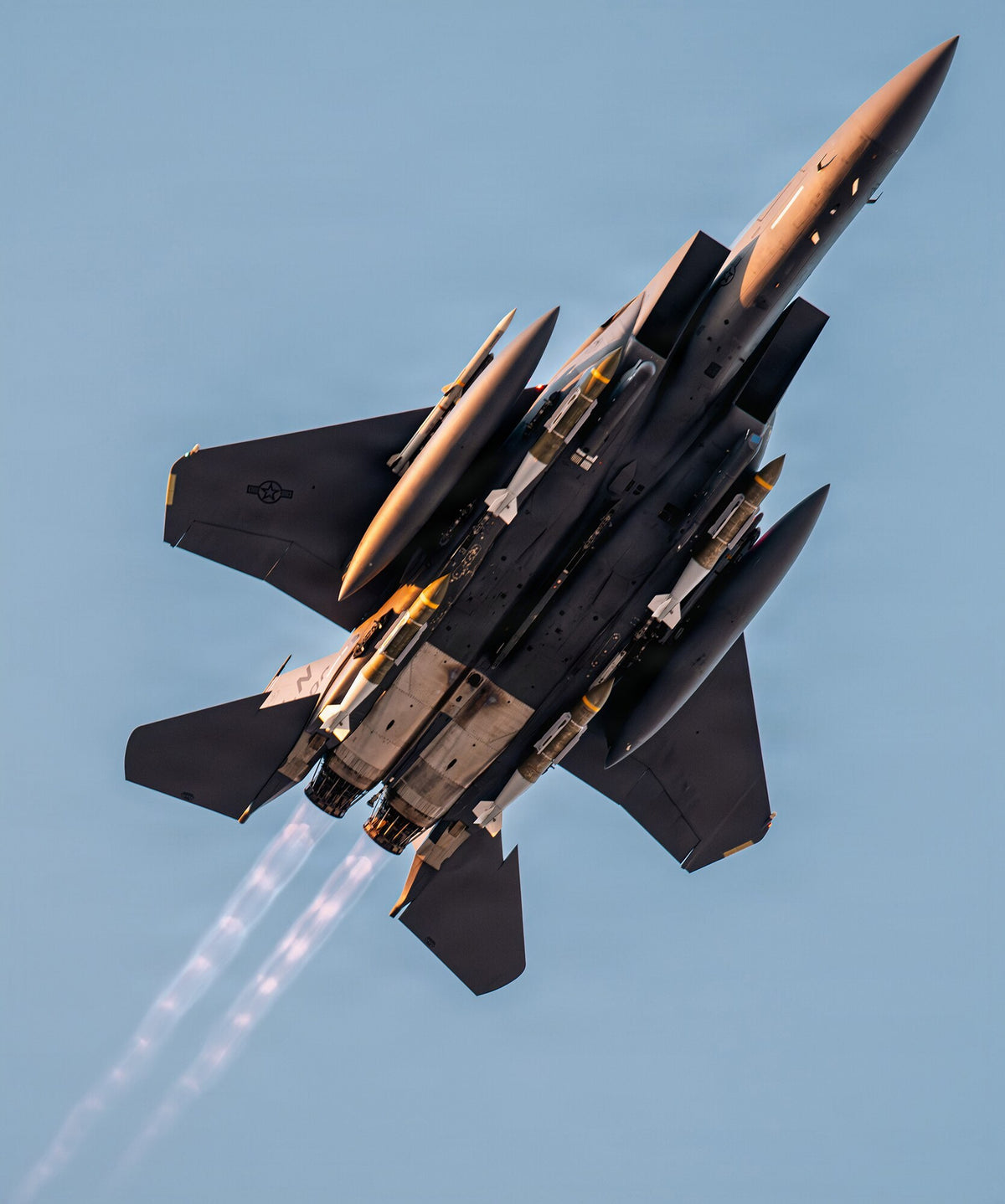
PHOTO CAPTION: A U.S. Air Force F-15E Strike Eagle takes flight in the Middle East in support of Operation Epic Fury on March 2, 2026. An F-15E aircrew was later shot down over Iran, triggering the Dude 44 combat rescue operation. U.S. Air Force photo.
A U.S. Air Force officer who survived nearly two days alone in Iran after his F-15E Strike Eagle was shot down is speaking publicly about the ordeal for the first time.
The weapons systems officer, identified publicly by his mission call sign Dude 44 Bravo, was one of two aircrew members aboard an F-15E shot down during combat operations over Iran in early April. The jet's pilot was recovered within hours, but Bravo remained alone in Iran's mountainous terrain for roughly two days.
CBS News released a preview of Bravo's first public account Tuesday ahead of an upcoming 60 Minutes interview. CBS says the Air Force colonel describes the violent ejection, injuries he suffered, how he evaded Iranian forces and what happened when American rescuers finally reached him.
The full interview is scheduled to air Sept. 13.
Bravo's disappearance triggered a massive combat search-and-rescue effort involving U.S. aircraft and personnel operating deep inside hostile territory.
Air Force accounts have described the Dude 44 rescue as one of the service's most complex modern combat-rescue operations. Crews flying HH-60W Jolly Green II helicopters and HC-130J Combat King II aircraft had to contend with mountainous terrain, poor weather and surface-to-air threats while searching for the downed aircrew.
The two men were recovered during separate missions.
The first airman was located and rescued within hours of the shootdown. Bravo remained isolated much longer, injured and attempting to avoid detection as American forces worked to determine his location and mount another recovery mission.
The scale of that effort extended far beyond the rescue helicopters themselves. Air & Space Forces Magazine reported after the operation that hundreds of personnel and dozens of aircraft were involved in the broader effort to recover the crew. Later Air Force reporting described a task force involving more than 150 aircraft supporting the rescue operation.
The mission also put an Air Force capability that had rarely been required during the post-9/11 wars back into the spotlight: retrieving American aircrew who had been shot down and were actively trying to survive in hostile territory.
Air & Space Forces reported that before Dude 44, no American airman had faced a comparable shootdown-and-evasion scenario since conflicts involving Serbia during the 1990s.
For Bravo, however, the operation was not an exercise in military doctrine.
He was injured, alone in Iran and waiting for American forces to find him.
His upcoming interview will provide the first account of those two days from the man who actually spent them on the ground.
(Source: OAF Nation)