VFW Opposes Veterans Benefits Bill
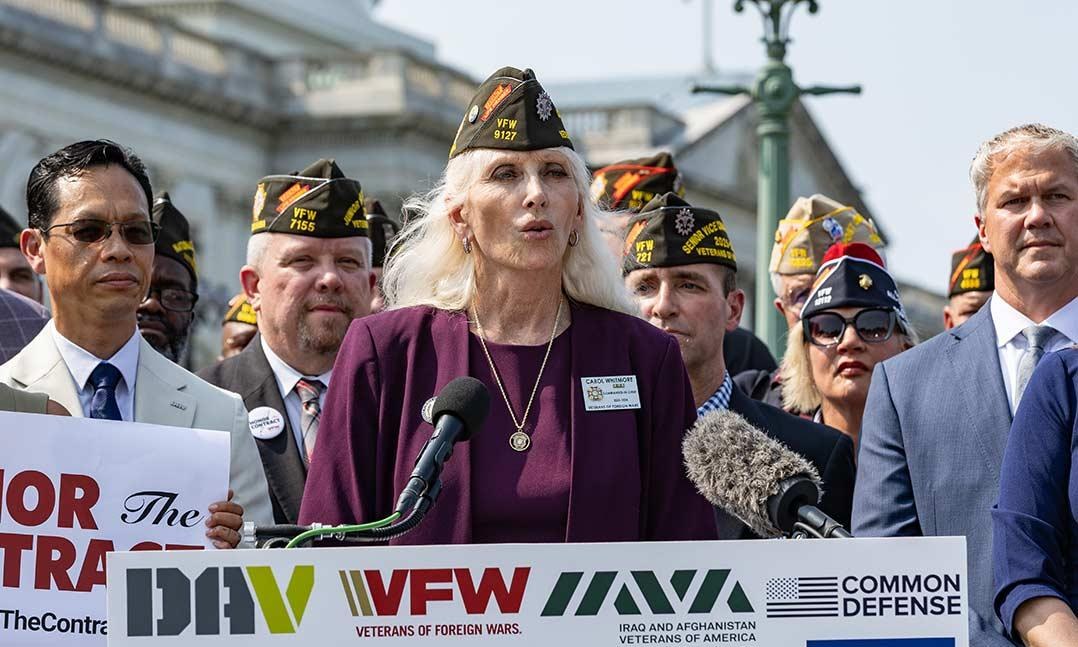
PHOTO CAPTION: A Veterans of Foreign Wars (VFW) cap is pictured in front of the U.S. Capitol in Washington, D.C. The VFW is urging Congress to reject proposed changes that could reduce VA disability compensation for some future veterans while supporting separate passage of the Major Richard Star Act. (Illustrative file photo.)
One of America's largest veterans organizations is urging Congress to reject a sweeping benefits package, warning that it could reduce future disability compensation for veterans with conditions including tinnitus and sleep apnea while expanding assistance for other former service members.
The Veterans of Foreign Wars issued a new action alert on November 4 opposing the Take Care of America's Veterans Act, a legislative package introduced earlier this year that combines the Major Richard Star Act with more than 60 other veterans-related proposals.
The VFW supports many of the benefits contained in the package, including relief for combat-injured military retirees.
Its objection centers on how Congress proposes to pay for those improvements.
According to the organization, Section 108 would change how the Department of Veterans Affairs assigns disability ratings for certain medical conditions, resulting in smaller compensation payments for some future veterans.
The organization is planning to bring advocates to Capitol Hill on November 9 and 10 to press lawmakers to reject the broader package and pass a separate version of the Major Richard Star Act.
Why a Bill Expanding Veterans Benefits Is Facing Opposition
The Take Care of America's Veterans Act was introduced in June by Rep. Mike Bost of Illinois and Sen. Jerry Moran of Kansas, then the Republican leaders of the House and Senate Veterans' Affairs Committees.
Their goal was to combine numerous long-standing legislative priorities into one package that could advance through Congress more efficiently.
The legislation includes proposals addressing medical care, disability compensation, caregivers, surviving spouses and transition assistance.
Among them is the Major Richard Star Act, a measure intended to address a long-standing problem affecting medically retired veterans with combat-related disabilities.
Sponsors argue that combining the proposals creates a practical path for passing reforms that have struggled to advance individually, often because of their costs.
But several veterans organizations have objected to using projected reductions in future disability compensation to help finance those improvements.
What Would Change for Tinnitus and Sleep Apnea?
Section 108 is at the center of the disagreement.
The provision would change how VA evaluates certain disabilities, including tinnitus and obstructive sleep apnea.
Tinnitus, commonly experienced as ringing or buzzing in the ears, is one of the most frequently recognized service-connected disabilities.
Sleep apnea is another condition for which veterans can receive compensation when it is determined to be connected to military service.
Under the proposed changes, some veterans filing future claims could receive lower disability ratings than they would under the current rating schedule.
That matters because VA disability ratings determine monthly tax-free compensation.
A lower rating can mean a smaller monthly payment, although the exact financial impact would depend on the veteran's combined rating and individual circumstances.
Veterans groups have raised particular concerns about how revised sleep apnea criteria would affect people whose symptoms are controlled through treatment such as a CPAP machine.
They have also warned that the tinnitus proposal could eliminate separate compensation for some future claims.
The VFW argues that the legislation would make these changes harder to reverse by writing them into federal law instead of allowing VA to update the rating schedule through its normal rulemaking process.
Would Current Veterans Lose Their Benefits?
This is one of the most important distinctions in the controversy.
According to the VFW and congressional sponsors, veterans who already receive disability compensation would be protected from reductions under the proposed provision.
That means the legislation should not be described as an immediate across-the-board cut to existing veterans' monthly checks.
The concern is primarily about future disability claims and how ratings would be determined after the changes take effect.
However, advocates have also raised questions about how the legislation would affect future evaluations of conditions that veterans already have.
The distinction between a protected existing award, a new claim, and a later reassessment is important.
Veterans should not assume that their current benefits are being reduced or that the legislation has already become law.
What Is the Major Richard Star Act?
The Major Richard Star Act addresses a separate issue involving medically retired service members who have combat-related disabilities.
Under current law, some military retirees with fewer than 20 years of service cannot receive their full military retirement pay and VA disability compensation at the same time.
Instead, their retirement payments are reduced because they also receive disability compensation.
The Major Richard Star Act would change that arrangement for eligible combat-injured retirees, allowing them to receive both benefits without the existing offset.
Supporters argue that military retirement and VA disability compensation serve different purposes and should not reduce one another.
The legislation is named for Army Maj. Richard Star, who advocated for changes to the policy after being medically retired because of combat-related injuries.
Veterans organizations have pushed Congress to address the issue for years.
The VFW continues to support the Major Richard Star Act.
Its November 4 action alert specifically calls for a separate, clean version that is not tied to reductions in other veterans' compensation.
How Much Money Is at Stake?
The debate involves substantial federal spending.
In June, Stars and Stripes reported that opponents of the package estimated the proposed disability-rating changes could reduce future benefits by as much as $57 billion over 10 years, potentially affecting approximately 1.5 million veterans.
Those figures represent estimates of future effects, not money already removed from veterans' accounts.
The projected savings were intended to help offset the cost of expanded benefits elsewhere in the legislation.
The dispute therefore involves more than the amount Congress intends to spend.
It also concerns whether the federal government should finance additional veterans benefits by changing compensation rules for future claims.
Critics argue that doing so would shift costs onto veterans who develop or claim service-connected conditions later.
Sponsors maintain that the broader legislation would deliver significant improvements to veterans' health care, benefits and family support while providing a viable legislative path for several long-delayed reforms.
Veterans Organizations Remain Divided Over the Approach
The VFW is not alone in criticizing the proposal.
Disabled American Veterans, Iraq and Afghanistan Veterans of America, the Marine Corps League and other veterans organizations have raised objections to the disability-compensation changes.
Some groups argue that Congress should pass the Major Richard Star Act on its own, without connecting it to other funding provisions.
Supporters of the broader package counter that combining reforms is a way to overcome the budget obstacles that have prevented action on individual bills.
That disagreement helps explain why legislation containing widely supported veterans priorities can still face substantial opposition.
There is considerable agreement that combat-injured retirees deserve relief and that veterans' programs need improvements.
The conflict centers on whether the proposed financing mechanism is acceptable.
What Happens Next?
The VFW's new campaign comes as the 119th Congress approaches the end of its term and lawmakers face competing priorities.
On November 9 and 10, VFW and Auxiliary advocates plan to visit Capitol Hill to promote their position.
The organization is urging lawmakers to reject the Take Care of America's Veterans Act as written while supporting a stand-alone Major Richard Star Act.
The legislation has not been enacted, and the disputed disability-rating changes are not currently in effect because of this bill.
For veterans, the key issue is how Congress balances expanded benefits against the potential reduction of compensation available to future claimants.
One proposal would provide relief to some combat-injured retirees and improve other benefits while relying partly on changes to disability compensation.
The alternative urged by the VFW is to advance the Major Richard Star Act separately without tying its passage to those changes.
The debate is ultimately about two obligations: providing additional benefits to veterans who have waited years for relief, and preserving the compensation system for those who may need it in the future.
(Source: OAF Nation)