Veterans Benefit from Brief Pain Therapy
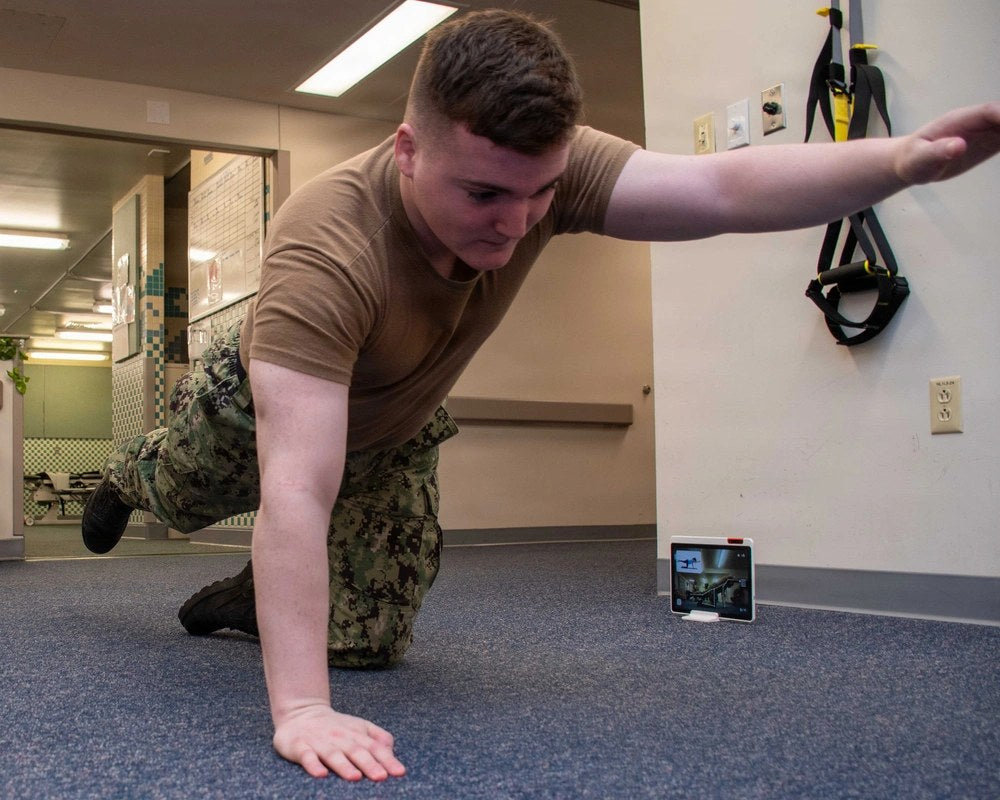
PHOTO CAPTION: U.S. Navy personnel participate in a physical therapy exercise session. U.S. Navy photo / DVIDS.
A brief course of cognitive behavioral therapy helped Veterans with chronic musculoskeletal pain reduce how much their pain interfered with everyday life, with improvements still evident three months after treatment ended, according to a new randomized clinical trial.
Researchers studied 184 Veterans receiving primary care through a Veterans Health Administration medical center. Participants had moderate-to-severe chronic musculoskeletal pain and were randomly assigned either to continue their usual pain care or to receive usual care plus six individual 30-minute therapy sessions delivered over 12 weeks.
The abbreviated treatment, known as brief cognitive behavioral therapy for chronic pain, included education about pain, behavioral and cognitive skills, and strategies intended to help patients maintain those skills after treatment.
Researchers measured participants at the beginning of the study, halfway through treatment, at the end of the 12-week program and again three months later.
Veterans who received the brief therapy showed significantly greater improvement in pain interference at every follow-up compared with those receiving usual pain care alone. Pain interference measures how much pain disrupts areas of life such as physical activity, work and other everyday activities.
The therapy group reached what researchers considered a clinically significant improvement by the midpoint of treatment. Their results continued to improve by the end of the program and remained improved at the three-month follow-up.
The group receiving usual care alone did not reach the same threshold for clinically significant improvement, according to the researchers.
Veterans receiving the brief therapy also reported improvements in physical quality of life and sleep quality.
The findings are notable because traditional cognitive behavioral therapy programs can require substantially more time and repeated appointments. A shorter treatment could potentially make behavioral pain care easier to deliver through primary care, particularly for patients who face scheduling, travel or access barriers.
Cognitive behavioral therapy does not attempt to convince patients that their pain is imaginary. Instead, chronic-pain programs use behavioral and cognitive techniques to help patients manage the ways persistent pain can affect activity, sleep, mood and daily functioning.
The study does not show that six therapy sessions eliminate chronic pain or that the treatment will work equally well for every patient. Its primary finding involved pain interference rather than a cure for the underlying condition.
The participants had chronic musculoskeletal pain and were treated through a single Veterans Health Administration medical center. The study population had an average age of 59, about 85% were men and roughly 77% were White, which may limit how broadly the findings apply to other populations.
Researchers said the shortened format was designed to make evidence-based chronic-pain treatment easier to deliver in primary care and concluded that even a substantially abbreviated behavioral intervention can produce relatively rapid and sustained improvements in pain-related outcomes.
The study was led by researchers affiliated with the VA Center for Integrated Healthcare and was published in the August 2026 issue of Pain. The research was supported through the Department of Veterans Affairs.
Source: “Brief cognitive behavioral therapy for chronic pain rapidly improves pain interference: a randomized controlled trial,” Pain, Vol. 167, No. 8, Aug. 1, 2026. DOI: 10.1097/j.pain.0000000000004028. ClinicalTrials.gov: NCT04724694.
(Source: Manual)