Vance Confronted Over Kuwait Attack Failures
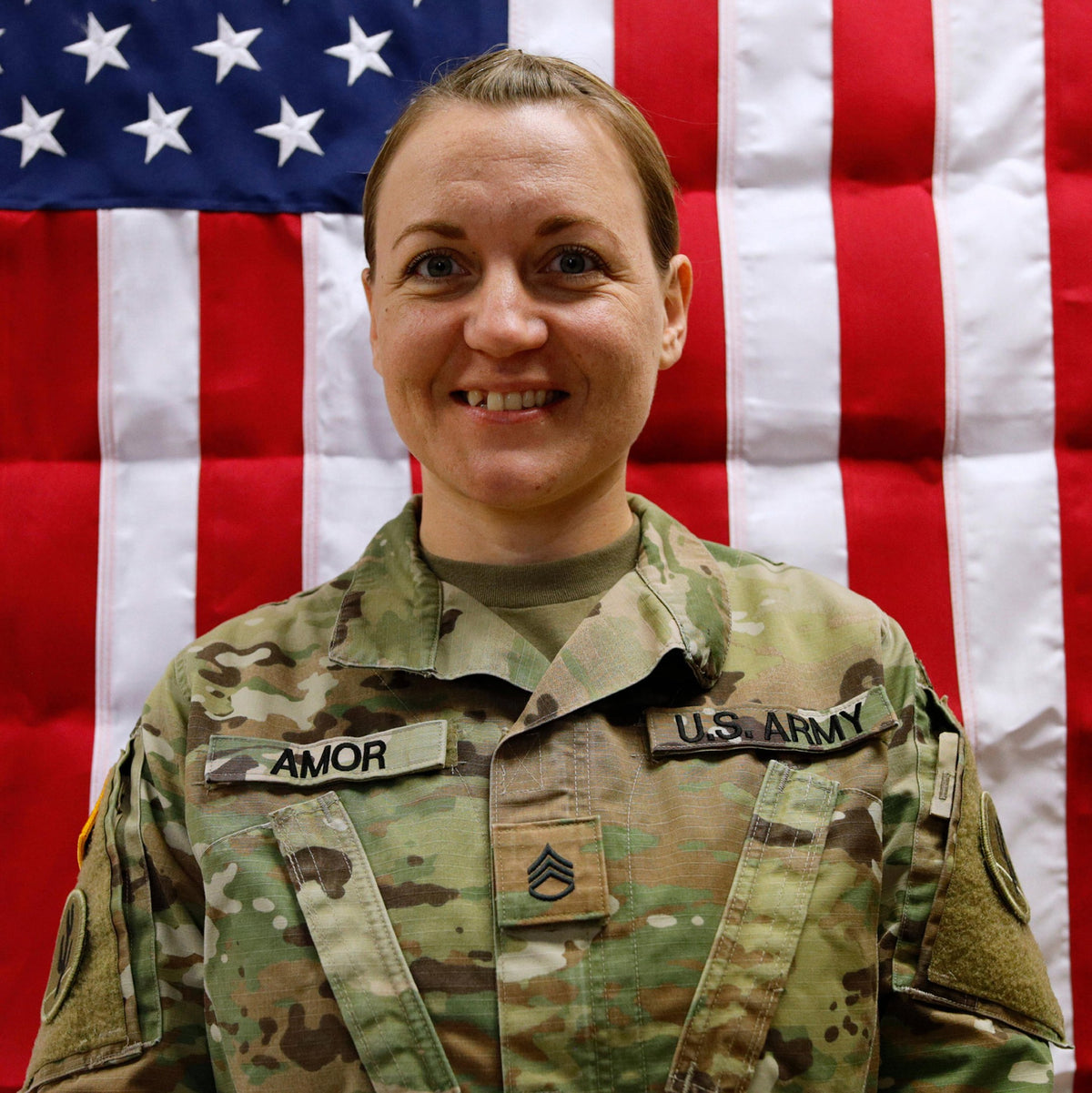
PHOTO CAPTION: U.S. Army Reserve Master Sgt. Nicole Amor, 39, of White Bear Lake, Minnesota, was among six American soldiers killed in an Iranian drone strike at Port Shuaiba, Kuwait, on March 1, 2026. Her husband, Joey Amor, confronted Vice President JD Vance during an October 17 town hall, demanding accountability for alleged military leadership failures preceding the attack. Amor was posthumously promoted to master sergeant. (U.S. Army Reserve photo)
The husband of a U.S. Army Reserve soldier killed in an Iranian drone strike confronted Vice President JD Vance during a nationally televised town hall, demanding accountability for alleged military leadership failures preceding an attack that killed six American service members.
Joey Amor, whose wife, Master Sgt. Nicole Amor, died in Kuwait on March 1, questioned Vance during a CBS News town hall broadcast Saturday, October 17.
Amor said the Iranian drone was responsible for his wife's death but argued that military decisions made before the attack had left American troops unnecessarily vulnerable.
"There's a failure in the leadership," Amor told the vice president.
Vance responded that he had not previously heard the specific concerns Amor was raising. He acknowledged that some troop-location decisions had been a serious mistake and pledged to examine the allegations.
Six American Soldiers Killed in Kuwait
On March 1, an Iranian drone struck a U.S. military tactical operations center at Port Shuaiba, Kuwait, killing six Army Reserve soldiers and wounding dozens more.
The soldiers were assigned to the 103rd Sustainment Command, based in Des Moines, Iowa.
Among the dead was Nicole Amor, 39, of White Bear Lake, Minnesota, a mother of two who had served in the Army Reserve for nearly two decades.
She was scheduled to return home just two days after the attack. She was posthumously promoted from sergeant first class to master sergeant.
The five other soldiers killed were Jeffrey O'Brien, Cody Khork, Noah Tietjens, Declan Coady and Robert Marzan.
The strike occurred one day after the United States and Israel launched military operations against Iran.
Survivors Allege Commanders Ignored Warnings
In the months following the attack, surviving soldiers raised concerns about decisions made by senior military leaders before the strike.
Investigations by CBS News, The Washington Post and The Associated Press documented allegations that commanders had been warned Port Shuaiba was vulnerable to Iranian drone attacks.
Some soldiers said the operations center lacked effective protection against low-flying drones and that alternative locations farther from Iran had been considered.
Others alleged that military leaders dismissed warnings and failed to adequately prepare medical support for a mass-casualty event.
The reporting identified Maj. Gen. John Hinson and Brig. Gen. Clint Barnes as senior commanders whose decisions have faced scrutiny.
The Army has disputed aspects of the survivors' accounts.
Army Central previously said Port Shuaiba had been selected under established operational plans, that protective measures were in place and that commanders assisted with the response following the strike.
Military officials have also said the Army's investigation examined the installation's defenses and the circumstances surrounding the attack.
Vance Says He Was Unaware of Specific Concerns
During the October 17 town hall, Amor directly questioned how the administration intended to hold military leaders accountable.
Vance expressed sympathy for the family and said the conversation was the first time he had heard about the specific failures Amor described.
The vice president acknowledged that some information does not always reach senior officials.
He also said military leaders had recognized problems involving where troops were stationed, describing a troop-positioning decision as a "huge mistake."
Vance said the military had changed some of its tactics to improve protection against drones and other threats.
He declined to describe specific operational changes, citing concerns about revealing information that could assist Iranian forces.
Vance promised to take Amor's concerns seriously and speak with him further after the town hall.
He did not announce disciplinary action against any commander or confirm that every allegation made by surviving soldiers had been substantiated.
Army Investigation Faces Scrutiny
The Army completed an investigation into the Port Shuaiba attack during the summer.
Families received an overview of findings, but the full investigative report has not been publicly released.
Previous reporting indicated the initial review did not assign individual fault or recommend punitive action.
In July, lawmakers led by Sen. Elizabeth Warren of Massachusetts and Rep. Pat Ryan of New York announced a separate investigation into the attack and the medical treatment of wounded personnel.
Their inquiry questioned whether the Army's internal investigation was sufficiently independent and whether troops had received adequate protection and medical care.
In October, additional Associated Press reporting documented continued frustration among survivors and Gold Star families who said they had not received satisfactory answers about the decisions preceding the attack.
The Army has maintained that its review and related processes must account for classified and operationally sensitive information.
A Family Still Seeking Answers
For Joey Amor, the questions extend beyond the Iranian drone that killed his wife.
He wants to know whether failures in planning, intelligence assessments or military leadership contributed to the deaths of the six American soldiers, and whether anyone will be held accountable if those failures are substantiated.
Vance's public commitment creates a new opportunity for those concerns to reach the administration's senior leadership.
As of October 20, no new disciplinary action or additional public investigative findings had been announced in connection with the town hall exchange.
The central questions remain unresolved: whether the attack could have been better anticipated, whether the troops had sufficient protection, and what changes will prevent similar losses in the future.
(Source: OAF Nation)