USS Lincoln Faces Mental Health Strain
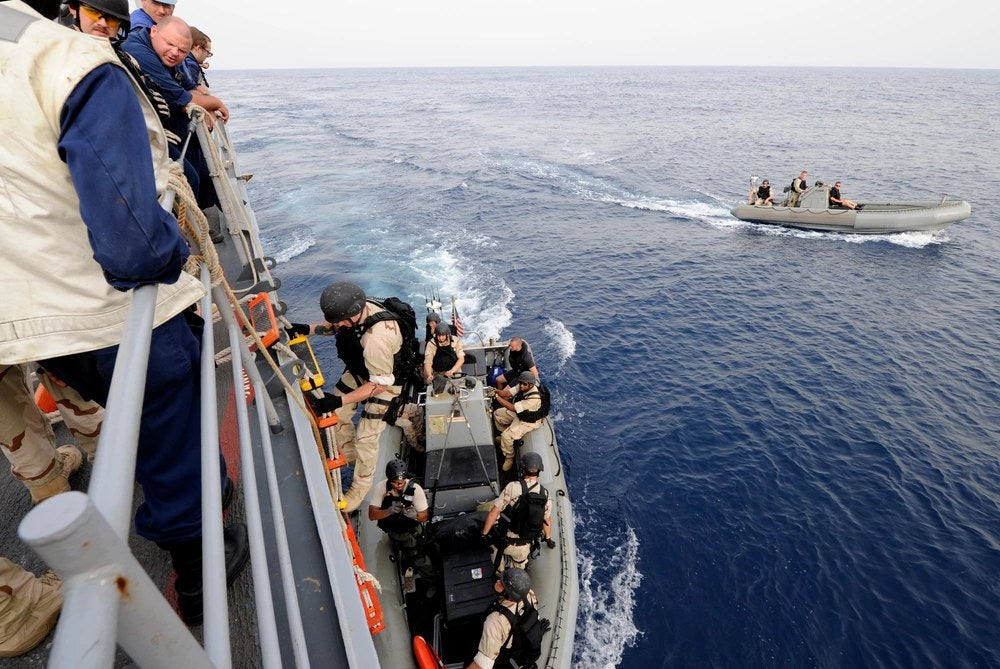
PHOTO CAPTION: Illustrative file photo. USS Abraham Lincoln sailors participate in Applied Suicide Intervention Skills Training in San Diego on Sept. 19, 2023. New reporting from current and former Navy personnel describes sailors aboard deployed carriers waiting weeks or months for mental health appointments as providers struggle with heavy caseloads. (U.S. Navy photo by Mass Communication Specialist 2nd Class Han A. Puyu)
Sailors serving aboard U.S. Navy aircraft carriers say they have waited weeks or even months to see mental health providers as extended deployments put increasing pressure on a system that some current and former Navy personnel say is struggling to keep up.
The problem became particularly stark aboard USS Abraham Lincoln during its prolonged 2026 deployment.
After the ship's deployed resiliency counselor left about six months into the deployment for personal reasons, roughly 5,000 sailors and Marines aboard the carrier were left with two licensed mental health clinicians, according to Military Times.
Those two clinicians were not the only support available aboard the ship.
The Navy previously said Lincoln also had five chaplains, three behavioral health technicians and an embedded integrated prevention coordination counselor.
But those positions do not all provide the same level of clinical mental health care.
The two licensed clinicians were a clinical psychologist and a clinical social worker.
Sailors and mental health professionals interviewed by Military Times said the demand for clinical treatment can overwhelm the limited number of providers aboard a carrier.
One Navy mental health professional said some clinicians increased their schedules from roughly 40 hours per week to as many as 90 hours in an effort to keep up with demand.
The result, according to sailors who served aboard Lincoln and USS Harry S. Truman, can be lengthy waits.
A Lincoln sailor who served during the recent Middle East deployment told Military Times that unless a sailor said they were suicidal, they could wait weeks before receiving an appointment.
A Truman sailor said waits could stretch into months.
The problem is not limited to ships at sea.
Sam Rodriguez, a former sailor who worked with the medical evacuation unit at Naval Medical Center Portsmouth, said a 54 day wait for an initial mental health appointment was not uncommon for sailors seeking care ashore.
The Navy maintains that its staffing levels are based on years of evaluating demand aboard deployed ships.
Cmdr. Katie Pierce, an operational psychologist working with the Navy's suicide prevention team, said one mental health provider can handle approximately 1,600 to 2,500 personnel under the service's planning model.
But providers interviewed by Military Times said conditions during long combat deployments can produce demands that the normal staffing model was not designed to handle.
Lincoln's most recent deployment stretched for roughly nine months and included more than 200 consecutive days in a combat zone.
Acting Navy Secretary Hung Cao said in August that Lincoln had been deployed for 266 days, spent 200 days in a combat zone, flown more than 10,000 sorties and dropped approximately 1.5 million pounds of ordnance.
Cao acknowledged that the crew had been pushed to its limits, while rejecting portrayals of Lincoln sailors and Marines as victims.
He said a small number of mental health cases had been treated aboard the ship with no loss of life.
Concerns about the crew's mental health had already surfaced before the new reporting.
Military Times reported in August that family members said two sailors attempted to jump overboard during the deployment.
The individual circumstances behind those incidents have not been publicly established, so they should not be treated as proof that either sailor had been waiting for mental health care.
The Navy said at the time that it had not identified an increase in reported suicidal ideation or suicide attempts aboard Lincoln and announced that additional counseling resources were being sent to the carrier.
The new Military Times report suggests the strain extends beyond one ship.
Mental health personnel described a system in which therapists must balance long term treatment with the immediate demands of thousands of sailors operating aboard a deployed warship.
One provider said the normal clinical model does not match the reality of a carrier that needs rapid triage while still trying to provide meaningful ongoing treatment.
Administrative requirements can create another burden.
Deployed resiliency counselors are required to document patient information in Navy systems, but unreliable internet connections at sea can leave them with months of paperwork to complete once they return ashore.
The Navy currently has 34 deployed resiliency counselors, filling about 81 percent of authorized positions, according to the service.
Those counselors provide short term therapy for concerns including stress, anxiety, anger and relationship problems, but they are not responsible for treating sailors experiencing suicidal ideation.
Military Times interviewed multiple current and former Navy personnel who said the system is being asked to handle more demand than it was designed for during prolonged combat operations.
For sailors aboard carriers where thousands of people live and work in confined conditions for months at a time, that can mean the difference between asking for help and actually receiving sustained clinical care.
(Source: OAF Nation)