U.S. Unable to Verify Iran Threats
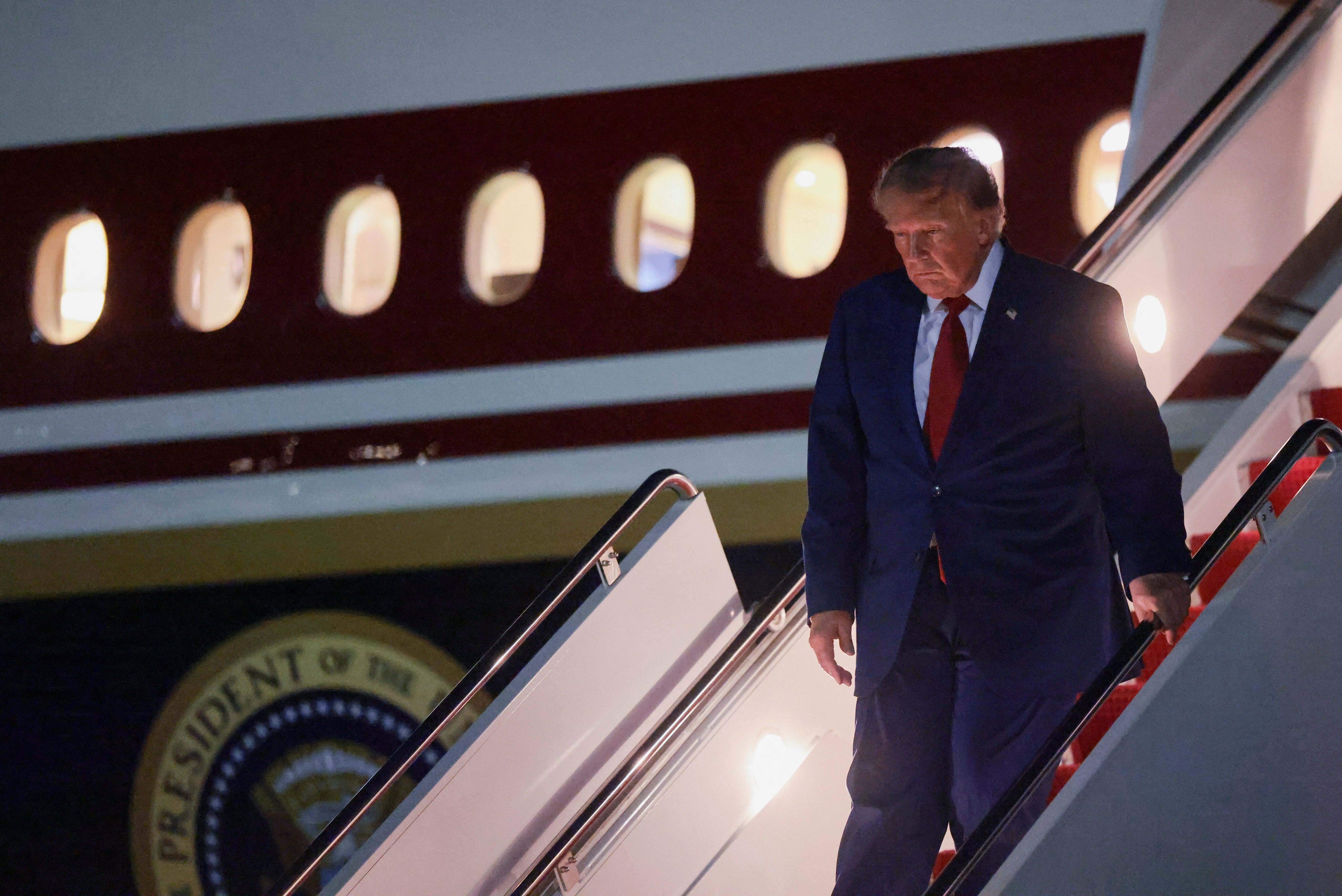
PHOTO CAPTION: U.S. President Donald Trump disembarks Air Force One at Joint Base Andrews, Maryland, U.S., August 11, 2026. REUTERS/Kylie Cooper
WASHINGTON, Aug. 13 — The United States received several warnings from Israel over the past year that Iran intended to assassinate President Donald Trump, including ahead of a secret aircraft switch in Turkey, but U.S. intelligence officials could not independently verify some of the threats, according to a current U.S. official and two former officials.
The warnings were provided to U.S. intelligence agencies and, in some cases, directly to senior White House officials by Israeli officials, the sources said. They included possible plots to shoot Trump with a sniper or recruit someone to attack him with a knife during a large public event.
The tips began before the 12-day war in June 2025 and intensified ahead of the U.S. decision to go to war with Iran in February, the sources said. The most detailed warning came before the NATO summit in Ankara in July, when Israeli officials briefed the White House on intelligence indicating Iran might try to kill Trump, potentially with a shoulder-launched missile while he traveled aboard Air Force One.
The U.S. intelligence community has long assessed that Iran wants retaliation for Trump’s killing of Iranian military commander Qassem Soleimani in 2020. But the CIA has been unable to corroborate some of the specific threats against Trump shared by Israeli intelligence since early last year, the officials said.
In the case of the NATO summit, a Turkish official said the country’s intelligence agencies also had no evidence corroborating the Israeli warning about a threat to Trump. Turkey shared that assessment with U.S. officials.
Despite the lack of independent verification, the White House and Secret Service took precautions, including an extraordinary deception operation during Trump’s Turkey visit. Trump was secretly moved from Air Force One to another aircraft for his flight out of the country.
The episode highlights the role Israeli intelligence has played in Trump administration decisions involving Iran at a time when U.S. and Israeli assessments of Tehran’s capabilities and intentions have sometimes differed. Earlier this year, U.S. intelligence agencies assessed that Iran was not actively building a nuclear weapon, while Israel argued Tehran posed an urgent threat.
Trump nevertheless ordered strikes in Iran in February. Reuters previously reported that Trump also considered Israeli intelligence alleging Tehran had tried to assassinate him when deciding to launch the military campaign.
A spokesperson for the Israeli Embassy rejected the suggestion that Israel was using intelligence sharing to influence U.S. policy toward Iran.
“The same people who claim that Israel is trying to influence U.S. policy through alleged intelligence sharing would just as soon accuse Israel of concealing critical information if it benefited their own agenda,” the spokesperson said.
The White House and CIA declined to comment. Secret Service spokesman Anthony Guglielmi declined to discuss specific intelligence but said the agency remained focused on Trump’s security amid recent assassination attempts and an increase in threats against the president.
“The U.S. Secret Service continuously analyzes a wide range of information to guide our protective operations in real time and across every location we secure,” Guglielmi said.
U.S. and Israeli intelligence assessments diverge
The United States has long relied heavily on Israeli intelligence on Middle East issues, particularly Iran. Israeli intelligence typically moves through formal channels to the CIA or National Security Agency before U.S. analysts assess it, two former U.S. officials said.
U.S. intelligence agencies are not always able to independently verify Israeli reporting and may use other information to judge its reliability and accuracy. During the two U.S. military offensives against Iran, the CIA assessed with “low confidence” some Israeli intelligence concerning Iranian threats, including alleged plans to assassinate Trump, according to one former official and another person familiar with the matter.
It is unclear how widely those assessments were distributed inside the administration. The NSA declined to comment.
Two former U.S. officials also described several instances over the past year in which senior Israeli officials and representatives contacted the White House directly, including calls to the Situation Room, to brief Trump administration officials on Iranian threats.
Those direct contacts have occurred amid strains in intelligence sharing within the Trump administration. Last year, after growing tensions with the Office of the Director of National Intelligence, the CIA stopped working on joint assessments with the National Intelligence Council, the former officials said.
The National Intelligence Council is the intelligence community’s senior analytical body under ODNI and produces assessments intended to reflect the broader view of U.S. intelligence agencies, with the CIA traditionally serving as its largest contributor.
Officials and another person familiar with the matter said fewer recent NIC assessments on Iran have also resulted partly from layoffs at ODNI.
(Source: Reuters)