Air Force Rhabdo Cases Surge 60%
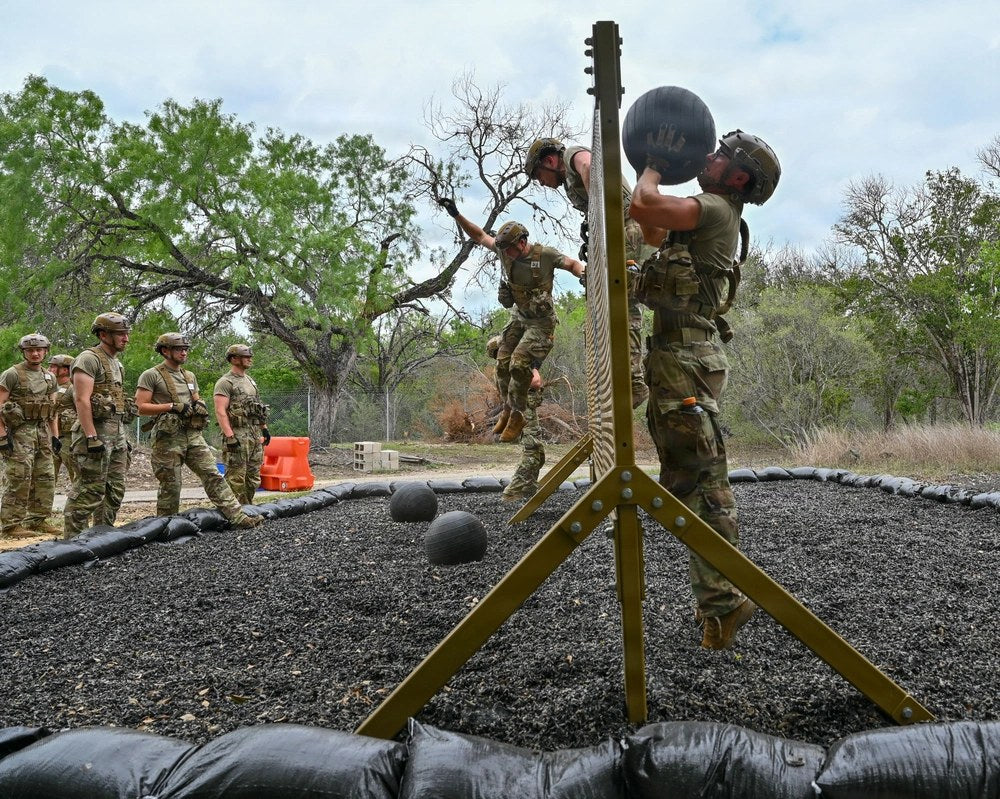
PHOTO CAPTION: Air Force Special Warfare candidates complete an obstacle course during Assessment and Selection at Joint Base San Antonio-Lackland, Texas, April 16, 2026. U.S. Air Force photo by Ava Leone.
The U.S. military recorded 521 cases of exertional rhabdomyolysis in 2025, while the Air Force saw the largest year-over-year increase among the services, according to new military health data highlighted this week.
Exertional rhabdomyolysis, commonly called rhabdo, occurs when intense physical activity causes muscle tissue to break down and release its contents into the bloodstream. In severe cases, the condition can damage the kidneys, trigger dangerous heart rhythms and become life-threatening.
The Air Force said Aug. 10 that its incidence rate for exertional rhabdomyolysis increased 60% from 2024 to 2025. The service recorded 67 cases in 2025, up from 38 the previous year.
Across the Armed Forces, 521 cases associated with physical exertion or heat stress were identified during 2025. About 76% of cases recorded during the military's 2021-2025 surveillance period occurred between April and September.
That seasonal pattern is particularly relevant during summer training, when high temperatures, humidity, dehydration and demanding physical activity can combine to increase risk.
Military recruits have historically been among the groups at highest risk because basic and other entry-level training can rapidly expose people to physical workloads substantially greater than what they were accustomed to before entering service.
Rhabdomyolysis can occur when someone suddenly begins an aggressive workout, dramatically increases training volume or returns to intense exercise after a period of reduced activity.
High-volume repetitive exercise, prolonged workouts and movements involving heavy eccentric muscle contractions — when a muscle lengthens while under load — can also increase risk.
Heat exposure and dehydration can make the problem worse.
Symptoms can include severe muscle pain, weakness, swelling and urine that becomes brown, red or tea-colored. Significant fatigue, nausea, vomiting, fever and a rapid heart rate can also occur.
Symptoms may not appear immediately and can develop one to three days after the muscle injury.
Military medical officials warn that severe muscle swelling and intense pain require prompt medical evaluation. Dark brown urine following strenuous exercise can indicate that muscle proteins are being filtered through the kidneys, potentially putting the kidneys at risk.
Rhabdomyolysis can range from relatively mild cases to medical emergencies.
That wide range has been a focus for military physicians trying to determine which patients require hospitalization, how to identify people at increased risk for complications or recurrence and when a service member can safely return to training.
The Consortium for Health and Military Performance at Uniformed Services University recently developed an updated joint clinical practice guideline for managing exertional rhabdomyolysis in warfighters.
The guidance gives military clinicians recommendations for diagnosis, risk assessment, treatment, evaluation of recurring cases and decisions about returning service members to duty.
Uniformed Services University researchers again highlighted rhabdomyolysis during the 2026 Military Health System Research Symposium, which concluded Aug. 6.
Dr. Francis O'Connor, medical director of the university's Consortium for Health and Military Performance, told attendees that the condition is largely preventable but can become serious. Military clinicians are working to distinguish relatively mild cases from those requiring more aggressive treatment.
Military health officials recommend gradually increasing exercise intensity rather than abruptly beginning unusually strenuous workouts, particularly after time away from training.
Hydration, recovery and recognizing when physical stress has moved beyond normal post-workout soreness are also important parts of prevention.
The Air Force specifically cautioned against attempting extreme exercise challenges without appropriate conditioning and warned leaders running group workouts that participants may enter with significantly different fitness levels.
The latest military surveillance data show that rhabdomyolysis remains an occupational health concern even among populations expected to maintain high levels of physical fitness.
For troops, the difference between an extremely difficult workout and a developing medical emergency may not always be obvious — which is why military researchers and physicians continue to emphasize early recognition.
Source: Defense Health Agency Medical Surveillance Monthly Report; Air Force Materiel Command; Uniformed Services University Consortium for Health and Military Performance.