U.S. Troops Faced Ammo Shortage in Kuwait
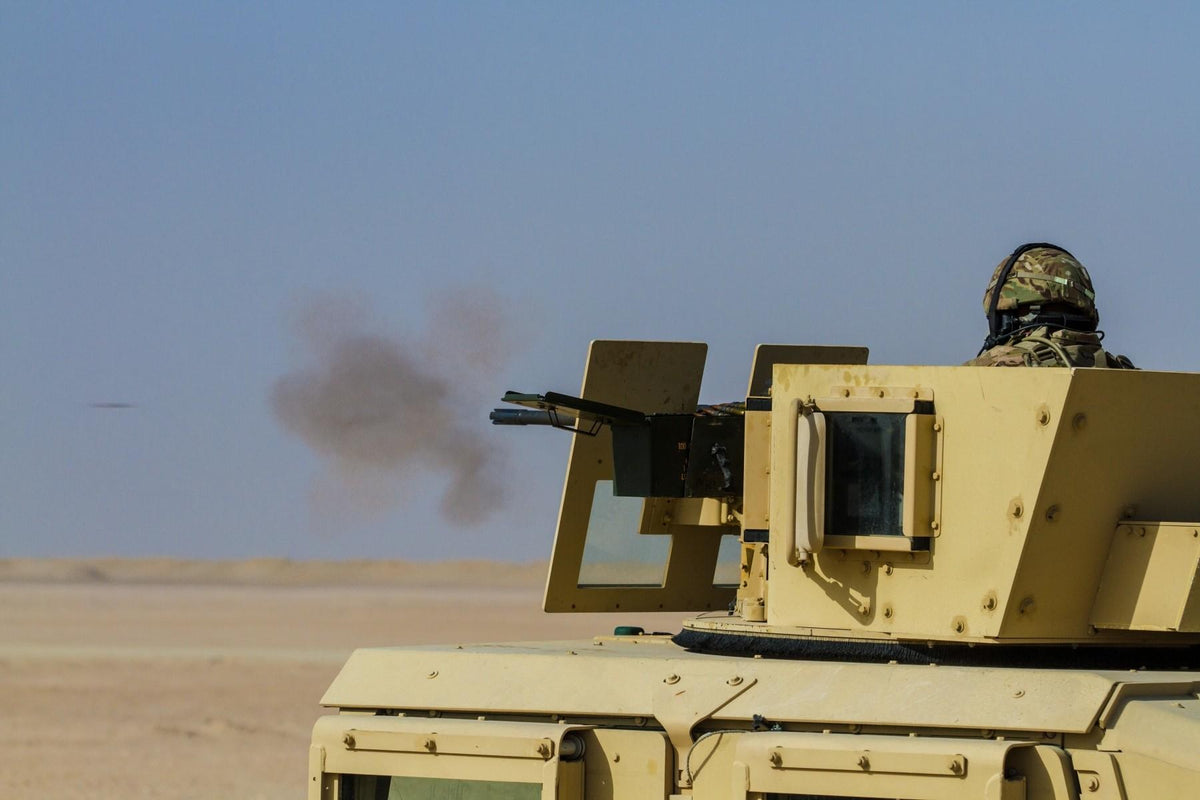
PHOTO CAPTION: A U.S. Marine fires a .50-caliber machine gun during a training exercise at Camp Buehring, Kuwait, in October 2021. Newly published reporting says American soldiers defending the same installation ran critically low on .50-caliber ammunition during Iranian attacks in 2026. U.S. Marine Corps photo by Sgt. Jennessa Davey.
American troops defending one of the U.S. military's major staging bases in Kuwait ran critically low on .50-caliber machine-gun ammunition during Iranian attacks before eventually abandoning the damaged installation, according to newly released reporting and footage.
An October 7 investigation by CBS News revealed new details about conditions at Camp Buehring during the opening months of the war with Iran, including ammunition shortages, repeated enemy attacks and the withdrawal of American troops into the Kuwaiti desert.
The installation, located approximately 25 miles from Iraq's border, has served as a major staging ground for U.S. military operations across the Middle East for more than two decades.
Before the war began, the Pentagon had already dispersed most of the roughly 7,000 American service members stationed at Camp Buehring to reduce their exposure to Iranian attacks.
However, more than 100 soldiers remained at the installation as Iranian missiles, drones and reportedly fighter aircraft struck the base.
According to CBS News, newly obtained videos recorded by someone stationed at Camp Buehring show incoming attacks, explosions and significant damage to military infrastructure.
CBS said it authenticated the footage using embedded metadata and comparisons with photographs documenting damage to the installation.
Three American service members told the network that Iranian F-5 fighter aircraft also participated in attacks on the base.
One eyewitness described the aircraft passing close enough to see the pilots' helmets.
As attacks continued, American personnel faced increasingly serious concerns about their ability to defend the installation.
CBS reported that soldiers ran critically low on .50-caliber ammunition, a critical supply for heavy machine guns used in defensive operations.
A senior Army logistics official confirmed concerns about the availability of .50-caliber ammunition and other advanced defensive munitions, including Patriot missile interceptors.
The remaining soldiers also feared the damaged and increasingly isolated installation lacked sufficient resources to handle a mass-casualty emergency.
One service member told CBS that the attacks had devastated the base and that the remaining troops were eventually forced to leave.
The source also questioned why additional forces had not arrived to reinforce the soldiers who stayed behind.
Ultimately, American personnel loaded their equipment into vehicles and departed Camp Buehring at night, driving into the Kuwaiti desert.
They established improvised forward operating locations where they continued their mission away from the heavily damaged installation.
The relocation did not immediately end the difficulties.
According to U.S. officials cited by CBS, two soldiers were injured by lightning during desert sandstorms in late April. One suffered burns while another sustained a ruptured eardrum.
No American personnel were killed by enemy fire at Camp Buehring or the temporary positions, according to the report.
The troops eventually moved to Camp Arifjan in May before relocating to other assignments.
The revelations raise questions about ammunition availability, defensive planning and support for American personnel operating under sustained enemy attack.
The Defense Department's inspector general previously reported that Iranian strikes hit American military facilities across several Middle Eastern countries and caused billions of dollars in equipment losses.
However, the new footage and service member accounts provide a more detailed picture of what happened to troops defending Camp Buehring.
Defense Secretary Pete Hegseth previously explained that the military had relocated more than 90 percent of American troops from vulnerable bases as part of its defensive preparations before the war.
U.S. Central Command declined to comment on the new CBS findings. The Pentagon also did not directly address the allegations, instead referring to Hegseth's earlier explanation of the military's repositioning strategy.
The newly disclosed details leave questions about whether sufficient ammunition, reinforcements and emergency support were available to the troops who remained at Camp Buehring during the attacks.
(Source: OAF Nation)