Article: U.S. Strikes Iranian Island
U.S. Strikes Iranian Island
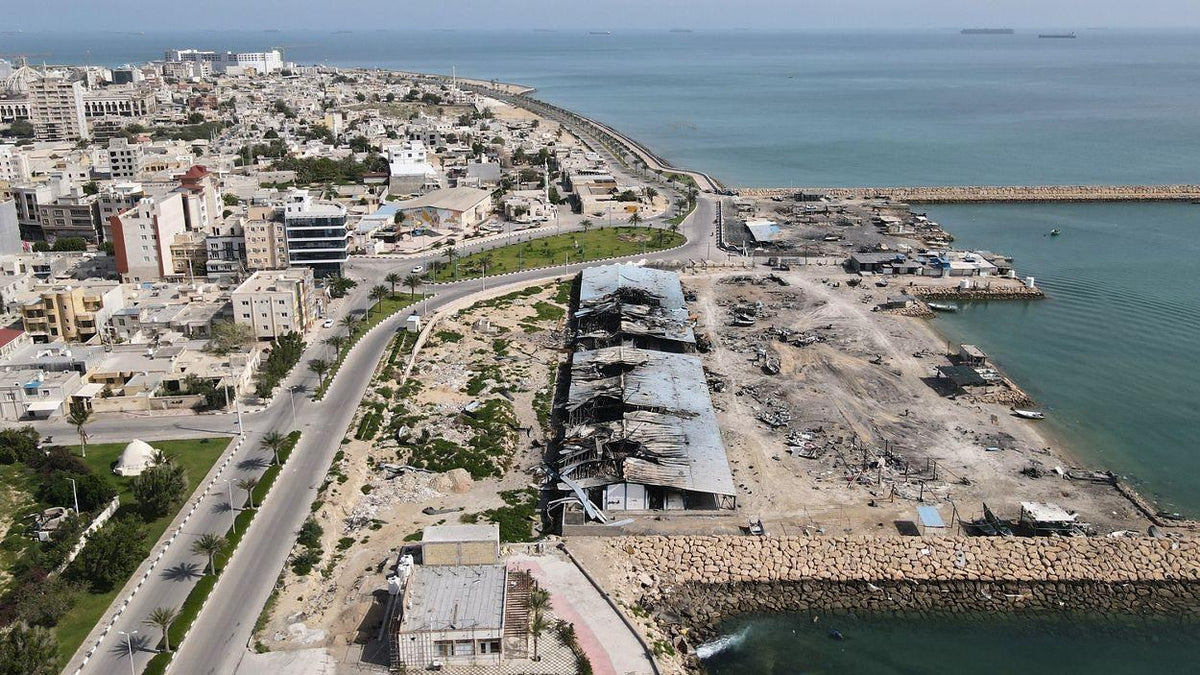
PHOTO CAPTION: Damage from earlier airstrikes is visible on Iran's Qeshm Island in April 2026. The United States conducted additional strikes on the island on November 2 following reports that Iranian forces fired on an American aircraft. (AP Photo/Asghar Besharati. File photo.)
The United States carried out airstrikes against Iranian targets on Qeshm Island in the Strait of Hormuz on Monday, November 2, after Iranian forces reportedly fired on an American aircraft, according to multiple U.S. officials.
The strikes mark another direct military confrontation between American and Iranian forces as Washington attempts to negotiate an end to the months-long conflict.
But the latest reporting also reveals something previously undisclosed: U.S. forces have conducted other limited strikes against Iranian targets in recent weeks without publicly announcing them.
American Aircraft Reportedly Targeted
Two U.S. officials confirmed Monday's operation to ABC News, describing it as a limited defensive action rather than the beginning of another large-scale military offensive.
One official said the strikes were launched in response to an Iranian attack on a U.S. aircraft.
Another official told the Associated Press that American forces targeted Iranian personnel operating surface-to-air missiles against U.S. military assets.
The officials did not publicly identify the type of American aircraft involved, disclose whether it sustained damage, or provide a detailed assessment of the targets struck.
Iranian state television reported explosions on Qeshm Island, a strategically important island near the entrance to the Persian Gulf.
Additional Iranian reports described explosions around nearby Hengam Island and the mainland port city of Bandar Abbas.
U.S. Central Command had not issued a public operational statement confirming those additional locations at the time of the initial reporting.
Earlier Monday, Iranian authorities claimed they had shot down two American RQ-170 reconnaissance drones. An American official disputed that claim, calling it false.
There has been no independently verified evidence establishing that either aircraft was shot down.
U.S. Officials Reveal Earlier Strikes Were Not Announced
One of the more significant details in the new reporting concerns American military operations that had not previously been made public.
According to ABC News, U.S. forces have carried out other limited strikes against Iranian targets in recent weeks.
Officials said those operations were deliberately not publicized because the administration did not want them interpreted as the beginning of a broader return to combat.
The previously undisclosed operations reportedly occurred amid increasing attacks against commercial shipping in the Strait of Hormuz.
U.S. officials have characterized the strikes as defensive measures intended to protect American forces and maritime operations.
However, the military has not released a complete list of the operations, their targets, or assessments of the damage inflicted.
The disclosures demonstrate that direct military engagements have continued even as Washington and Tehran pursue negotiations.
Why Qeshm Island Matters
Qeshm Island occupies a strategically important position in the Strait of Hormuz, the narrow waterway connecting the Persian Gulf with international shipping routes.
The island is near major Iranian naval facilities and shipping lanes used by commercial tankers and military vessels.
Its location makes it particularly significant during the ongoing confrontation over access to the strait.
Iran has used restrictions on shipping and threats against vessels as leverage during the conflict.
The United States has maintained military forces in the region and imposed a naval blockade targeting Iranian ports.
The combination has created repeated opportunities for direct confrontations involving aircraft, ships, drones, and coastal missile systems.
Monday's strikes underscore the danger of those encounters escalating beyond the limited engagements described by U.S. officials.
Strikes Come as Trump Considers His Next Move
The operation occurred just one day before the November 3 U.S. midterm elections, adding another complication to President Donald Trump's decisions about the conflict.
Trump had previously suggested that a larger military offensive against Iran could be considered after the elections.
The administration has also been evaluating diplomatic options.
On Monday, Trump indicated that an agreement with Tehran remained possible, while Vice President JD Vance said the administration had made progress in indirect negotiations.
Iran has separately proposed reopening the Strait of Hormuz under conditions that include ending the American naval blockade and easing sanctions.
No final agreement has been announced.
The contrast is significant: American officials are discussing a possible negotiated settlement while U.S. forces are still conducting military strikes against Iranian targets.
What This Means for U.S. Forces
For American personnel deployed throughout the Middle East, the latest confrontation highlights the continuing operational risks even without a publicly announced return to full-scale fighting.
Military aircraft operating near Iranian-controlled territory may face threats from surface-to-air missiles and other air-defense systems.
U.S. ships and commercial vessels in the Strait of Hormuz also remain exposed to potential attacks.
Officials have not announced new American casualties or confirmed aircraft losses from Monday's confrontation.
They have also not publicly identified the specific aircraft or military units involved.
Although U.S. officials insist the strikes were limited, the possibility of further incidents remains as American and Iranian forces continue operating in the same contested region.
Whether Monday's operation remains an isolated confrontation or becomes part of a larger escalation will depend on the decisions made by both governments in the coming days.
(Source: OAF Nation)