U.S. Prioritizes Munitions for Domestic Use
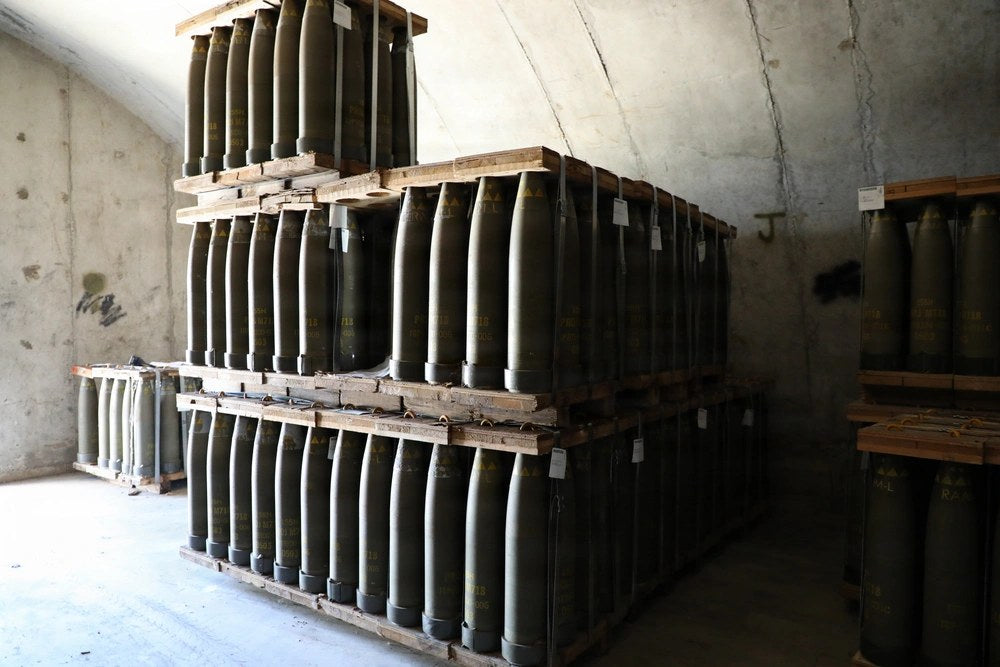
PHOTO CAPTION: U.S. Army projectiles sit ready for issue inside a climate-controlled ammunition magazine at Blue Grass Army Depot in Richmond, Kentucky. U.S. Army photo by Dori Whipple, Joint Munitions Command.
President Donald Trump said Thursday that the United States is currently keeping newly produced munitions for its own forces rather than selling them abroad, while saying weapons sales to U.S. allies will resume.
The comments come amid mounting questions over how months of combat against Iran have affected American ammunition and missile inventories. Trump rejected reports portraying U.S. stockpiles as dangerously depleted and said production is being increased.
“We are taking them for ourselves, the U.S.A., rather than selling them to others,” Trump wrote in a social media post. He added that sales to allies would begin again, though he did not identify which munitions, countries or existing weapons deals could be affected.
Trump also said he intends to seek reimbursement from European countries for military aid and munitions previously supplied to Ukraine, arguing that European governments should have paid for more of the weapons provided during the war with Russia.
His remarks come one month after Reuters reported that the U.S. Army had used “virtually all” of its available stock of certain long-range precision missiles during the Iran war, according to sources familiar with inventory data.
Those weapons included Army Tactical Missile Systems, or ATACMS, and the newer Precision Strike Missile. The weapons allow ground forces to hit targets from long range and are considered important not only for operations in the Middle East but for potential conflicts involving adversaries such as China or Russia.
Trump has repeatedly pushed back on suggestions that the U.S. military is running out of weapons. In August, however, he acknowledged that while inventories of some munitions were extremely large, supplies of other weapons were more limited and said American manufacturers were expanding production.
Pressure on the U.S. arsenal has extended beyond offensive missiles. Recent reporting has also raised concerns about stocks of Patriot interceptors and other precision weapons as the military simultaneously supports overseas commitments and continues operations against Iran.
The Army and defense industry have been expanding ammunition-production capacity. In July, the service broke ground on a new 155mm ammunition production facility at the Iowa Army Ammunition Plant, part of a broader effort to increase the capacity of the U.S. defense industrial base.
Trump’s Thursday statement suggests that rebuilding American inventories is taking priority, at least temporarily, over some foreign weapons sales.
Exactly how broadly that policy applies — and how soon allied sales resume — remains unclear.
Source: Reuters; President Donald Trump; U.S. Army