U.S. Oil Reserve Hits Critical Low
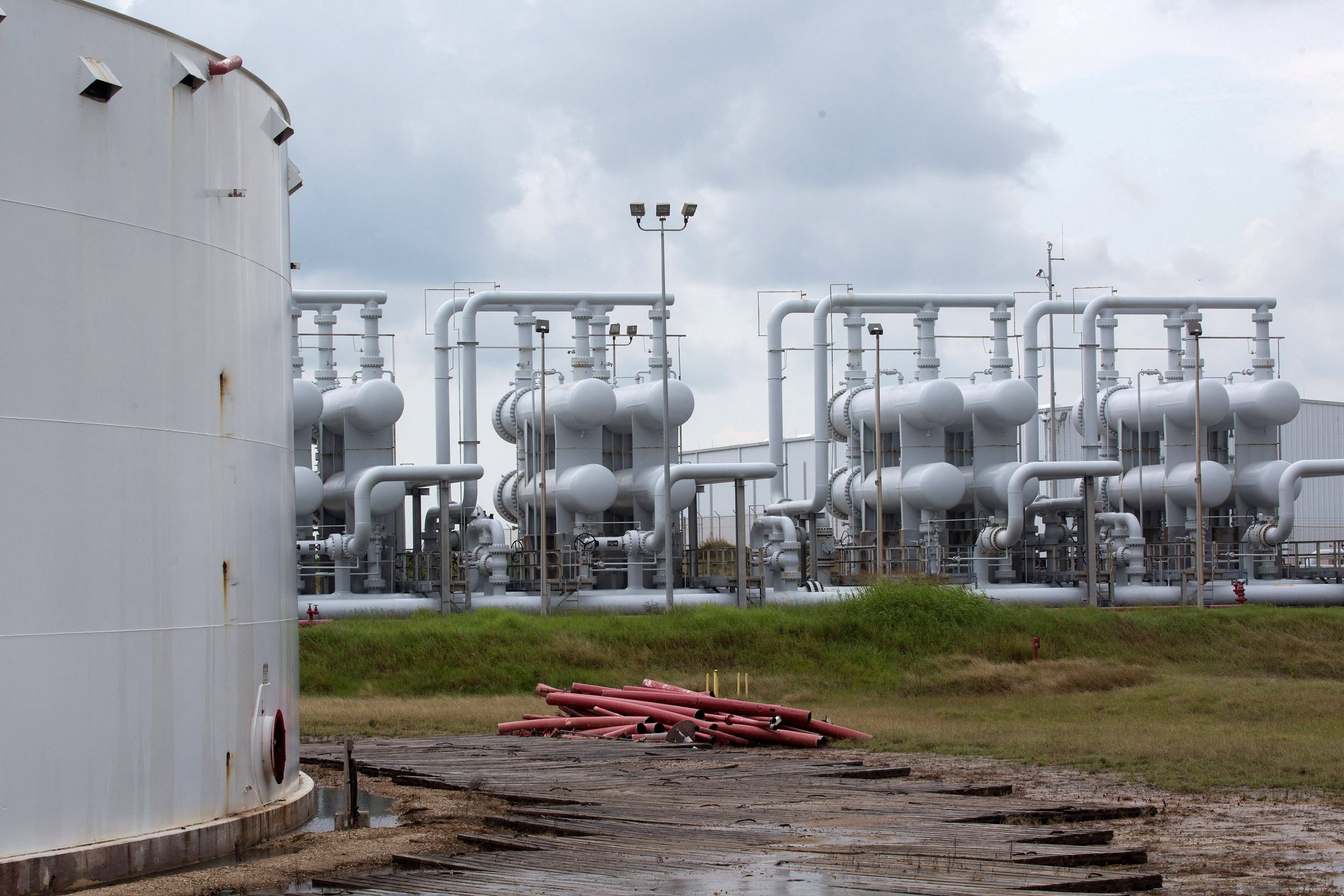
PHOTO CAPTION: FILE PHOTO: An oil storage tank and crude oil pipeline equipment is seen during a tour by the Department of Energy at the Strategic Petroleum Reserve in Freeport, Texas, U.S. June 9, 2016. REUTERS/Richard Carson/File Photo
WASHINGTON/HOUSTON, Aug. 31 — Six months into the U.S.-Israeli war with Iran, Washington may have less ability to calm volatile oil markets after years of withdrawals left the Strategic Petroleum Reserve at its lowest level since 1982.
The reserve, created after the oil crises of the 1970s, stores crude in 60 underground salt caverns along the Texas and Louisiana coasts. After years of releases under former President Joe Biden and President Donald Trump, it now holds 289.7 million barrels.
The Reuters source says that level would fall to about 243 million barrels if Trump releases a final 39 million barrels under a March agreement with the International Energy Agency.
More than 30 countries agreed in March to release a record 400 million barrels in an effort to stabilize markets after the United States and Israel launched the war against Iran on Feb. 28. The U.S. contribution totaled 172 million barrels.
But drawing down the reserve carries physical limits.
Oil inside the caverns, some of which are as tall as the Empire State Building, floats above water. As oil is removed, the water level rises, potentially damaging cavern walls as well as pipes and pumps used to extract the crude.
A Department of Energy source said the reserve’s minimum operating level is 70 million barrels. Siddharth Misra, a petroleum engineering professor at Texas A&M University, said that while 70 million barrels may represent the absolute physical floor, the practical minimum for safe operation is closer to 250 million.
“The core mission of the reserve is to supply the market rapidly during a crisis,” Misra said. “But operating below 250 million barrels pushes the infrastructure into a dangerous zone.”
Misra said his comments did not necessarily represent the position of Texas A&M.
Trump said Sunday that the United States would refill the SPR using Venezuelan oil, but it remains unclear how quickly such a move could replenish the stockpile or ease gasoline prices.
Washington is expected to reach an agreement with Caracas this week aimed at reviving Venezuela’s damaged oil industry, potentially giving the United States control over one-fifth of the country’s vast proven crude reserves.
Replenishing the reserve could take years
The Trump administration released the 172 million barrels from the SPR as a loan, requiring participating companies to repay the crude with interest in the form of roughly 40 million additional barrels.
That extra oil amounts to roughly two days of U.S. consumption. Repayments are not scheduled to begin until later this year and are not expected to be completed until late 2028.
Kevin Book, an analyst with ClearView Energy Partners, wrote Sunday that whether Venezuelan oil is sent directly into the SPR or sold to finance purchases of U.S. crude, fully replenishing the reserve “could take years.” He also said the process could be interrupted by elections in the United States and Venezuela.
The decline in emergency reserves has developed over years.
After the U.S. oil production boom that began in 2008, the country became a net exporter of total petroleum products. As a result, an International Energy Agency requirement that members maintain reserves equal to 90 days of net petroleum imports no longer applies to the United States.
Beginning in 2021, Biden released about 230 million barrels in coordination with international partners to help contain oil prices. That included a record 180-million-barrel sale after Russia invaded Ukraine in 2022.
Washington later began replenishing the reserve, but the Iran war interrupted those efforts.
Funding is another obstacle. Congress provided $171 million last year for SPR replenishment, far short of the roughly $20 billion that would have been needed at the time.
The Department of Energy did not immediately respond to a request for comment.
Legal and infrastructure limits emerge
Federal law also begins restricting the president’s ability to make routine, smaller withdrawals once the SPR falls below 252.4 million barrels. A president could still authorize releases during major emergencies.
A Government Accountability Office report in May said the SPR caverns were generally in good condition but warned about the integrity of wells and other aging infrastructure that requires continued work.
“The SPR’s drawdown, distribution, and fill capabilities are currently limited and are at risk going forward due to longstanding issues with aging infrastructure compounded with ongoing major construction intended to address them,” the GAO said.
The watchdog also found that ongoing construction outages and other problems could restrict how quickly the reserve can be filled or drawn down during an emergency.
Less flexibility if another oil shock hits
Clayton Seigle, a senior associate with the Center for Strategic and International Studies’ energy security and climate change program, described the SPR level as “precariously low” during an Aug. 24 event.
The shrinking U.S. emergency stockpile, combined with a reduced ability by OPEC producers to quickly increase output, means policymakers have less room to respond to another disruption, Seigle said.
Oil-market analysts are also watching the declining reserve closely.
“Would market participants worry more, as we approach the bottom of the barrel? Clearly, yes,” said Lutz Kilian, director of the Center for Energy and the Economy at the Federal Reserve Bank of Dallas.
“They may even question the ability of the release of whatever oil is left to calm the market.”
Kilian said drawing the reserve down much further could eventually contribute to higher oil prices and economic damage if another major supply disruption occurs.
“Once inventories are for all practical purposes exhausted, demand destruction becomes the only response to a shortage of oil,” he said.
(Source: Reuters)