TRUMP'S GAZA PLAN FACES DISARMAMENT CHALLENGE
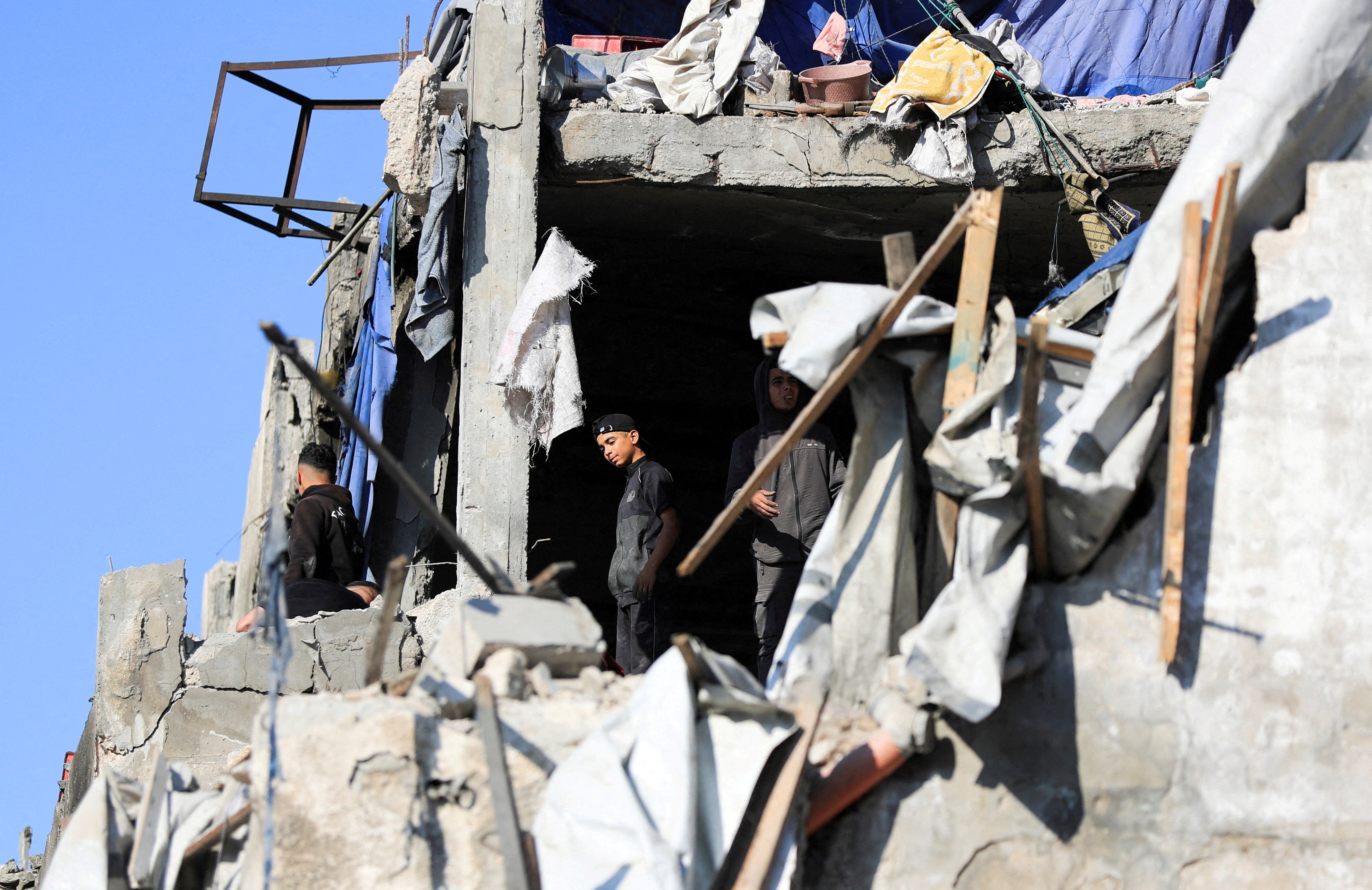
PHOTO CAPTION: FILE PHOTO: Palestinians inspect the damage at the site of an Israeli strike on Wednesday, in Gaza City, May 28, 2026. REUTERS/Dawoud Abu Alkas/File Photo
JERUSALEM, Aug. 10 — President Donald Trump’s latest plan to end the Gaza war calls for Hamas to give up its weapons as Israeli forces withdraw from the territory, but Israel and Hamas remain divided over how that process should happen.
Hamas has endorsed the roadmap, while Israel says it will not withdraw until the group’s disarmament is complete. The text of the plan, however, links the two steps in phases.
What is Trump’s latest Gaza plan?
Trump said July 30 that there had been a breakthrough in talks aimed at advancing a 2025 ceasefire plan, saying Hamas and other Gaza militants had accepted a 15-point roadmap drawn up by his “Board of Peace” to surrender their weapons.
The 2025 ceasefire reduced the level of violence but did not end Israeli attacks in Gaza or secure the disarmament of Hamas and other armed groups. Both issues have been the focus of months of negotiations between the Board of Peace and Hamas in Cairo.
The new roadmap is intended to move that process forward by linking the withdrawal of Israeli forces to disarmament, while Gaza would be rebuilt under a new U.S.-backed Palestinian technocratic government after two years of full-scale Israeli military assault.
What does the roadmap require?
According to text published by the Board of Peace, Israel and Hamas would immediately halt “all military operations” in Gaza. Israeli withdrawals would then be tied to the disarming of all militias, including Hamas.
The National Committee for the Administration of Gaza, the proposed technocratic government, would take over civilian administration and oversee a process to “decommission and store heavy weapons, military production sites, depots of weapons, and tunnels.”
A temporary peacekeeping force known as the International Stabilization Force, or ISF, would deploy into areas vacated by Israeli troops. The force would also train new Palestinian police and help support humanitarian aid deliveries.
What is happening in Gaza now?
Israel has reduced its attacks since Trump announced the latest plan. Israeli officials say the military will still respond to immediate threats but will no longer carry out targeted assassinations.
Despite the October 2025 ceasefire, Israel had continued near-daily airstrikes in Gaza. Gaza health authorities say those attacks have killed more than 1,200 Palestinians, most of them civilians, while four Israeli soldiers have been killed by Gaza militants during the same period. Hamas does not release figures for its own war dead.
Israel says its strikes have targeted threats to its forces or militants involved in the 2023 Hamas attacks that triggered the war.
The October ceasefire left Israeli forces controlling more than half of Gaza, a share that has since expanded to about two-thirds. In those areas, Israeli forces have bulldozed remaining buildings, destroyed Hamas tunnels and ordered residents to leave.
Nearly all of Gaza’s population of about 2 million people is now confined to a narrow strip of Hamas-controlled territory along the coast, with many living in tents or damaged buildings.
The Board of Peace has meanwhile begun establishing a base in Israel near the Kerem Shalom crossing that could serve as a logistics and staging site for ISF troops. Diplomats say the force is still likely months away from deployment.
Morocco and Uganda have pledged troops, while Kosovo, Albania and Kazakhstan have committed military planners and medics. Indonesia, which had previously offered thousands of military personnel for medical and reconstruction roles, says its talks are currently on hold.
Where do Israel and Hamas disagree?
Israeli Prime Minister Benjamin Netanyahu said Sunday that Trump’s latest plan was unacceptable in its current form, though Israel remained in discussions with Washington. He repeated that Israeli forces would not withdraw until Hamas had completed disarmament.
Hamas endorsed the roadmap but objected after the Board of Peace later said on X that the group should also surrender light weapons such as guns and that Israel would withdraw only after disarmament was complete.
The written roadmap instead links disarmament and Israeli withdrawal in phases.
Nickolay Mladenov, the Board of Peace’s Gaza envoy, told Israel’s Channel 12 News on Sunday that the process would proceed “sector by sector.” Once a designated area was verified as effectively free of weapons, with arms stored and rendered unusable, Israeli forces would withdraw from that area, eventually leaving Gaza entirely, he said.
Hamas says it is bound only by the original roadmap text, which provides 14 days to establish a disarmament timetable. That deadline can be extended, and Mladenov said negotiations were continuing.
(Source: Reuters)