Trump Says U.S. No Longer Needs Iran Deal
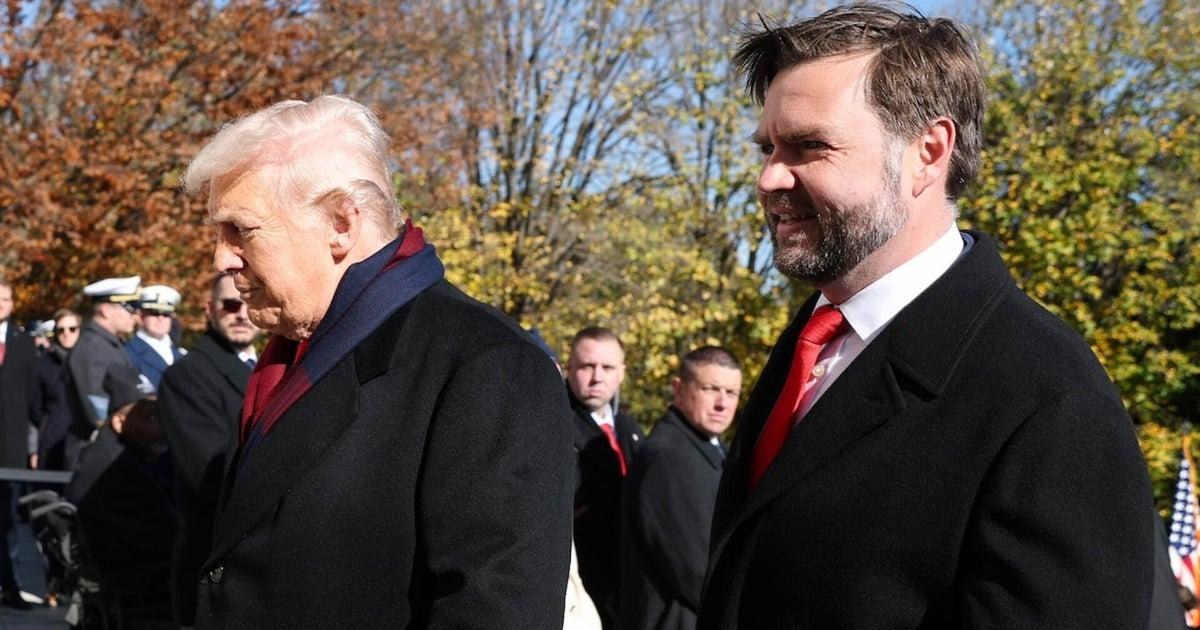
PHOTO CAPTION: President Donald Trump and Vice President JD Vance arrive for a Veterans Day ceremony at Arlington National Cemetery in Virginia on November 11, 2026. The following day, Trump said the United States no longer needed an agreement with Iran and directed Vance to focus on domestic investigations. Vance had been involved in diplomatic efforts to end the conflict and previously questioned whether the war was worth its cost. (Reuters file photo by Kylie Cooper.)
President Donald Trump declared Thursday that the United States no longer needs an agreement with Iran, directing Vice President JD Vance to focus on alleged domestic corruption instead of negotiations aimed at ending the ongoing war.
The November 12 announcement comes as the administration faces growing pressure over the conflict, rising economic costs and Republican losses in last week's midterm elections.
Vance, a Marine Corps veteran who helped lead previous negotiations with Iran, has publicly questioned whether the war was worth its political and economic consequences.
The vice president had also been exploring renewed diplomatic contacts with Iranian officials.
Trump's latest statement now raises questions about whether those efforts will continue and what his position means for American service members involved in the conflict.
The president has not announced a formal end to every diplomatic channel. Nor has he announced a withdrawal of U.S. forces or a new major military offensive.
Trump Says America Does Not Need an Iran Agreement
In a social media post Thursday morning, Trump said he wanted Vance to concentrate on investigating what he described as widespread crime and corruption in Democratic-led cities and states.
The president argued that addressing those allegations could produce substantial savings for the federal government.
He then turned to Iran.
"We don't need a deal with Iran. Those days have long since passed," Trump wrote.
Trump also claimed the United States controlled substantial Iranian financial resources and the Strait of Hormuz.
Those statements reflect the president's description of American leverage. They do not, by themselves, establish that every disputed shipping route is operating normally or that the United States has secured an internationally recognized settlement over Iranian assets.
The announcement represents a significant change in emphasis from recent diplomatic efforts to negotiate an end to the fighting.
But it remains unclear whether Trump intends to suspend all negotiations or is seeking to increase pressure on Iran before any future agreement.
Vance Had Been Working Toward a Negotiated End
Vance has played a prominent role in attempts to resolve the conflict.
Earlier this year, he helped lead negotiations that produced a temporary truce, although the arrangement ultimately collapsed.
In recent days, according to The Washington Post, Vance had been exploring additional contacts with hard-line officials in Tehran.
The reported discussions were intended to determine whether a new agreement could reopen the Strait of Hormuz and place restrictions on Iran's nuclear activities.
The effort followed months of mediation by Qatar and other regional governments.
Iran has demanded relief from American economic restrictions, including the U.S. blockade of Iranian ports.
Washington has insisted that any settlement address Iran's nuclear program and broader security concerns.
Those disagreements have repeatedly prevented diplomatic initiatives from producing a lasting agreement.
Trump's decision to assign Vance a different priority now creates uncertainty about who, if anyone, will lead the next phase of direct American outreach.
Other U.S. representatives, including Steve Witkoff and Jared Kushner, have participated in earlier diplomatic efforts.
Their involvement means Vance's reassignment would not necessarily eliminate every possible channel of communication.
Vance Questioned Whether the War Was Worth Its Cost
The disagreement follows unusually direct public remarks from the vice president after the November 3 midterm elections.
On November 4, Vance attributed Republicans' electoral losses in large part to dissatisfaction with the Iran war.
"The reason we lost is the war," Vance wrote on X.
He challenged supporters of the conflict to explain whether the political consequences were justified.
The vice president also defended earlier advice to pursue a diplomatic resolution and end the fighting.
Those comments stood out because Vance had previously defended the administration's military actions even while advocating restraint in other foreign policy debates.
Trump responded at the time by acknowledging that the war had influenced the election.
But he continued to defend the decision to launch military operations against Iran, arguing that preventing the country from acquiring a nuclear weapon justified the action.
The two leaders therefore agree that the conflict has produced significant domestic consequences, but their public statements reflect different emphases on its costs and the path forward.
Eight Months of War and an Unresolved Strait of Hormuz Crisis
The United States and Israel began major military operations against Iran on February 28, 2026.
The fighting has since expanded into a prolonged regional confrontation involving naval operations, airstrikes, attacks on commercial shipping and diplomatic efforts to negotiate a settlement.
The Strait of Hormuz remains central to the dispute.
The waterway connects the Persian Gulf to the Gulf of Oman and is a major route for international oil and gas shipments.
Iranian actions have disrupted maritime traffic, while the United States has maintained economic and military pressure through a blockade targeting Iran.
The conflict has contributed to higher energy prices and disruption throughout the region.
American military operations have continued even while officials pursue negotiations.
Recent reports have described strikes near Iran's Qeshm Island, attacks on commercial vessels and continuing threats to military installations.
For U.S. personnel operating in the Middle East and supporting missions from bases elsewhere, the conflict remains an active operational commitment.
Trump's Thursday announcement does not resolve those military requirements.
Negotiators Were Still Searching for a Compromise
As recently as November 9, Trump met with Qatar's prime minister, Sheikh Mohammed bin Abdulrahman Al-Thani, as regional governments sought to prevent another major escalation.
Reuters reported that the Qatar-led diplomatic effort focused on a possible agreement involving shipping access, sanctions, Iranian financial assets and nuclear inspections.
One proposed framework would have involved reciprocal steps by Washington and Tehran.
Iran would reopen maritime access through the Strait of Hormuz, while the United States would relax elements of its blockade and financial restrictions.
Broader negotiations would then address Iran's nuclear activities.
American officials were skeptical of the Iranian terms.
Iranian representatives argued that sanctions relief and other concessions were necessary before a durable settlement could be reached.
On November 9, Trump also said he would hold off on additional major strikes for the time being following appeals from regional partners.
He indicated that American forces remained prepared to resume operations if required.
That position left military pressure and negotiations operating alongside each other.
Thursday's statement raises a new question about whether the White House still considers diplomacy an important part of that strategy.
What Does This Mean for U.S. Troops?
For American service members, the immediate significance is uncertainty rather than a confirmed change in military orders.
The president has not announced the end of American combat operations.
He has also not announced a new deployment, an immediate troop withdrawal or a decision to launch another large-scale attack.
U.S. forces remain responsible for their assigned missions, including maritime security, force protection and operations supporting the broader conflict.
A suspension or reduction in diplomatic activity could complicate efforts to reach a negotiated end to the fighting.
However, Trump's remarks do not establish that negotiations have permanently ended.
Nor do they prove that renewed military escalation is imminent.
Any practical change to U.S. military operations would require additional decisions and orders.
A Political Disagreement With Military Consequences
The public exchange comes during an unusual period for the administration.
Republicans lost control of both chambers of Congress in the November 3 elections, and Vance has argued that voter frustration with the Iran war was a central reason.
The vice president has emphasized the conflict's political and economic costs.
Trump continues to defend the military campaign and argues that the United States has sufficient leverage to pressure Iran without accepting a negotiated agreement.
Those differing positions matter because both men have been involved in decisions about the war.
Vance's diplomatic role has been particularly visible.
If his latest assignment removes him from active negotiations, the White House will need to determine whether another official takes over that responsibility or whether the diplomatic effort slows.
The administration has not provided a complete explanation of its next steps.
What Happens Next?
For now, Trump's statement establishes a change in the vice president's publicly assigned priorities.
Vance has been directed toward domestic investigations, while Trump says the United States no longer needs a deal with Iran.
The president has not formally declared all negotiations terminated.
Qatar and other regional governments may continue attempting to mediate, and Washington retains the ability to resume talks through other officials.
The larger unresolved issue is how the United States intends to bring the conflict to an end.
More than eight months after the war began, American forces remain engaged, the Strait of Hormuz remains contested and diplomatic proposals have repeatedly failed to resolve the major disagreements.
Thursday's announcement does not answer whether the administration intends to rely primarily on continued economic pressure, further negotiations or additional military action.
For the troops carrying out the mission, those decisions remain consequential even as the political debate over the war intensifies at home.
(Source: OAF Nation)