Trump Halts Army Explosive Disposal
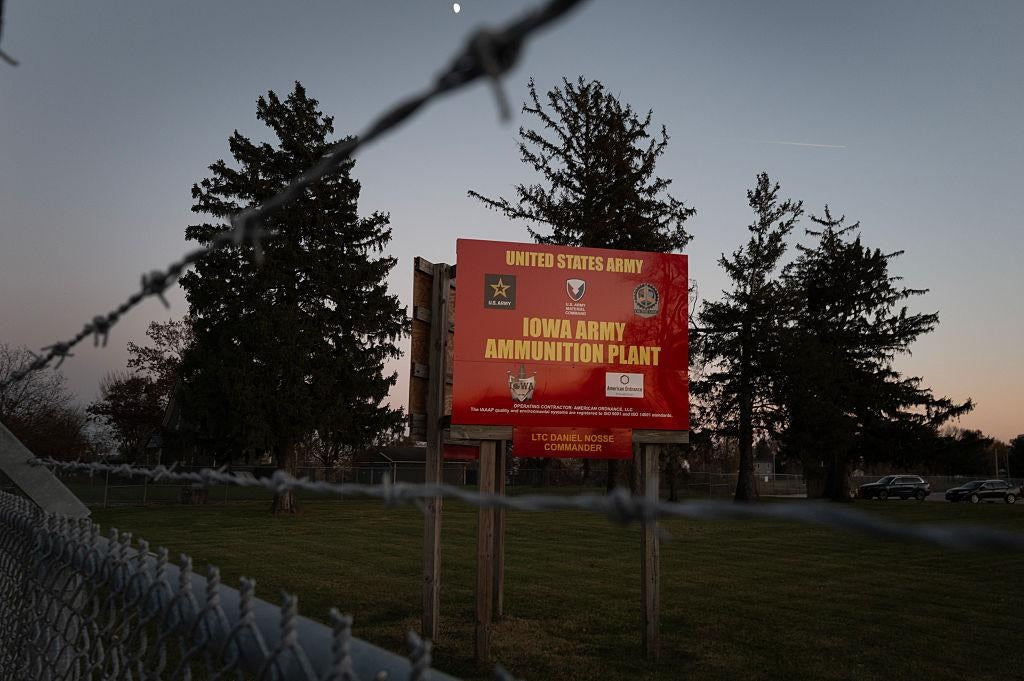
PHOTO CAPTION: The entrance sign at the Iowa Army Ammunition Plant in Middletown, Iowa, photographed September 23, 2026. President Donald Trump ordered the Army on November 23 to pause its planned detonation of 68 barrels of deteriorating lead azide until a federal appeals court agrees the operation can proceed. (U.S. Army photo by Lori McFate.)
President Donald Trump has ordered the U.S. Army to halt its planned destruction of nearly 10,000 pounds of unstable explosives at an ammunition plant in Iowa, despite warnings from military officials that the material could detonate unexpectedly as temperatures fall.
The order, announced Monday, November 23, follows a federal appeals court's temporary block on the operation and growing concerns from nearby residents about toxic lead contamination.
The Army says the explosives have deteriorated to the point where even moving them could trigger a deadly accident.
But the alternative the military selected, destroying the material in two controlled detonations, could send lead-contaminated dust into surrounding communities.
After months of planning, the Army is now facing a situation where both acting and waiting carry potential consequences.
68 Barrels of Explosives That Have Become Too Dangerous to Move
The problem involves 68 barrels containing approximately 9,700 pounds of degraded lead azide stored at the Iowa Army Ammunition Plant in Middletown.
Lead azide is a highly sensitive explosive compound used in detonators and other military munitions.
The barrels had been stored for more than two decades in earth-covered ammunition storage bunkers.
In March 2026, Army personnel discovered that the material was deteriorating.
Changes in the liquid used to store the compound had allowed explosive crystals to form inside the barrels, including around their lids.
That created an increasingly dangerous situation.
According to Army officials, friction involving those crystals could initiate an explosive reaction.
Cold weather presents an additional problem. As temperatures fall, the remaining liquid becomes more susceptible to freezing, potentially increasing the material's sensitivity.
Military officials have warned that an uncontrolled explosion could endanger personnel and surrounding communities.
The Army and Environmental Protection Agency concluded that attempting to move or chemically process the material could create an unacceptable risk of accidental detonation.
Their proposed solution was to destroy the explosives where they were stored.
The Army Planned Two Explosions, but Residents Feared the Fallout
The original plan called for two controlled detonations at the ammunition plant on November 20.
The Army warned residents to expect loud explosions, ground vibrations, and a dust plume containing lead.
People living in a nearby Middletown neighborhood were advised to temporarily leave their homes because of the potential for localized window damage.
The military also established environmental monitoring procedures and planned measures such as soil wetting and earthworks to help reduce the spread of contaminated dust.
But the proposal raised concerns among residents and environmental organizations.
Lead is toxic, and exposure to contaminated dust can present health risks.
Some residents began preparing to seal windows and doors, while others questioned how far the plume might travel if winds shifted.
Environmental organizations also argued that federal officials had not adequately considered alternatives to open detonation or provided sufficient information to affected communities.
On November 19, the Iowa Environmental Council and the Sierra Club's Iowa chapter, represented by Earthjustice, challenged the EPA's emergency permit in federal court.
That same day, the U.S. Court of Appeals for the Eighth Circuit temporarily stayed the permit while considering the challenge.
The court's action paused the permit; it did not represent a final ruling that the Army's disposal plan was unlawful.
Army Warned Waiting Could Make the Situation Worse
The Army initially postponed the planned November 20 detonation until November 23.
Military officials said they were approaching a dangerous weather window, with temperatures expected to drop below freezing.
In a court filing over the weekend, the Justice Department argued that a controlled detonation was necessary to prevent the greater threat of an uncontrolled explosion.
The government also notified the court that the Army intended to invoke an emergency legal exception that it argued would allow the operation to proceed without relying on the contested EPA permit.
By November 22, the Army had rescheduled the operation for Wednesday, November 25, citing more favorable weather conditions and additional time to position safety measures.
The revised schedule did not resolve the legal dispute.
Trump Orders the Army to Stop Until the Court Agrees
On Monday, Trump announced that he had directed the military not to proceed until the Eighth Circuit approved the operation.
In his public statement, Trump indicated that he believed the dangerous material should ultimately be destroyed but wanted the court's agreement before the Army acted.
He also addressed Iowa's incoming governor, Rob Sand, and raised the possibility of holding him responsible if the operation remained blocked and a subsequent accident caused harm.
Sand had previously warned that the available options were dangerous and questioned why the problem had reached such an urgent stage.
The president's announcement adds another complication to the Army's disposal plan.
Military officials have warned that delaying action could increase the risk of an uncontrolled explosion, while environmental organizations continue to challenge whether the planned detonation offers adequate protection to surrounding communities.
What Happens to the Explosives Now?
For now, the deteriorating lead azide remains at the Iowa Army Ammunition Plant.
Trump's announcement means the military has been directed to wait for further court action rather than proceed under the emergency authority it had previously asserted.
The government maintains that destroying the material in place is the safest available option.
Environmental organizations dispute whether the alternatives and potential contamination risks have been adequately evaluated.
Neither position eliminates the danger posed by thousands of pounds of unstable explosives.
The immediate question is whether the Army can obtain the necessary legal approval before deteriorating conditions make the material even more hazardous.
Until then, the same 68 barrels that prompted months of emergency planning remain inside the ammunition plant, with the military, the courts, and nearby residents waiting for a resolution.
(Source: OAF Nation)