SUPPRESSOR BLOWBACK HEALTH RISKS QUESTIONED
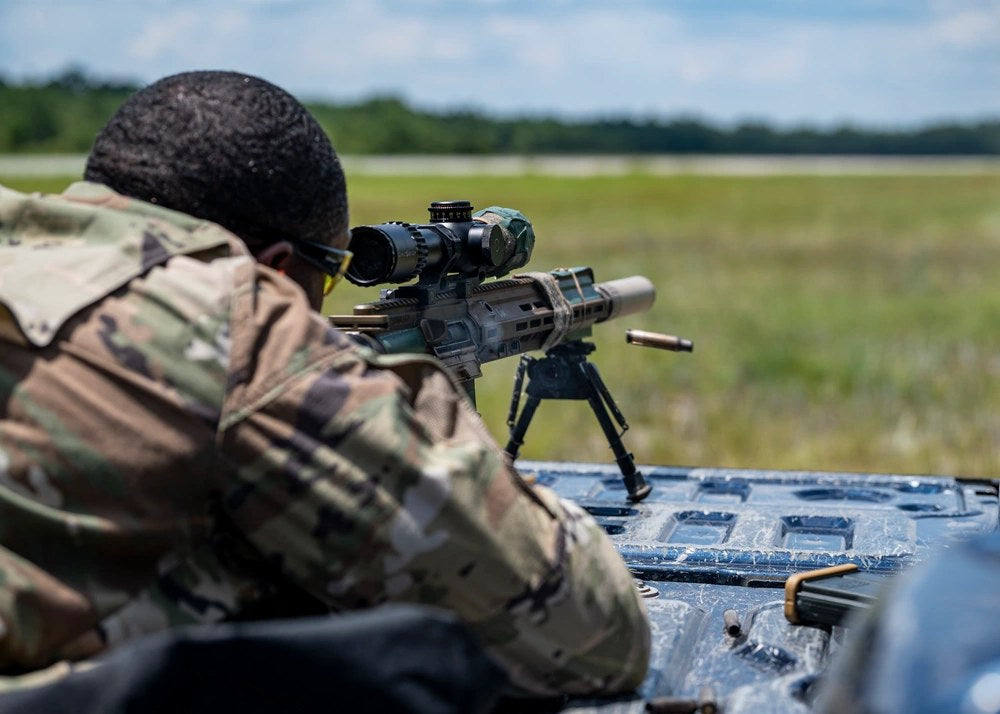
PHOTO CAPTION: Chief Master Sgt. Harold Davis fires a suppressed M110A1 squad designated marksman rifle at Moody Air Force Base, Georgia, July 12, 2024. Credit: U.S. Air Force photo by Airman 1st Class Leonid Soubbotine
Suppressors have become increasingly common on military weapons because they reduce noise, muzzle flash and blast exposure. But veterans, researchers and special operations advocates are raising another question: what happens to the gases and microscopic particles pushed back toward the person firing the weapon?
Some special operations veterans describe finishing heavy range sessions with a layer of dark residue covering their faces, necks and hands — and sometimes getting into their mouths. Researchers are examining whether repeated exposure to that mixture of gases and metal particulates could create health risks that have received far less attention than hearing loss or blast overpressure.
The concern centers on what shooters often call “blowback.”
When a firearm is discharged, burning propellant produces gases and particulate matter. A traditional suppressor slows and contains some of those gases at the muzzle to reduce sound and visible signature, but increased pressure can also force material back through the weapon toward the shooter.
The Special Operations Association of America has urged the military to pay more attention to that exposure as suppressors become more widespread.
Operators interviewed by the organization described what one called a thick layer of grime or dust covering their head, face, neck and hands after extended shooting. The residue can include compounds and metals produced during gunfire.
Those emissions can include carbon monoxide, hydrogen cyanide, ammonia, lead, copper and zinc, according to weapons-emissions research and testing cited by researchers studying the issue.
There is already evidence that heavy exposure to firearms emissions can affect the body.
A controlled Norwegian military study involving 54 healthy volunteers found measurable reductions in lung function after participants spent an hour firing military rifles. Researchers concluded that exposure to fumes from military weapons could pose a respiratory hazard for troops who conduct frequent live-fire training or operate in enclosed environments.
That research did not specifically prove that suppressors caused the effects.
And that distinction is important.
Scientists have not established that suppressor blowback itself causes the wide range of long-term illnesses now being discussed by advocates. Special operations personnel can simultaneously be exposed to blast overpressure, breaching charges, lead, exhaust, burn pits and other hazards, making it difficult to isolate a single cause.
Dr. Chris Palmer, chief scientist for suppressor manufacturer HUXWRX Safety Co., reviewed more than 100 studies involving weapons emissions and related occupational exposures. He argues that repeated exposure to gunfire byproducts deserves significantly more attention, particularly among personnel who shoot frequently.
Palmer’s affiliation with a suppressor manufacturer is also relevant. HUXWRX sells suppressors specifically designed to redirect gases away from the shooter, meaning the company has a commercial interest in technologies intended to reduce blowback.
The concern, however, extends beyond a single manufacturer.
U.S. Special Operations Command told the Special Operations Association of America that requirements for its suppressors include reducing noxious fumes and particulate matter as part of both weapons programs and operator-health initiatives.
The Army has also encountered the problem during development of its Next Generation Squad Weapon systems. Concerns over toxic fumes from suppressed firing contributed to design changes intended to reduce the amount of gas reaching the shooter.
At the same time, suppressors can provide significant health and battlefield benefits.
Army blast-overpressure guidance notes that suppressors can reduce exposure to the pressure generated by weapons fire. They also reduce damaging noise and muzzle flash while making it harder for an enemy to identify where shots originated.
That creates a complicated tradeoff.
Removing suppressors is not necessarily the answer. Instead, advocates want the military to measure the gases and particles troops are exposed to, compare suppressor designs and incorporate toxic-exposure standards into future weapons purchases.
Newer “flow-through” and low-back-pressure suppressors are designed to move more gases forward rather than forcing them back through the firearm toward the shooter.
For service members who have spent years firing suppressed weapons, the growing attention may raise a familiar question from other military exposure issues: what were they breathing during all those hours on the range?
For now, researchers do not have a definitive answer about the long-term health consequences of suppressor blowback.
But advocates argue that the exposure should be measured before another generation of troops spends years discovering the answer firsthand.
Sources: Military Times; U.S. Army; Special Operations Association of America; U.S. Special Operations Command; published firearms-emissions research
(Source: OAF Nation)