Russia Claims 1,200 Drones Intercepted
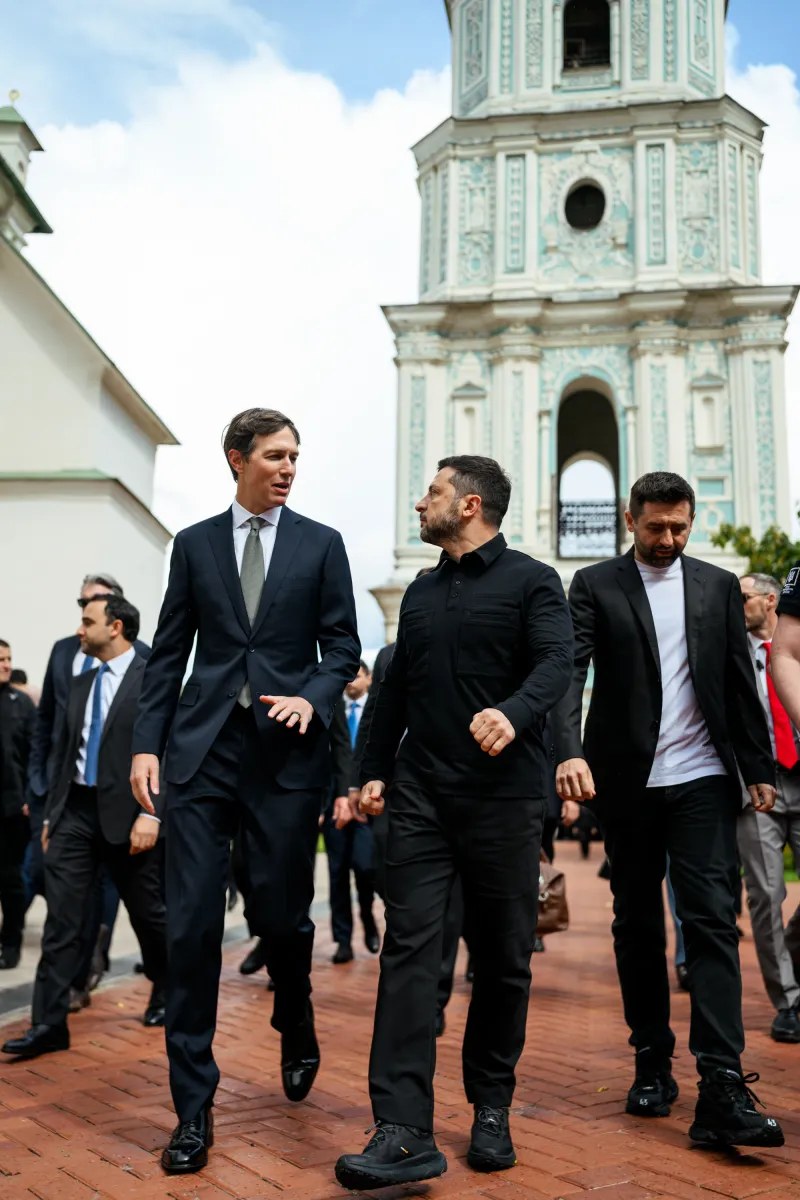
PHOTO CAPTION: Ukrainian President Volodymyr Zelenskyy walks with U.S. envoys Steve Witkoff and Jared Kushner in Kyiv on September 6, 2026, during an earlier round of peace negotiations. U.S.-led talks in November have expanded to include broader European security arrangements as fighting between Russia and Ukraine continues. (Official White House file photo by Daniel Torok.)
Ukraine carried out one of the largest reported drone attacks of the war overnight Thursday into Friday, with Russia claiming its air defenses intercepted 1,198 Ukrainian drones.
At the same time, American negotiators are expanding discussions with Russia beyond a ceasefire in Ukraine to include the future of European security, a development that has raised concerns among NATO allies.
The two developments unfolded as U.S. envoys Steve Witkoff and Jared Kushner completed meetings with Russian President Vladimir Putin and Ukrainian President Volodymyr Zelenskyy.
European leaders fear that discussions over security arrangements could give Moscow an opportunity to revive demands for restrictions on NATO's military presence in Eastern Europe.
No peace agreement has been reached, and no changes to NATO deployments have been announced.
Russia Reports Nearly 1,200 Ukrainian Drones Overnight
Russia's Defense Ministry said its forces intercepted 1,198 Ukrainian long-range drones between late November 12 and early November 13.
If accurate, the figure would make the operation one of Ukraine's largest drone offensives since Russia launched its full-scale invasion in February 2022.
The number is a Russian military claim and has not been independently confirmed.
Despite Moscow's reported interceptions, Russian regional authorities said strikes across three regions killed seven people, including a 12-year-old child, and wounded 17 others.
Ukraine's General Staff separately announced that its forces had struck a major oil refinery in Volgograd, setting a fire.
The facility is part of Russia's extensive petroleum infrastructure, which Ukraine has repeatedly targeted in an effort to disrupt fuel supplies and economic resources supporting Moscow's war.
Russian officials confirmed an attack and fires in an industrial area of Volgograd but did not independently confirm that the refinery itself was struck.
The scale of the operation reflects Ukraine's growing reliance on long-range unmanned aircraft to attack targets far beyond the front lines.
But the timing is particularly important because the attacks occurred during a renewed American diplomatic effort to end the fighting.
Peace Talks Are No Longer Just About Ukraine
The United States recently brought Russian and Ukrainian representatives together in Abu Dhabi for their first direct negotiations in approximately nine months.
The discussions produced an agreement in principle for a substantial prisoner exchange and plans for additional meetings.
But major disagreements over territory, security guarantees and the conditions for ending the war remain unresolved.
One of the most consequential developments is the decision to broaden the negotiating agenda.
American representatives are now discussing Europe's security arrangements after the war, including issues that extend beyond Ukraine's borders.
Those questions include the future deployment of military forces, security guarantees and the relationship between Russia and NATO.
Moscow has demanded negotiations over such matters for years.
European leaders fear Russia could use a peace settlement in Ukraine to seek restrictions on neighboring countries' military choices.
That is why the expanded negotiations have attracted attention far beyond Kyiv and Moscow.
What Does Russia Want From NATO?
Russia's objections to NATO's presence in Eastern Europe are not new.
Before invading Ukraine in 2022, Moscow presented proposals demanding restrictions on the alliance's military activity and expansion.
Russian officials have long argued that NATO forces positioned near Russian territory threaten Moscow's security.
The Kremlin has also opposed Ukraine joining NATO and rejected the presence of European military forces in Ukraine under proposed postwar security arrangements.
During Thursday's meeting with American envoys, Putin reiterated his opposition to European troop deployments in Ukraine after a ceasefire.
He also returned to Russian security proposals made in 2021, which included demands to roll back NATO military deployments in Central and Eastern Europe.
For NATO members such as Poland and the Baltic states, those demands carry consequences well beyond Ukraine.
These countries depend on the alliance's collective defense commitments and the ability of member nations to deploy forces where needed.
Agreeing to restrictions on those deployments could change how NATO plans to defend its eastern members.
However, discussing Moscow's demands does not mean Washington has accepted them.
No agreement has been announced that would require American or allied troops to leave Eastern Europe.
European Leaders Warn Against Negotiating Their Security Without Them
European governments have reacted cautiously to the expanded discussions.
German Chancellor Friedrich Merz has argued that Europe already has an established security structure through NATO.
European Union foreign policy chief Kaja Kallas warned that allowing Russia to make the continent's security arrangements a central negotiating issue could divert attention from Russia's invasion of Ukraine.
European leaders want a ceasefire and a settlement protecting Ukraine's sovereignty before broader security arrangements are negotiated.
They also insist that European governments must participate directly in any discussions affecting their security.
The concern is straightforward.
A negotiation between Washington and Moscow could potentially address military deployments, security commitments and alliances that directly affect countries not originally present at the table.
Those governments do not want their future military arrangements decided without their participation.
For years, Russia opposed bringing European representatives into direct negotiations because European governments have provided substantial military and economic support to Ukraine.
The United States is now attempting to bring those representatives into future discussions.
American Envoys Meet Putin and Zelenskyy
Following negotiations in Abu Dhabi, Witkoff and Kushner traveled to Moscow on November 12 and met Putin.
They subsequently visited Dublin, where Zelenskyy was attending a gathering of European leaders.
The American envoys briefed Zelenskyy about the discussions with the Russian president and the next steps in Washington's diplomatic initiative.
Kushner said the United States expects European representatives to participate in upcoming negotiations.
Zelenskyy welcomed the prospect of Europe having a direct role rather than being confined to separate consultations.
But Russia's public position has been more conditional.
Kremlin spokesman Dmitry Peskov said Moscow would evaluate European governments' intentions and willingness to facilitate a settlement before deciding on an expanded format.
That leaves an important question unresolved: which European representatives will participate, and how much influence will they have?
Even with an expanded agenda, negotiators have not announced a breakthrough on the fundamental disagreements dividing Russia and Ukraine.
Fighting Continues While Diplomacy Moves Forward
The diplomatic discussions have not produced a general ceasefire.
Both sides continued carrying out drone and missile attacks on Friday.
Russia launched 117 drones against Ukraine overnight, according to Ukrainian authorities.
Officials reported at least two deaths from Russian attacks, including a 17-year-old.
A separate strike on Zaporizhzhia wounded dozens of people, including children.
Russian attacks on Ukraine's electrical infrastructure also disrupted power supplies across 12 regions as the country prepares for another winter of wartime energy shortages.
Ukraine, meanwhile, has expanded attacks against Russian oil refineries and other industrial infrastructure.
The country's military says these operations are intended to weaken Russia's ability to sustain the war.
Whether Friday's unusually large drone operation was deliberately timed to influence the peace negotiations has not been established.
What is clear is that the renewed diplomatic process has not stopped either military from conducting major operations.
Why This Matters to American Forces
For American service members, the negotiations raise issues beyond whether fighting in Ukraine eventually ends.
The United States maintains military forces throughout Europe as part of NATO, including troops supporting the defense of eastern alliance members.
Those deployments are part of the alliance's deterrence strategy.
Any eventual agreement changing where NATO forces could operate, what military capabilities could be stationed near Russia or how security guarantees would function could have consequences for American military planning.
That does not mean U.S. troops are being ordered to leave Europe.
No such decision has been announced.
The negotiations are still preliminary, and NATO members retain their existing commitments.
But the fact that these issues are now part of the diplomatic agenda explains why European governments are watching closely.
A settlement ending the war in Ukraine could become connected to a much larger debate about military security across the continent.
What Happens Next?
American officials expect another round of negotiations, potentially including European representatives.
Ukraine and its allies continue demanding meaningful security guarantees to prevent another Russian attack.
Russia has shown no sign of abandoning its territorial demands or its objections to NATO's military presence near its borders.
Meanwhile, military operations continue, with Friday's reported Ukrainian drone barrage demonstrating the enormous scale of unmanned warfare now taking place.
The immediate news is dramatic: Russia says it intercepted nearly 1,200 Ukrainian drones in a single night.
But the broader development could prove more consequential.
The United States is now discussing Europe's long-term security arrangements as part of efforts to end the war.
Whether that process produces a settlement, additional disagreements or a wider diplomatic confrontation remains unknown.
For NATO countries and the American troops stationed across Europe, the outcome could eventually affect how the alliance organizes its defenses for years to come.
(Source: OAF Nation)