CHINA DEPLOYS 100+ SHIPS IN PACIFIC DRILLS
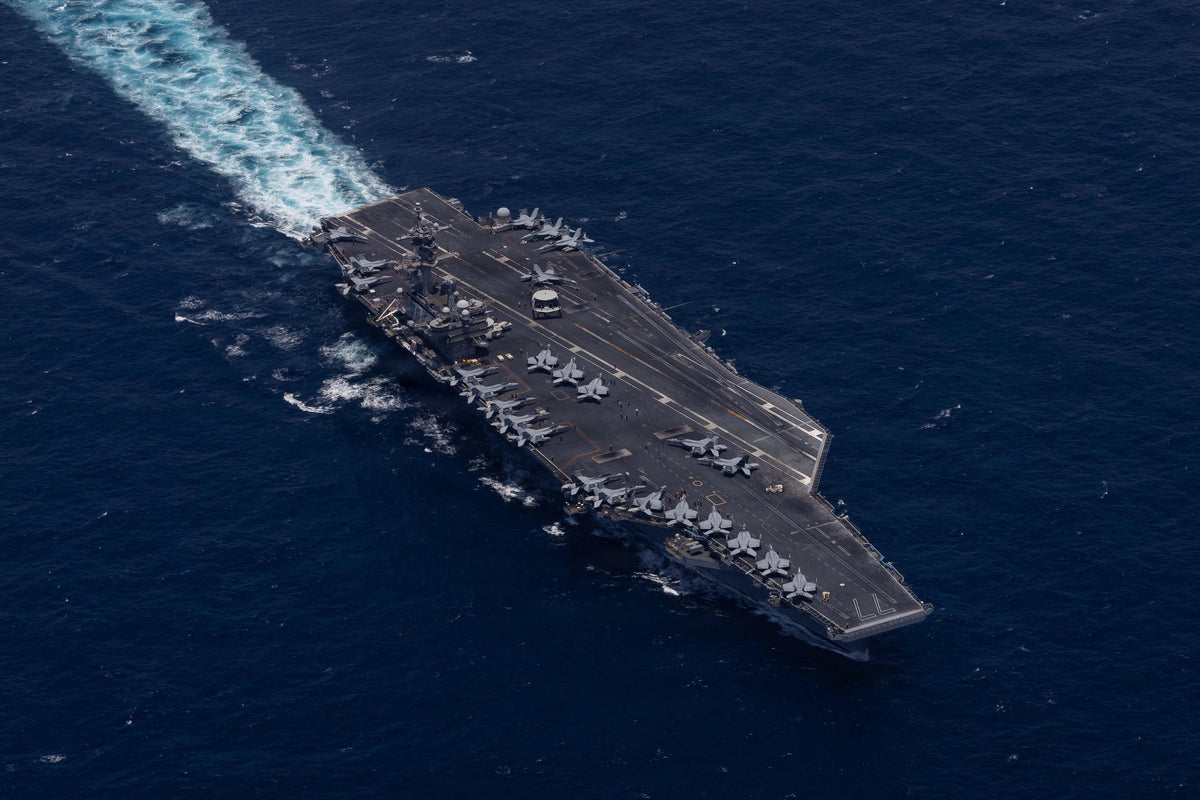
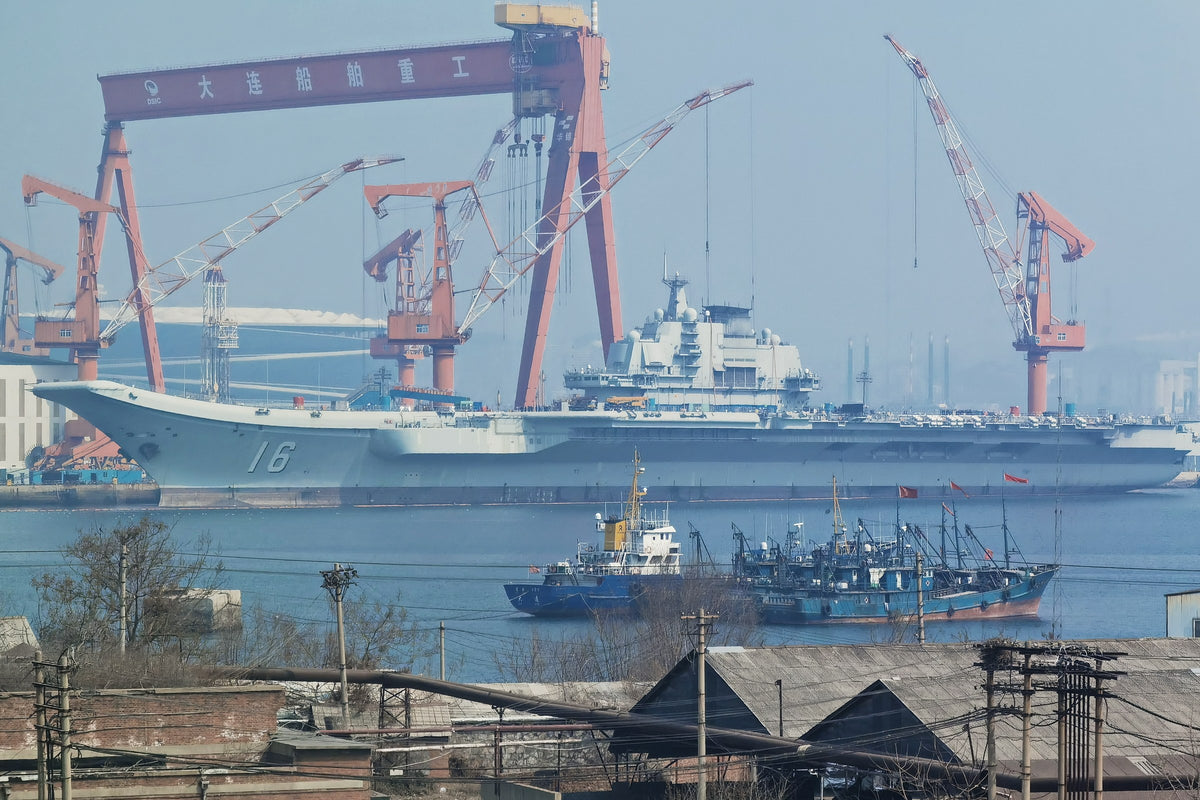
PHOTO CAPTION: The Chinese aircraft carrier Liaoning, hull number 16, is pictured at Dalian Shipyard in China in April 2023. Taiwanese officials say the carrier strike group participated in large-scale Chinese naval operations across the western Pacific in November 2026, when more than 100 military and coast guard vessels were reportedly deployed at the peak. The photograph predates the exercises. (File photo: Tyg728/Wikimedia Commons, CC BY-SA 4.0.)
China assembled more than 100 military and coast guard vessels across the western Pacific and waters surrounding Taiwan in early November, conducting large-scale exercises without formally announcing them, according to Taiwanese security officials.
The deployment included warships from three Chinese military theater commands and the aircraft carrier Liaoning.
Taiwanese officials say the operations may have rehearsed more than a potential blockade of Taiwan. The coordinated movements also suggest China was practicing how to conduct military operations across a much larger portion of the Pacific.
Reuters reported the details on November 13, citing Taiwanese security officials familiar with the activity.
The exercises come days before President Donald Trump and Chinese President Xi Jinping are expected to meet at the Asia-Pacific Economic Cooperation summit in Shenzhen, China.
Beijing has described its aircraft carrier activity as routine training. It has not publicly acknowledged the broader exercises described by Taiwanese officials.
More Than 100 Chinese Ships Were Involved
A senior Taiwanese security official told Reuters that Chinese military and coast guard vessels exceeded 100 at the peak of the operation in early November.
The activity stretched across waters surrounding Taiwan, the South China Sea and the western Pacific.
That distinction matters. The reported figure does not mean 100 warships assembled in a single formation immediately outside Taiwan's territorial waters.
Instead, Chinese forces operated across a broad region, with separate naval groups apparently conducting coordinated missions.
The Taiwanese official said the deployment exceeded the scale of China's previous publicly named exercises targeting Taiwan, including Justice Mission 2025.
The official also described simulated strikes against military targets and cities, including locations in Taiwan.
Those details come from the official's account. China has not released an exercise plan independently establishing what targets its forces were rehearsing against.
The size of the reported deployment was unusual, but the fact that Beijing did not formally announce the operation was also significant.
Taiwanese officials believe China was deliberately demonstrating military capabilities while limiting the international attention that accompanies a publicly declared exercise.
Was China Practicing a Blockade of Taiwan?
One of the central concerns raised by Taiwanese officials is whether the military activity was designed to rehearse a blockade.
A blockade would involve restricting access to Taiwan by sea, potentially disrupting commercial shipping, fuel deliveries, military supplies and other imports.
Such an operation would present a fundamentally different military challenge from a short series of airstrikes or a limited naval confrontation.
China would need to coordinate ships, aircraft, surveillance systems and other forces across several maritime approaches.
Taiwanese officials said the participation of China's eastern, northern and southern theater commands suggested rehearsals for precisely that type of coordinated operation.
But they also believe the activity went beyond a Taiwan-specific scenario.
The deployment could have allowed Chinese commanders to practice operating several regional fleets together across the western Pacific.
That would matter in any future confrontation involving Taiwan, the United States or other regional militaries.
It does not establish that Beijing has decided to impose a blockade or launch an attack.
The drills provide evidence of the capabilities China is exercising, not proof of a final political or military decision.
Why U.S. Military Planners Are Watching
Taiwan's defense minister, Wellington Koo, publicly described the Chinese activity this week as area-denial training.
Area denial is a military strategy intended to make it difficult or dangerous for opposing forces to operate within a particular region.
In a conflict over Taiwan, that could include preventing American or allied ships and aircraft from approaching the island.
China has spent years expanding the naval, missile, aviation and surveillance capabilities that could support such a strategy.
A naval force does not necessarily have to destroy every opposing ship to influence a military operation.
It may instead attempt to control access routes, threaten aircraft carriers, interfere with supply lines or make commanders reluctant to enter contested waters.
That helps explain why large exercises extending beyond the Taiwan Strait attract attention.
The United States maintains significant military interests in the western Pacific, including forces and installations in Japan and Guam, along with security commitments involving regional allies.
Taiwanese officials believe the exercises may have been testing the coordination needed for operations against forces arriving from outside the immediate Taiwan area.
There has been no announcement that American forces directly confronted the Chinese vessels during these particular drills.
China's Liaoning Aircraft Carrier Was Among the Forces
Taiwanese officials identified the Liaoning carrier strike group as one of the formations participating in the regional activity.
Liaoning, designated hull number 16, is China's first operational aircraft carrier.
Its role includes launching and recovering carrier-based aircraft while operating with supporting warships.
A carrier group gives China a way to conduct aviation operations farther from the mainland, extending the reach of its naval forces.
On November 10, Koo publicly confirmed that Liaoning and other Chinese formations were conducting area-denial exercises in the western Pacific.
China has described the carrier's training as a routine activity intended to develop its long-distance, open-ocean combat capabilities.
Beijing says the training is not directed at any particular country.
Taiwanese officials dispute the reassuring implications of that description.
They argue that the scale, positioning and coordination of Chinese forces demonstrate military pressure on Taiwan and could be relevant to future operations involving other Pacific nations.
About 70 Vessels Were Still Operating Friday
Although the largest concentration occurred earlier in November, the activity had not completely ended when Reuters published its report.
Two Taiwanese security officials said approximately 70 Chinese military and coast guard vessels remained operating within the first island chain on Friday, November 13.
The first island chain is a geographic term for the arc of islands stretching through Japan, Taiwan and the Philippines.
Its location makes it strategically important because Chinese naval forces moving into the wider Pacific must navigate through or around waterways in the region.
Taiwan National Security Council Secretary-General Joseph Wu said formations from China's northern, eastern and southern theater commands remained active, along with the Liaoning carrier group.
He placed some of the continuing activity in waters east of the Philippines.
Wu also said Chinese military aircraft activity near Taiwan remained elevated.
It is not clear how long the remaining formations will continue operating or whether additional exercises are planned.
Why the Timing Matters
The activity occurred shortly before a major diplomatic meeting involving the United States and China.
Trump and Xi are expected to meet during next week's APEC summit in Shenzhen.
Taiwan is also participating in the summit through a designated representative.
Taiwanese officials believe the unannounced exercises may have been intended to increase pressure on Taipei and signal China's military capabilities before those discussions.
One foreign intelligence source told Reuters that avoiding a formal announcement could allow Beijing to demonstrate military force without generating the same diplomatic backlash as a publicly named exercise.
That interpretation has not been independently established as China's intention.
Beijing has not acknowledged using the naval deployment to influence the upcoming meeting.
Xi, meanwhile, delivered remarks Thursday calling for peaceful reunification with Taiwan.
China continues to claim Taiwan as its territory and has not renounced the use of force.
Taiwan's government rejects Beijing's sovereignty claim and maintains that its future should be decided by the Taiwanese people.
What Happens Next?
For now, the reported exercises have not resulted in a declared blockade, an invasion or a direct military clash.
The most important confirmed developments are the unusually large deployment reported by Taiwanese officials, the involvement of multiple Chinese naval commands and the continued presence of ships and aircraft across the region.
Several questions remain unanswered.
China has not publicly detailed the full scope or purpose of the exercises. The reported peak ship count comes from Taiwanese security reporting, not an independently published Chinese force roster.
There is also no confirmed indication that the exercises represent an imminent decision to attack Taiwan.
What the deployment does show, according to Taiwanese officials, is that China is practicing large-scale coordination across a region extending well beyond the Taiwan Strait.
For American and allied military planners, that raises a consequential question.
In a future confrontation over Taiwan, would China's objective be limited to surrounding the island, or would its forces also attempt to keep outside militaries from entering the fight?
The scale and geographic reach of November's exercises are why officials in Taipei believe the latest activity deserves attention.China assembled more than 100 military and coast guard vessels across the western Pacific and waters surrounding Taiwan in early November, conducting large-scale exercises without formally announcing them, according to Taiwanese security officials.
The deployment included warships from three Chinese military theater commands and the aircraft carrier Liaoning.
Taiwanese officials say the operations may have rehearsed more than a potential blockade of Taiwan. The coordinated movements also suggest China was practicing how to conduct military operations across a much larger portion of the Pacific.
Reuters reported the details on November 13, citing Taiwanese security officials familiar with the activity.
The exercises come days before President Donald Trump and Chinese President Xi Jinping are expected to meet at the Asia-Pacific Economic Cooperation summit in Shenzhen, China.
Beijing has described its aircraft carrier activity as routine training. It has not publicly acknowledged the broader exercises described by Taiwanese officials.
More Than 100 Chinese Ships Were Involved
A senior Taiwanese security official told Reuters that Chinese military and coast guard vessels exceeded 100 at the peak of the operation in early November.
The activity stretched across waters surrounding Taiwan, the South China Sea and the western Pacific.
That distinction matters. The reported figure does not mean 100 warships assembled in a single formation immediately outside Taiwan's territorial waters.
Instead, Chinese forces operated across a broad region, with separate naval groups apparently conducting coordinated missions.
The Taiwanese official said the deployment exceeded the scale of China's previous publicly named exercises targeting Taiwan, including Justice Mission 2025.
The official also described simulated strikes against military targets and cities, including locations in Taiwan.
Those details come from the official's account. China has not released an exercise plan independently establishing what targets its forces were rehearsing against.
The size of the reported deployment was unusual, but the fact that Beijing did not formally announce the operation was also significant.
Taiwanese officials believe China was deliberately demonstrating military capabilities while limiting the international attention that accompanies a publicly declared exercise.
Was China Practicing a Blockade of Taiwan?
One of the central concerns raised by Taiwanese officials is whether the military activity was designed to rehearse a blockade.
A blockade would involve restricting access to Taiwan by sea, potentially disrupting commercial shipping, fuel deliveries, military supplies and other imports.
Such an operation would present a fundamentally different military challenge from a short series of airstrikes or a limited naval confrontation.
China would need to coordinate ships, aircraft, surveillance systems and other forces across several maritime approaches.
Taiwanese officials said the participation of China's eastern, northern and southern theater commands suggested rehearsals for precisely that type of coordinated operation.
But they also believe the activity went beyond a Taiwan-specific scenario.
The deployment could have allowed Chinese commanders to practice operating several regional fleets together across the western Pacific.
That would matter in any future confrontation involving Taiwan, the United States or other regional militaries.
It does not establish that Beijing has decided to impose a blockade or launch an attack.
The drills provide evidence of the capabilities China is exercising, not proof of a final political or military decision.
Why U.S. Military Planners Are Watching
Taiwan's defense minister, Wellington Koo, publicly described the Chinese activity this week as area-denial training.
Area denial is a military strategy intended to make it difficult or dangerous for opposing forces to operate within a particular region.
In a conflict over Taiwan, that could include preventing American or allied ships and aircraft from approaching the island.
China has spent years expanding the naval, missile, aviation and surveillance capabilities that could support such a strategy.
A naval force does not necessarily have to destroy every opposing ship to influence a military operation.
It may instead attempt to control access routes, threaten aircraft carriers, interfere with supply lines or make commanders reluctant to enter contested waters.
That helps explain why large exercises extending beyond the Taiwan Strait attract attention.
The United States maintains significant military interests in the western Pacific, including forces and installations in Japan and Guam, along with security commitments involving regional allies.
Taiwanese officials believe the exercises may have been testing the coordination needed for operations against forces arriving from outside the immediate Taiwan area.
There has been no announcement that American forces directly confronted the Chinese vessels during these particular drills.
China's Liaoning Aircraft Carrier Was Among the Forces
Taiwanese officials identified the Liaoning carrier strike group as one of the formations participating in the regional activity.
Liaoning, designated hull number 16, is China's first operational aircraft carrier.
Its role includes launching and recovering carrier-based aircraft while operating with supporting warships.
A carrier group gives China a way to conduct aviation operations farther from the mainland, extending the reach of its naval forces.
On November 10, Koo publicly confirmed that Liaoning and other Chinese formations were conducting area-denial exercises in the western Pacific.
China has described the carrier's training as a routine activity intended to develop its long-distance, open-ocean combat capabilities.
Beijing says the training is not directed at any particular country.
Taiwanese officials dispute the reassuring implications of that description.
They argue that the scale, positioning and coordination of Chinese forces demonstrate military pressure on Taiwan and could be relevant to future operations involving other Pacific nations.
About 70 Vessels Were Still Operating Friday
Although the largest concentration occurred earlier in November, the activity had not completely ended when Reuters published its report.
Two Taiwanese security officials said approximately 70 Chinese military and coast guard vessels remained operating within the first island chain on Friday, November 13.
The first island chain is a geographic term for the arc of islands stretching through Japan, Taiwan and the Philippines.
Its location makes it strategically important because Chinese naval forces moving into the wider Pacific must navigate through or around waterways in the region.
Taiwan National Security Council Secretary-General Joseph Wu said formations from China's northern, eastern and southern theater commands remained active, along with the Liaoning carrier group.
He placed some of the continuing activity in waters east of the Philippines.
Wu also said Chinese military aircraft activity near Taiwan remained elevated.
It is not clear how long the remaining formations will continue operating or whether additional exercises are planned.
Why the Timing Matters
The activity occurred shortly before a major diplomatic meeting involving the United States and China.
Trump and Xi are expected to meet during next week's APEC summit in Shenzhen.
Taiwan is also participating in the summit through a designated representative.
Taiwanese officials believe the unannounced exercises may have been intended to increase pressure on Taipei and signal China's military capabilities before those discussions.
One foreign intelligence source told Reuters that avoiding a formal announcement could allow Beijing to demonstrate military force without generating the same diplomatic backlash as a publicly named exercise.
That interpretation has not been independently established as China's intention.
Beijing has not acknowledged using the naval deployment to influence the upcoming meeting.
Xi, meanwhile, delivered remarks Thursday calling for peaceful reunification with Taiwan.
China continues to claim Taiwan as its territory and has not renounced the use of force.
Taiwan's government rejects Beijing's sovereignty claim and maintains that its future should be decided by the Taiwanese people.
What Happens Next?
For now, the reported exercises have not resulted in a declared blockade, an invasion or a direct military clash.
The most important confirmed developments are the unusually large deployment reported by Taiwanese officials, the involvement of multiple Chinese naval commands and the continued presence of ships and aircraft across the region.
Several questions remain unanswered.
China has not publicly detailed the full scope or purpose of the exercises. The reported peak ship count comes from Taiwanese security reporting, not an independently published Chinese force roster.
There is also no confirmed indication that the exercises represent an imminent decision to attack Taiwan.
What the deployment does show, according to Taiwanese officials, is that China is practicing large-scale coordination across a region extending well beyond the Taiwan Strait.
For American and allied military planners, that raises a consequential question.
In a future confrontation over Taiwan, would China's objective be limited to surrounding the island, or would its forces also attempt to keep outside militaries from entering the fight?
The scale and geographic reach of November's exercises are why officials in Taipei believe the latest activity deserves attention.
(Source: OAF Nation)