Reservists Seek Unpaid Compensation
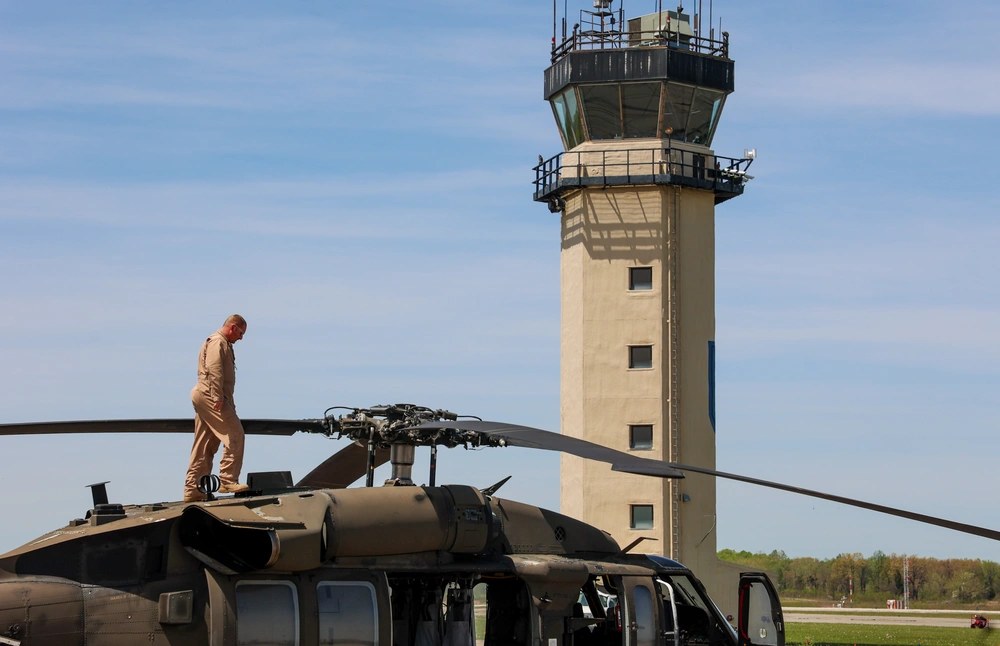
PHOTO CAPTION: Illustrative photo: Chief Warrant Officer 4 Donald Seelye, an Army Reserve test pilot who also works as a Department of the Army civilian employee, prepares a helicopter for testing at Fort Knox, Kentucky, on April 22, 2025. Seelye is not a plaintiff in the differential pay case. U.S. Army photo by Eric Pilgrim.
Five military reservists are seeking years of allegedly unpaid compensation from the federal government more than a year after the Supreme Court issued a major ruling expanding eligibility for the pay.
The five filed a class action complaint Sept. 23 before the Merit Systems Protection Board against the Departments of Defense, Justice and Veterans Affairs.
All five are current or former federal civilian employees who also serve in the military reserves.
Their dispute centers on reservist differential pay, a federal benefit intended to prevent eligible government employees from taking a financial hit when they leave higher paying civilian jobs for qualifying active duty military service.
When the employee's civilian basic pay exceeds military pay and allowances, the government can be required to make up the difference.
For years, however, federal guidance restricted when reservists could receive that money.
That led to a case that eventually reached the Supreme Court.
On April 30, 2025, the Supreme Court ruled 5 to 4 in Feliciano v. Department of Transportation that an eligible federal civilian employee called to active duty during a declared national emergency does not have to prove that the military service was specifically connected to that emergency to qualify for differential pay.
The Court said the timing was what mattered.
More than a year later, the five reservists now say they still have not received money they believe they are entitled to under that ruling.
The plaintiffs are Army Reserve Capt. Lacy Jaudon, Army Reserve Lt. Col. Shahara Timbrook, Army reservist Shea Matthew Gibbons, Navy reservist Bryce Miller and Army Reserve Capt. John Mezzanotte.
Their claims span several federal agencies and years of military service.
Jaudon is a federal attorney and member of the Army Reserve Judge Advocate General's Corps.
According to the filing, she performed about four months of active duty training in 2021, served from October 2023 through October 2024 and returned to active duty in March 2026.
The complaint says there were pay periods when her projected civilian salary exceeded her military pay and allowances, but the Army paid no differential.
Timbrook, who serves in the Army Reserve Judge Advocate General's Corps and works as chief of personnel policy for the Army Office of General Counsel, performed a series of active duty orders in 2016.
The filing says the Army paid her no differential.
Gibbons is a former assistant U.S. attorney who also serves in the Army Reserve Judge Advocate General's Corps.
He performed active duty training for several months in 2019 while employed by the Justice Department, according to the complaint. The filing says the department did not pay him a differential.
Miller is a Navy reservist and a federal civilian employee at the Orlando VA Healthcare System.
He served on active duty from November 2025 through June 2026. The complaint says his civilian basic pay exceeded his military compensation during at least one pay period after accounting for paid leave, but the VA paid no differential.
Mezzanotte is an assistant U.S. attorney in New Jersey and an Army Reserve captain.
He served on active duty in 2024 and has been on another period of active duty since October 2025.
According to the filing, the Justice Department did not pay him a differential and denied his request for the money on Aug. 19.
Attorneys representing the group say each of the named reservists is likely owed a few thousand dollars, although no exact total has been established.
The potential reach of the case is much larger than the five named plaintiffs.
The proposed class seeks compensation for other current and former federal civilian employees at the Defense Department, Justice Department and VA who performed qualifying military service but were not paid differential pay.
The complaint also attempts to reach older claims.
A separate case pending in the U.S. Court of Federal Claims is seeking differential pay dating to May 2019 because of a six year statute of limitations in that court.
The new complaint argues that claims brought through the Merit Systems Protection Board under federal military employment protections do not face the same time limit.
If that argument succeeds, the proposed class could potentially reach unpaid differential compensation dating to 2009, when Congress created the federal benefit.
The new complaint also alleges that federal personnel guidance has still not been brought into line with the Supreme Court's 2025 ruling.
Military Times reported that the filing says the government told the Supreme Court twice that it would revise its guidance but has not yet done so.
Bloomberg Law reported that the Office of Personnel Management had not proposed a new rule or updated its policies to reflect the Supreme Court decision as of the filing.
The Defense Department, Justice Department, VA and Office of Personnel Management had not immediately responded to Bloomberg Law's requests for comment.
The new case does not mean the five reservists have already won their individual claims or established the amount of money each should receive.
But the underlying legal question that previously prevented many reservists from qualifying was addressed by the nation's highest court more than a year ago.
Now the five reservists are asking the federal government to pay what they say should have followed from that decision.
(Source: OAF Nation)