Pentagon OKs Heat-Ray Testing
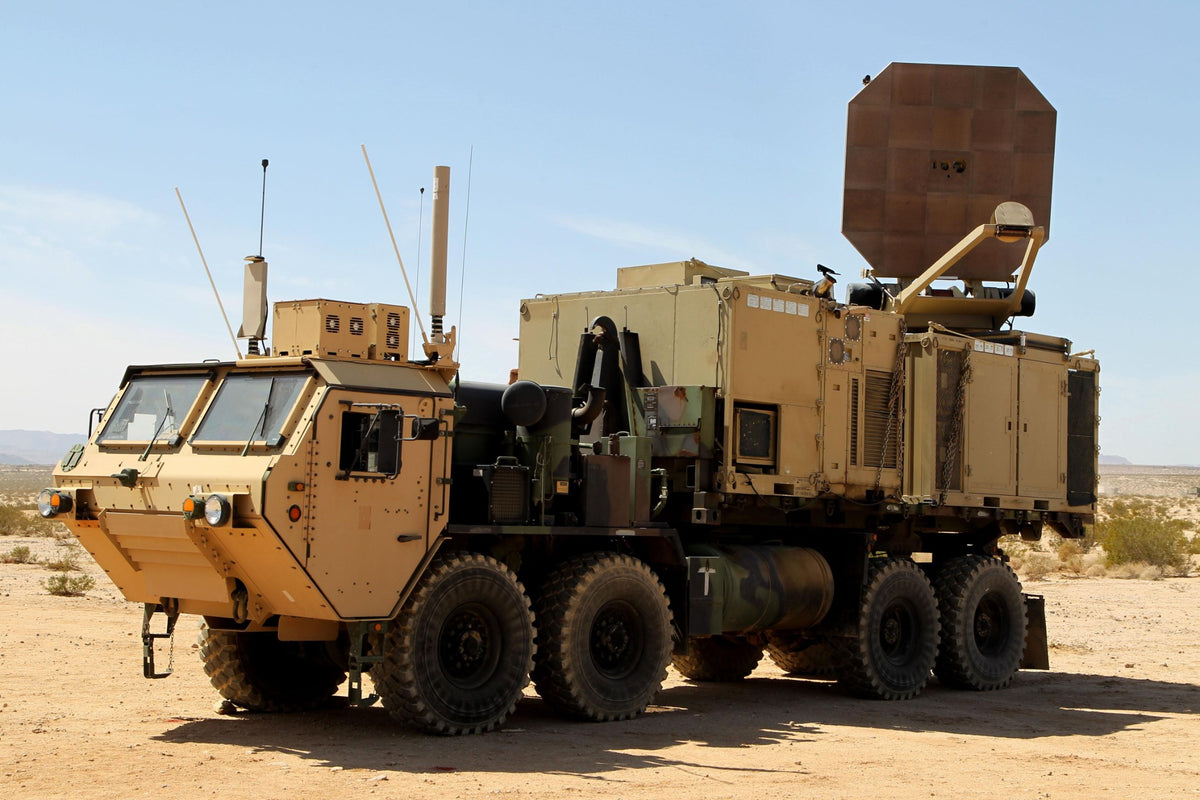
PHOTO CAPTION: The U.S. Marine Corps demonstrates the Active Denial System 2, a vehicle-mounted directed-energy weapon, at Marine Corps Air Ground Combat Center Twentynine Palms, California, on March 21, 2013. The Pentagon has authorized the Department of Homeland Security to test the technology for potential use along the U.S.-Mexico border. The system produces an intense burning sensation on exposed skin. (U.S. Marine Corps photo by Lance Cpl. Alejandro Bedoya)
The Pentagon has authorized the Department of Homeland Security to test a military weapon capable of producing an intense burning sensation on human skin, potentially opening the door to its use in border enforcement operations.
The authorization was detailed in a memorandum signed by Defense Secretary Pete Hegseth in September and obtained by CNN, which reported the development October 21.
The agreement allows Homeland Security to borrow one Active Denial System, a military directed-energy weapon commonly known as a heat ray, for seven months while officials evaluate its capabilities and develop possible operational tactics.
The authorization does not establish that the system has been deployed or used against anyone at the border.
Weapon Creates Intense Burning Sensation
The Active Denial System uses an invisible, highly focused beam of electromagnetic energy to heat the outermost layers of human skin.
Unlike conventional firearms or chemical crowd-control agents, the system does not fire a projectile or release a chemical substance.
Instead, it operates using 95-gigahertz millimeter waves that penetrate approximately 1/64 of an inch into the skin.
The resulting sensation has been compared by military officials to the intense heat encountered when opening a hot oven.
The weapon is designed to trigger an immediate reaction that causes individuals to move away from the beam.
According to military descriptions, the intense heating sensation generally stops when exposure ends, although residual tingling or tenderness can persist for 10 to 15 minutes.
The vehicle-mounted system has an effective range of approximately 1,000 meters, slightly more than half a mile.
The Pentagon classifies the technology as nonlethal, but that designation does not mean it is incapable of causing injuries.
Hegseth Authorizes Seven-Month Loan
According to CNN, the September memorandum authorizes Homeland Security to temporarily borrow one Active Denial System for seven months.
The agreement specifies that military personnel will not operate the equipment during the loan period.
Instead, DHS assumes responsibility for operating the system and developing the tactics, techniques and procedures associated with its possible use.
The department may request an extension after the initial loan expires.
The memorandum does not publicly identify where testing will take place, what scenarios will be evaluated or whether the equipment will eventually be used in immigration enforcement operations.
Customs and Border Protection told CNN that it continually evaluates technology intended to improve its operational effectiveness.
When asked about the arrangement, the Pentagon referred questions to Homeland Security.
Border Officials Considered Weapon Before
The possibility of using the Active Denial System along the southern border has been discussed inside federal agencies for years.
According to current and former officials interviewed by CNN, Customs and Border Protection previously evaluated whether the technology could disperse crowds or discourage large groups from attempting unauthorized crossings.
Officials considered the system in the El Centro sector along the California-Mexico border, including areas near waterways.
The idea raised questions about whether forcing people to flee from the beam could create additional dangers, such as causing individuals to enter hazardous water.
In 2018, officials again discussed using the technology against migrants, but then-Homeland Security Secretary Kirstjen Nielsen rejected the proposal, according to CNN.
Federal officials also considered possible domestic crowd-control uses during the protests following George Floyd's murder in 2020.
Those discussions did not result in operational deployment.
Military Previously Sent System to Afghanistan
The Active Denial System was originally developed for military applications, including perimeter security, checkpoint protection and crowd control.
The U.S. military transported a version of the system to Afghanistan but ultimately did not use it in combat operations.
Military officials also considered using the technology at overseas detention facilities, but those plans were not carried out.
The Pentagon has publicly demonstrated the equipment on numerous occasions, including exercises involving military volunteers exposed to the beam.
Military officials have described the weapon as an alternative to lethal force in situations where troops need to compel people to move away without using conventional firearms.
Safety and Legal Questions Remain
Although designed to minimize lasting injury, the Active Denial System has caused burns in documented testing incidents.
According to reporting by Axios, a laboratory accident in 1999 caused blistering, while a 2007 training incident resulted in burns to an airman after procedural failures led to excessive exposure.
The military subsequently emphasized operating safeguards, training procedures and software controls intended to reduce those risks.
Former border officials have also questioned how the weapon could be used safely around rivers, crowded crossing areas or locations where people cannot easily move away from the beam.
Another concern involves international boundaries.
Using a directed-energy weapon against people standing on Mexican territory could raise significant legal and diplomatic questions.
The authorization does not establish whether Homeland Security has resolved those issues or approved rules governing any future operational use.
Testing Authorized, Deployment Not Confirmed
The September memorandum represents a new step in federal consideration of military directed-energy technology for domestic border enforcement.
It gives Homeland Security access to the equipment and permission to evaluate its possible use.
However, no confirmed operational deployment against migrants or other civilians has been announced.
Officials have not disclosed where tests will occur or whether the system will ultimately become part of regular border-enforcement operations.
For now, the Pentagon has authorized testing of a weapon developed to repel people through intense heat-induced pain, while its eventual role at the southern border remains undetermined.
(Source: OAF Nation)