Article: Judge Blocks New York Armor Ban
Judge Blocks New York Armor Ban
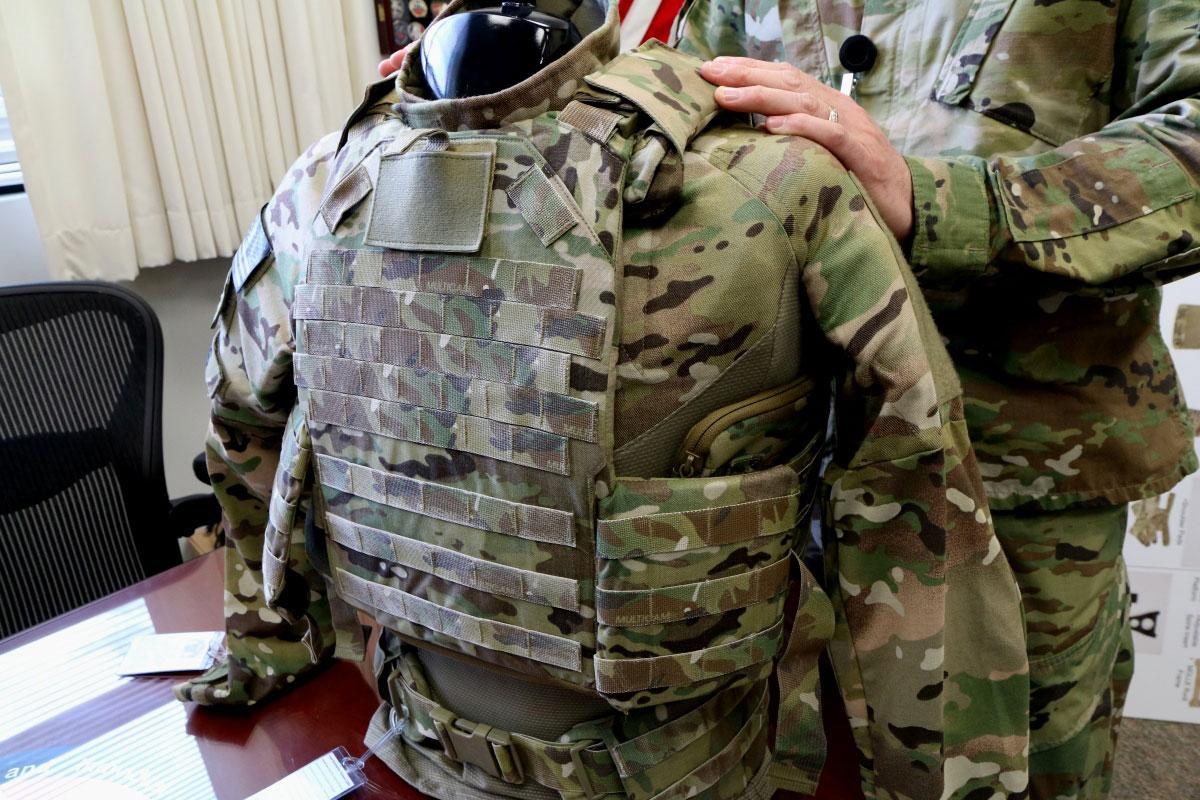
PHOTO CAPTION: U.S. Army body armor and a physical training vest are displayed at Goodfellow Air Force Base, Texas, on August 2, 2022. A federal judge ruled on October 21, 2026, that body armor is protected under the Second Amendment, striking down New York's civilian purchase-and-sale restrictions. The ruling was stayed for 14 days to allow an appeal. (U.S. Air Force photo via DVIDS)
A federal judge has ruled that body armor designed to stop bullets is protected under the Second Amendment, striking down New York laws that barred most ordinary civilians from purchasing or receiving protective vests for self-defense.
U.S. District Judge John L. Sinatra Jr. issued the 47-page decision Wednesday, October 21, finding that New York failed to demonstrate a historical justification for its restrictions on buying and selling body armor.
The ruling grants a permanent injunction against the challenged provisions, although the judge temporarily stayed the order for 14 days to allow the state to appeal.
The decision does not immediately eliminate the restrictions or affect every law governing body armor.
Judge Rules Defensive Armor Is Constitutionally Protected
The lawsuit, Heeter v. James, was filed in July 2024 by the Firearms Policy Coalition and two New York residents, Benjamin Heeter and Joseph Wurtenberg.
Both men said they wanted to purchase body armor for lawful self-defense but could not do so because they did not work in occupations exempt from the state's restrictions.
New York argued that body armor was not an arm protected by the Second Amendment and that governments historically regulated protective armor.
Sinatra rejected those arguments.
The judge relied partly on the U.S. Supreme Court's 2008 decision in District of Columbia v. Heller, which discussed historical definitions of arms encompassing both offensive weapons and defensive armor.
The court also applied the historical-tradition framework established by the Supreme Court in New York State Rifle & Pistol Association v. Bruen in 2022.
Under that framework, the government must demonstrate that restrictions on conduct protected by the Second Amendment are consistent with the nation's historical tradition of firearm and arms regulation.
Sinatra concluded that New York had not met that burden.
The judge found that defensive armor falls within the constitutional meaning of arms and that the state had failed to identify sufficiently comparable historical restrictions supporting its broad purchase ban.
Restrictions Followed Deadly Buffalo Shooting
New York enacted the body armor restrictions in 2022 following several mass shootings, including the May 14 attack at a Tops supermarket in Buffalo.
In that attack, a gunman wearing body armor killed 10 Black people and wounded three others in a racially motivated mass shooting.
The attacker's protective equipment stopped a bullet fired by a security guard.
State lawmakers subsequently restricted the purchase, sale and transfer of body armor, citing concerns about criminals and mass shooters using protective equipment during violent attacks.
Under the law, most people could not legally purchase body armor unless they were employed in an eligible profession.
Exemptions included police officers, certain other law enforcement personnel, military service members and additional occupations approved by the state.
Ordinary civilians who purchased body armor in violation of the law faced a misdemeanor charge for a first offense and a felony for subsequent offenses.
Sellers also faced criminal penalties for knowingly transferring armor to ineligible purchasers.
Court Rejects New York's Historical Arguments
In defending its restrictions, New York pointed to English and other historical laws regulating armor.
The state also argued that modern ballistic protection differs significantly from armor available when the Constitution was adopted.
Sinatra concluded that those arguments did not provide a sufficient historical foundation for a broad prohibition on civilians purchasing defensive equipment.
The opinion found that the development of modern materials such as Kevlar did not automatically remove body armor from constitutional protection.
The court also rejected New York's argument that body armor should be excluded from protection as dangerous or unusual equipment.
Sinatra determined that the state had not established that modern body armor was outside common lawful use.
The judge granted summary judgment to the plaintiffs, meaning the court resolved the constitutional challenge without requiring a trial.
Judge Blocks Purchase Ban but Pauses Enforcement Order
The ruling permanently enjoins enforcement of three provisions of New York law governing the purchase and sale of body armor:
Penal Law Section 270.21, concerning unlawful purchases.
Penal Law Section 270.22, concerning unlawful sales.
General Business Law Section 396-eee, regulating sales and deliveries.
However, Sinatra granted New York's request for a 14-day stay while the state considers an appeal.
During that period, the injunction does not take effect, and the existing purchase-and-sale restrictions remain enforceable.
A higher court could extend the stay while an appeal proceeds.
The ruling also expressly leaves untouched a separate New York statute prohibiting the wearing of body armor while committing certain violent felonies involving a firearm.
It does not establish a nationwide right to purchase armor without restriction or overturn every federal and state law affecting protective equipment.
New York Reviewing Decision
The New York Attorney General's Office said Wednesday that it was reviewing the court's ruling.
The Firearms Policy Coalition welcomed the decision and described it as a significant victory for the constitutional right to acquire protective equipment.
The group argues that ordinary Americans should be able to purchase body armor to protect themselves from criminal violence.
Supporters of New York's restrictions have maintained that limiting access to body armor is an important public-safety measure, particularly when attackers use protective equipment to resist law enforcement.
The court's ruling addresses the constitutional validity of the state's broad purchase-and-sale restrictions, not whether body armor can make certain criminal attacks more dangerous.
What Happens Next?
The state has 14 days under the district court's stay to pursue appellate relief before the injunction would otherwise become enforceable.
The case could move to the U.S. Court of Appeals for the Second Circuit, which could review the constitutional reasoning and determine whether the injunction should remain paused.
For now, the ruling represents a significant federal district-court decision recognizing defensive body armor as protected by the Second Amendment.
Its immediate impact on New York purchasers remains limited by the temporary stay and the possibility of further appellate proceedings.
(Source: OAF Nation)