Article: Pentagon Delays Iran Strike Report
Pentagon Delays Iran Strike Report
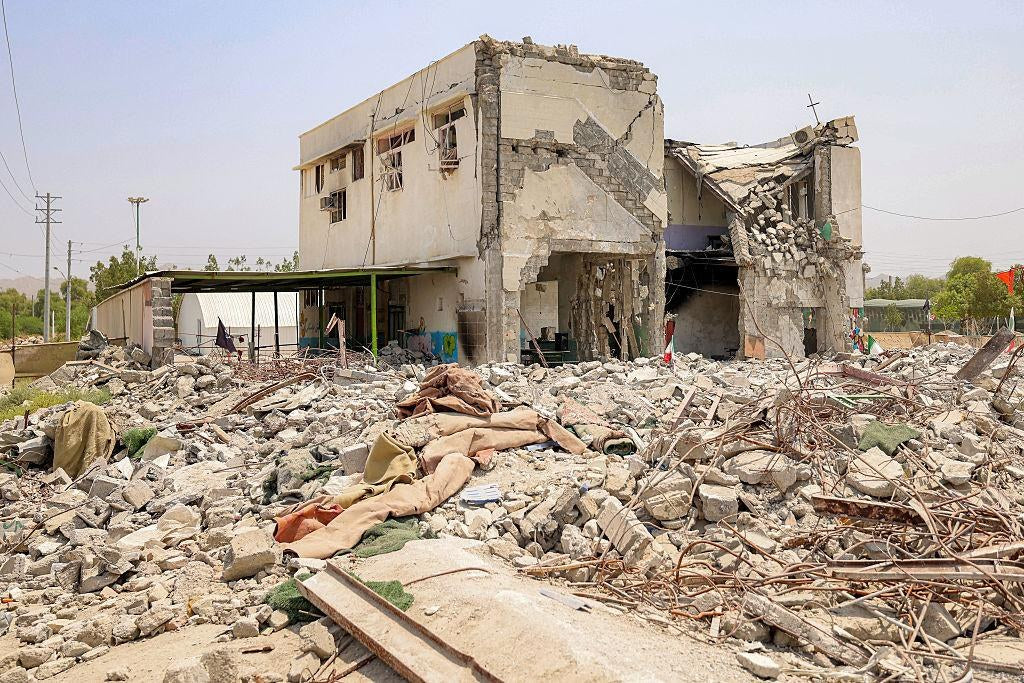
PHOTO CAPTION: The aftermath of the February 28, 2026, missile strike on Shajareh Tayyebeh Elementary School in Minab, Iran. Bloomberg reports that Pentagon officials intend to delay releasing the investigation's findings until after the November midterm elections. (Photo: Abbas Zakeri / Mehr News Agency, CC BY 4.0)
Senior Pentagon officials reportedly intend to delay the release of an investigation into a deadly U.S. missile strike on an Iranian elementary school until after the November 3 midterm elections, according to new reporting from Bloomberg News.
The February 28 attack on Shajareh Tayyebeh Elementary School in Minab, southern Iran, killed more than 150 people, including at least 123 children, according to Bloomberg's investigation.
The Pentagon has not publicly acknowledged responsibility for the strike, despite multiple investigations and reports indicating American forces were responsible.
Now, officials familiar with internal Pentagon discussions say senior advisers to Defense Secretary Pete Hegseth have communicated plans to withhold the investigation's findings until after the election.
The Pentagon disputes suggestions that a release date has been finalized, maintaining that the investigation is still ongoing.
Investigation Reportedly Nearly Complete for Months
Bloomberg reported October 15 that the Pentagon's internal investigation has been substantially complete for several months.
The investigation began in March, shortly after American and Israeli forces launched military operations against Iran.
According to people familiar with the matter, advisers to Hegseth communicated an intention to delay the public release of the findings until after the midterm elections.
A Pentagon official responded that the investigation remains ongoing, with no final decision about when information will be released.
The reporting does not establish that Hegseth personally ordered a politically motivated delay or that the proposed release schedule has been formally adopted.
Investigators Found Serious Targeting Failures
The new disclosure follows a September 18 Bloomberg investigation detailing how the school was reportedly struck during the opening day of the war.
According to officials involved in the internal review, the attack resulted from a series of failures involving outdated intelligence, incorrect targeting information and excessive reliance on artificial intelligence during military planning.
The school was located beside a compound previously used by Iran's Islamic Revolutionary Guard Corps.
Although the building had been converted into a school years earlier, that information allegedly failed to reach the personnel responsible for preparing the target list.
Bloomberg also reported that the Pentagon had sharply reduced staffing in offices responsible for preventing civilian harm, leaving fewer personnel to review potential targets.
According to the investigation, no civilian-harm mitigation specialist reviewed the Minab school target before the strike.
Those findings remain based on reporting from officials familiar with the investigation. The Pentagon's complete report has not been publicly released.
Senator Demands Immediate Release
Sen. Kirsten Gillibrand, a New York Democrat serving on the Senate Armed Services and Intelligence Committees, responded Thursday by demanding that the Pentagon release its findings.
Gillibrand accused the administration of placing political considerations ahead of military accountability and the lives of civilians.
She argued that Congress and the American public deserve a complete accounting of what happened.
Gillibrand and other lawmakers have previously pressed military leaders to explain how the school was targeted, whether outdated intelligence played a role and what safeguards failed to prevent civilian casualties.
International Investigations Raise Additional Questions
Amnesty International independently investigated the attack and concluded in March that U.S. forces failed to take feasible precautions to avoid civilian harm.
Human Rights Watch also called for a full investigation into whether the strike violated international humanitarian law.
The incident has become one of the deadliest reported civilian casualty events involving U.S. military operations in decades.
American officials have consistently maintained that the military does not intentionally target civilians.
However, the full Pentagon investigation could provide additional answers about who approved the strike, why the building was identified as a target and whether military personnel violated targeting procedures.
No Public Release Date Announced
As of October 16, the Pentagon has not announced when the completed findings will become public.
The reported plan to postpone disclosure until after the midterm elections raises additional questions about transparency and civilian oversight of military operations.
For the families of the children killed in Minab, the investigation may provide the clearest official explanation yet of how an elementary school became the target of American military weapons.
For Congress and the Pentagon, the findings could also have implications for military targeting procedures, intelligence oversight and accountability for civilian casualties in future operations.
(Source: OAF Nation)