Navy Faces $3.4B Idle Submarine Costs
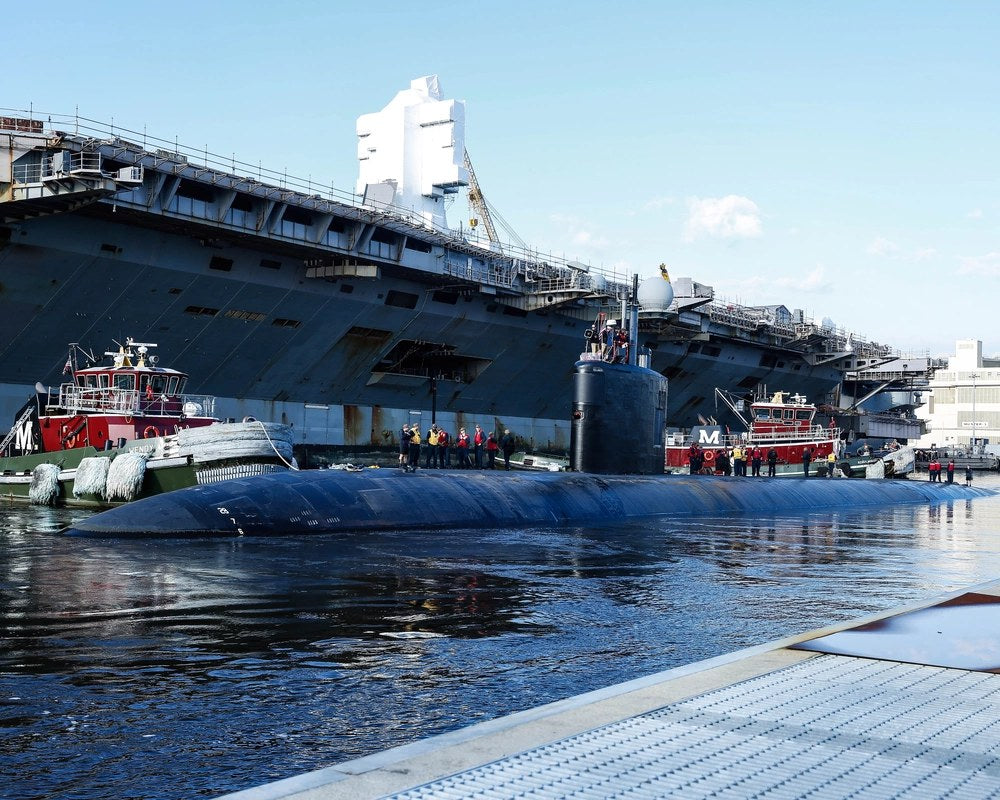
PHOTO CAPTION: The Los Angeles-class attack submarine USS Pasadena transits Norfolk Naval Shipyard in Portsmouth, Virginia, in October 2021. A new GAO report found Navy attack submarines lost more than 15,000 operational days to maintenance delays and idle time from fiscal 2016 through 2025. (U.S. Navy photo by Aldo Anderson)
The Navy lost more than 15,000 operational days from its attack-submarine fleet over the past decade because of maintenance delays and idle time, while spending an estimated $3.4 billion to sustain submarines and crews that provided no operational capability, according to a new government watchdog report.
The Government Accountability Office released the findings Thursday as part of a review of Navy attack-submarine readiness covering fiscal years 2016 through 2025.
GAO said the lost days came from two primary problems: submarines remaining in depot maintenance longer than planned and active submarines sitting pier-side while waiting to enter maintenance.
During what the Navy calls “active idle time,” a submarine and its crew remain at the pier because the boat is no longer certified to conduct normal operations but cannot yet enter a shipyard maintenance period.
Those delays have cost the Navy billions.
GAO estimated that sustaining crews and attack submarines during periods when they provided no operational capability cost approximately $3.4 billion over the 10-year period.
The findings come as attack submarines remain among the Navy's most heavily demanded assets.
As of fiscal 2025, the Navy had 44 attack submarines, which are used for missions including intelligence collection, surveillance and attacks against enemy targets. GAO said combatant commanders regularly request the submarines because of their ability to operate undetected.
The Navy has made progress reducing some active idle time, according to GAO, but another problem is growing as aging submarines wait to be taken out of service.
Submarines designated for decommissioning can remain tied to a pier for extended periods when a shipyard does not have dry-dock capacity available to begin the process of defueling the boat's nuclear reactor.
GAO calls this “inactive idle time.”
Without changes, the watchdog projects that 15 attack submarines will enter inactive idle status between fiscal 2026 and 2030.
Those boats could accumulate more than 14,000 additional idle days and cost the Navy another $3.1 billion to operate and support while awaiting decommissioning.
GAO said the Navy has not fully evaluated alternatives that could reduce that backlog, including defueling submarines outside traditional dry docks or reducing crew levels aboard submarines awaiting decommissioning.
The watchdog issued two recommendations calling on the Navy to evaluate alternative approaches to decommissioning submarines and develop a plan to reduce inactive idle time.
The Navy verbally agreed with both recommendations but did not provide written comments on the report.
GAO's public report is a declassified version of a classified assessment issued July 16. Information considered sensitive by the Defense Department, including attack-submarine operational availability and comparisons with strategic competitors, was removed before public release.
The watchdog warned that without changes, maintenance and decommissioning backlogs could continue consuming billions of dollars while limiting the availability of some of the Navy's most sought-after warships.
Source: U.S. Government Accountability Office, GAO-26-109256