Melania Trump Brokers Ukraine Ceasefire
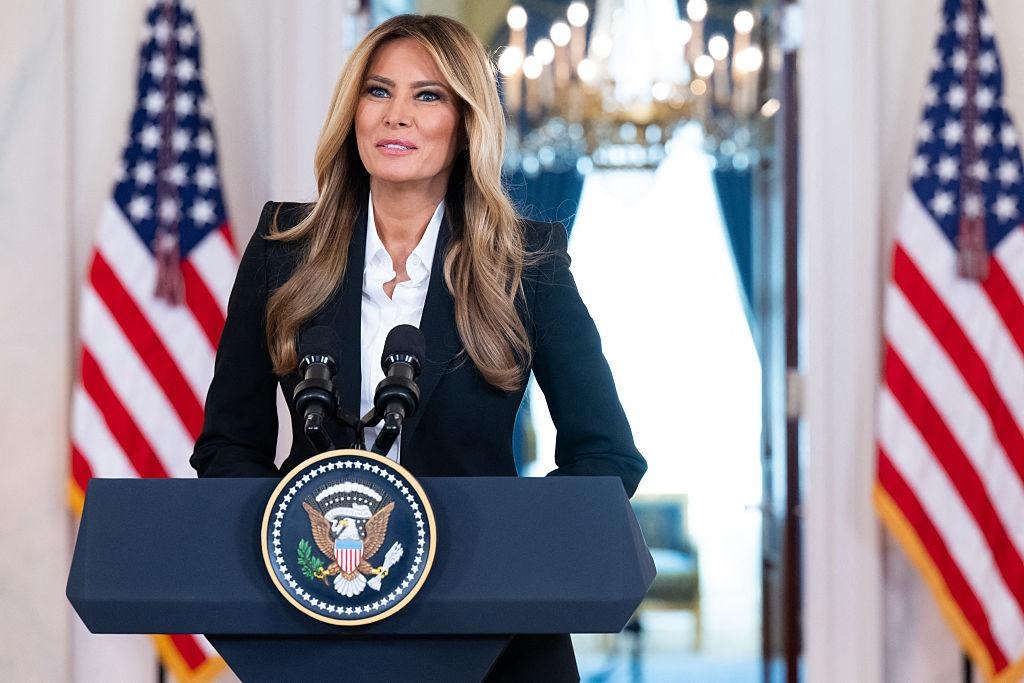
PHOTO CAPTION: First Lady Melania Trump delivers remarks about efforts to reunite children separated by the Russia-Ukraine war at the White House on October 10, 2025. On October 27, 2026, a localized humanitarian ceasefire negotiated with her involvement began in Russian-occupied Oleshky, Ukraine. (Archival White House photo by Cody Hendrix)
A temporary ceasefire between Russia and Ukraine negotiated with the involvement of first lady Melania Trump took effect Tuesday, two days ahead of schedule, as both countries began observing a localized pause in fighting to allow humanitarian assistance into a Russian-occupied Ukrainian city.
The ceasefire began at 3 a.m. local time on October 27 around Oleshky, a devastated city in southern Ukraine's Kherson region. Russian and Ukrainian officials separately confirmed that their forces were observing the agreement.
Later Tuesday, Melania Trump announced that the ceasefire had been expanded beyond Oleshky into surrounding areas of the Kherson region to provide safe passage for humanitarian convoys.
The agreement is intended to allow food, clean water and medicine into the city while establishing evacuation routes for residents who have been trapped by fighting, land mines and drone attacks.
It does not end the broader war between Russia and Ukraine, and fighting continues elsewhere.
Ceasefire Begins Two Days Ahead of Schedule
The White House first announced the agreement on October 23, identifying Melania Trump as a central intermediary in negotiations between Russian and Ukrainian officials.
The original announcement scheduled the ceasefire to begin October 29.
Instead, both sides began observing the agreement early Tuesday, according to statements from Russian and Ukrainian officials reported by Reuters and The Associated Press.
Melania Trump subsequently announced that the agreement had been accelerated to protect civilians and facilitate the delivery of urgently needed humanitarian assistance.
She also said its geographical boundaries had been extended beyond Oleshky to accommodate humanitarian convoys moving through the Kherson region.
The precise boundaries of the expanded area have not been independently established.
The ceasefire is expected to remain in effect through November 1, although its success will depend on both militaries continuing to observe the agreement.
Melania Trump's Unusual Diplomatic Role
The agreement represents an unusual diplomatic undertaking for a U.S. first lady, particularly during an active war.
According to the White House, Melania Trump initiated discussions after learning about the humanitarian emergency in Oleshky during an event connected to September's United Nations General Assembly in New York.
Her office said she and a representative worked directly with Russian and Ukrainian leadership to establish the ceasefire's objectives, timing, procedures and terms.
The discussions reportedly drew on communication channels previously established during efforts to reunite children separated from their families by the war.
The White House said those earlier efforts helped secure six reunification operations involving 34 children.
Pope Leo XIV also separately encouraged the warring parties to permit humanitarian access and civilian evacuations from Oleshky, according to The Associated Press.
The temporary agreement offers a practical, localized result from those diplomatic efforts, although it remains separate from broader negotiations aimed at ending the conflict.
Thousands of Civilians Remain in Oleshky
Oleshky lies across the Dnipro River from the Ukrainian-controlled city of Kherson. Russian forces seized the town during the opening days of the February 2022 invasion.
Before the war, approximately 24,000 people lived there.
The White House estimates that between 1,700 and 2,000 residents remain, primarily older civilians, along with approximately 50 children. Those numbers remain estimates because no formal population count has been conducted since 2022.
Years of fighting have left the town severely damaged.
The destruction of the Kakhovka dam in 2023 caused extensive flooding, while continuing military operations have damaged infrastructure and restricted movement.
Residents have reported shortages of food, medicine, drinking water, electricity and heating. Mines and drone attacks have made some roads extremely dangerous.
The planned humanitarian operation would allow civilian personnel to assess residents' needs, distribute essential supplies and coordinate evacuations.
According to the White House, residents seeking to leave would be offered transportation to their preferred destinations, including areas controlled by either Russia or Ukraine.
However, the successful delivery of supplies and completion of civilian evacuations have not yet been confirmed.
Fighting Continues Elsewhere in Ukraine
Although the ceasefire began around Oleshky, the broader conflict continued Tuesday.
Russian missile attacks struck Kyiv and other Ukrainian cities, with authorities reporting civilian casualties and damage to infrastructure.
Ukrainian officials reported that ballistic missiles and hundreds of drones had targeted multiple regions overnight.
The continued strikes underscore the limited nature of the humanitarian agreement.
The ceasefire is not a nationwide suspension of hostilities, a territorial settlement or a peace treaty.
Questions also remain about the safety of evacuation routes and whether residents in Russian-occupied territory will be able to leave without interference.
The Associated Press reported concerns among displaced residents that Russian authorities could screen evacuees based on their perceived loyalties.
What Happens Next?
The immediate priority is the humanitarian mission, including moving supplies into Oleshky, clearing dangerous routes and helping civilians who want to evacuate.
The temporary ceasefire is scheduled to continue through Sunday, November 1.
Separately, Russia, Ukraine and the United States are expected to resume diplomatic talks in Abu Dhabi in early November as efforts to negotiate a broader settlement continue.
For now, the Oleshky agreement represents a limited but tangible diplomatic development: a localized halt in fighting that both countries say they have begun observing.
Whether it produces sustained humanitarian access, successful civilian evacuations or progress toward a wider agreement remains to be seen.
(Source: OAF Nation)