Marine Corps Alters Complaint Process
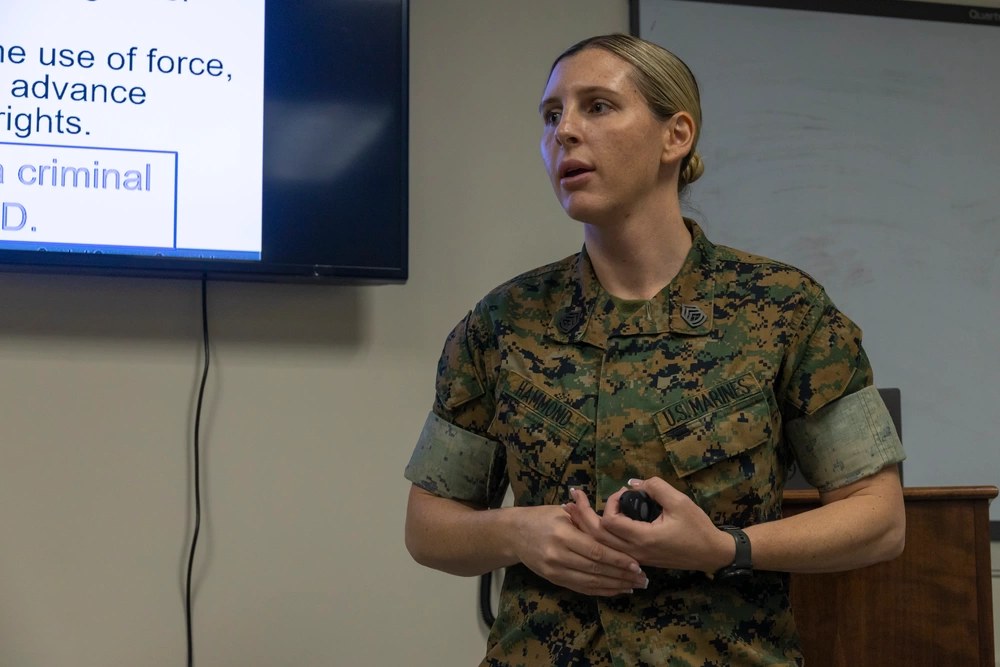
PHOTO CAPTION: Illustrative file photo — Marine Corps Gunnery Sgt. Mariah Hammond, an Equal Opportunity Advisor, gives a class on prohibited activities, conduct and the complaint process at MCAS Cherry Point, North Carolina, Aug. 9, 2023. U.S. Marine Corps photo by Cpl. Noah Braswell
The Marine Corps has changed how discrimination and harassment complaints are handled, immediately ending the processing of anonymous allegations of prohibited discrimination or discriminatory harassment as Military Equal Opportunity complaints.
The change is part of new Marine Corps guidance issued Aug. 20 implementing broader Pentagon reforms to the Military Equal Opportunity system. Commanders can still take action based on information received anonymously, but those allegations will no longer move through the normal MEO complaint process.
The rule does not apply the same way to every type of complaint. Anonymous complaints involving sexual harassment, hazing and bullying will continue to be routed and processed under separate procedures, according to MARADMIN 380/26.
At the same time, the Marine Corps created a new confidential reporting option for Marines and Sailors alleging prohibited discrimination or harassment.
Under that system, a service member can disclose personally identifiable information to an authorized Equal Opportunity Advisor and receive appropriate services without automatically starting an informal or formal complaint. Confidential reports generally will not trigger command notification, an inquiry or an investigation.
There are exceptions when a report reveals an imminent threat of serious bodily harm or death, an intent to commit a future crime or fraud, or when disclosure is otherwise required by federal law, Pentagon policy or legal authority.
A Marine or Sailor who initially chooses confidential reporting can later ask to convert the report into an informal or formal MEO complaint. Until additional guidance is issued, Equal Opportunity Advisors are the designated recipients of confidential reports.
The new policy also gives commanders additional authority to dismiss formal complaints without an investigation after consulting with an Equal Opportunity Advisor and legal counsel.
Reasons for dismissal can include complaints filed outside applicable deadlines, allegations that fall outside MEO policy, complaints lacking sufficient or actionable information, matters already resolved through alternative dispute resolution, withdrawn complaints, duplicate complaints and cases in which the complainant fails to respond to requests for information.
For most service members, a complaint can be considered untimely if it is filed more than 60 calendar days after the most recent incident. Reserve members receive 120 calendar days.
Commanders must decide whether to dismiss a formal complaint within 30 days of receiving it. Complainants must be notified in writing within seven days of that decision and may appeal a dismissal to the next higher commander with general court-martial convening authority within five days.
The guidance also addresses the career consequences that can follow an allegation. Favorable personnel actions — including actions previously delayed because of an MEO complaint — must resume or be completed within seven days when a complaint is dismissed or determined to be unsubstantiated.
The Marine Corps also reiterated that knowingly making a false official statement can constitute a violation of Article 107 of the Uniform Code of Military Justice.
The reforms follow Pentagon-directed changes intended to more quickly resolve complaints that lack actionable evidence while providing a confidential alternative to anonymous reporting. The Marine Corps guidance remains in effect until the changes are incorporated into a revised Marine Corps order.
(Source: OAF Nation)