Iran Sets Conditions to End U.S. Conflict
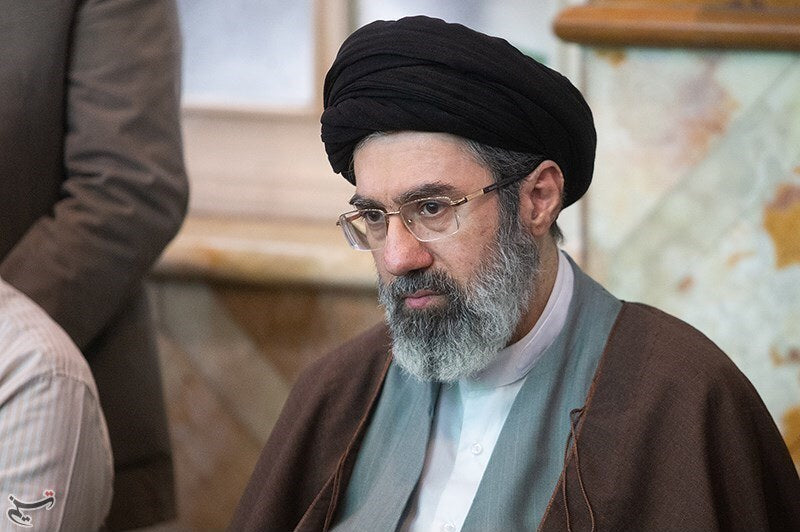
PHOTO CAPTION: Iranian Supreme Leader Mojtaba Khamenei is shown in an archival photograph. His office announced October 27, 2026, that he had emphasized Iran's conditions for ending the war with the United States during a reported meeting with national-security chief Mohsen Rezaei. The date and location of that meeting were not disclosed, and no ceasefire agreement was announced. (Photo by Mostafa Tehrani/Tasnim News Agency, CC BY 4.0)
Iran's supreme leader, Ayatollah Mojtaba Khamenei, has called for the country's conditions to be met before its war with the United States can end, according to an official statement released Tuesday.
The remarks were attributed to Khamenei during a reported private meeting with Mohsen Rezaei, secretary of Iran's Supreme National Security Council.
The announcement comes one day after senior officials from Saudi Arabia, Turkey and Pakistan traveled to Tehran for talks aimed at preventing renewed fighting and finding a path toward a regional settlement.
Khamenei's office said the meeting addressed Iran's security interests, relations with neighboring countries and control of the Strait of Hormuz.
No new ceasefire agreement was announced, and Iranian officials did not disclose the date or location of the reported meeting.
Khamenei Calls for Iran's Demands to Be Met
According to a statement reported by Iranian state-linked media, Khamenei emphasized protecting Iran's national interests and securing the conditions established by Iranian authorities for ending the conflict.
The statement also referred to ending what Tehran describes as a state of neither war nor peace.
That description reflects the prolonged confrontation between Washington and Tehran, in which diplomatic efforts have continued alongside military threats, a U.S. naval blockade and Iranian restrictions on shipping through the Strait of Hormuz.
Khamenei also emphasized maintaining Iran's role in managing the strategic waterway and strengthening relations with neighboring countries.
The statement did not announce a new list of demands or describe an agreement accepted by the United States.
Instead, it reaffirmed Iran's existing negotiating position as regional officials attempt to revive diplomatic efforts.
Iran Wants U.S. Blockade and Oil Sanctions Lifted
Several of Tehran's conditions have been publicly identified in previous statements by Iranian officials.
Iran has demanded an end to the American blockade of its ports and the removal of U.S. sanctions restricting Iranian oil exports.
Officials have also raised demands involving frozen Iranian assets, broader regional hostilities and arrangements governing passage through the Strait of Hormuz.
Rezaei previously said Tehran had presented conditions to Washington through mediators, including Qatar.
On October 22, he reiterated that Iran would not reopen the strait or resume negotiations without its demands being addressed.
The United States has taken a different position.
Vice President JD Vance said earlier this month that Iran must reduce its nuclear enrichment to achieve a settlement.
An Iranian official told Reuters that Tehran would not discuss its nuclear program during Monday's regional meeting and would not address that issue until its demands for ending the war had been met.
Those competing conditions remain among the principal obstacles to an agreement.
Strait of Hormuz Remains Central to Dispute
The Strait of Hormuz, which connects the Persian Gulf with the Gulf of Oman, is one of the world's most strategically important maritime routes.
Before the war began in February, approximately one-fifth of global oil and liquefied natural gas shipments ordinarily passed through the strait.
Iran has restricted shipping through the waterway, while the United States has imposed a counter-blockade targeting Iranian ports.
The confrontation has disrupted maritime commerce and added pressure to global energy markets.
Iranian officials maintain that any reopening arrangement must recognize Tehran's security requirements and control over access to the strait.
Washington and regional governments have sought arrangements that would restore commercial navigation.
Khamenei's reported discussion with Rezaei indicates that Iran's position on the waterway remains tied to its broader demands for ending the conflict.
Saudi Arabia, Turkey and Pakistan Hold Talks in Tehran
The announcement followed a separate diplomatic meeting on Monday involving senior representatives from Iran, Saudi Arabia, Turkey and Pakistan.
Rezaei hosted Saudi Defense Minister Prince Khalid bin Salman, Pakistani military chief Field Marshal Asim Munir and Turkish intelligence chief Ibrahim Kalin.
Iranian Foreign Minister Abbas Araghchi also participated.
The visiting countries recently established a mutual defense arrangement known as the Mecca Pact.
Their discussions addressed regional security, attempts to resume U.S.-Iran negotiations, Houthi attacks affecting Saudi Arabia and disruptions to maritime commerce.
According to a joint statement released after the October 26 meeting, the four countries agreed to continue talks on regional peace and security.
The statement did not announce a ceasefire or a binding settlement between Washington and Tehran.
Reuters reported that Pakistan had presented ideas for a potential compromise, but the parties have not announced agreement on those proposals.
Supreme Leader Remains Out of Public View
Tuesday's announcement was also notable because Khamenei has not made an independently verified public appearance since becoming Iran's supreme leader in March.
He succeeded his father, Ayatollah Ali Khamenei, who was killed in U.S. and Israeli strikes on February 28.
Iranian officials have said Mojtaba Khamenei was injured during the attack.
Since assuming power, he has communicated primarily through written statements attributed to him by official channels.
Senior Iranian officials have separately reported private meetings with the leader, but no authenticated new photographs or videos of him have been released publicly.
His office did not disclose when or where the meeting with Rezaei occurred.
Consequently, the latest announcement establishes Iran's officially stated position, but does not independently verify the details of the private encounter.
What the Announcement Means for American Forces
The United States and Iran remain divided over the conditions necessary to end the conflict.
Iran continues to demand relief from American economic and maritime restrictions, while Washington is pressing for changes to Tehran's nuclear activities and the regional security situation.
The dispute directly affects American forces operating in the Middle East, particularly those assigned to maritime security, regional air defense and other missions connected to the conflict.
Further escalation could expose U.S. military personnel and installations to additional threats.
Conversely, a negotiated agreement could affect military deployments, shipping operations and the conditions under which forces remain in the region.
For now, neither government has announced a new agreement.
Khamenei's reported remarks show that Iran continues to condition an end to the war on acceptance of its demands, even as neighboring countries attempt to facilitate negotiations.
The next significant development would be a concrete proposal accepted for negotiation by both Washington and Tehran, or an announced change in their military positions.
Neither occurred in Tuesday's statement.
(Source: OAF Nation)