Iran Plans to Keep Hormuz Closed
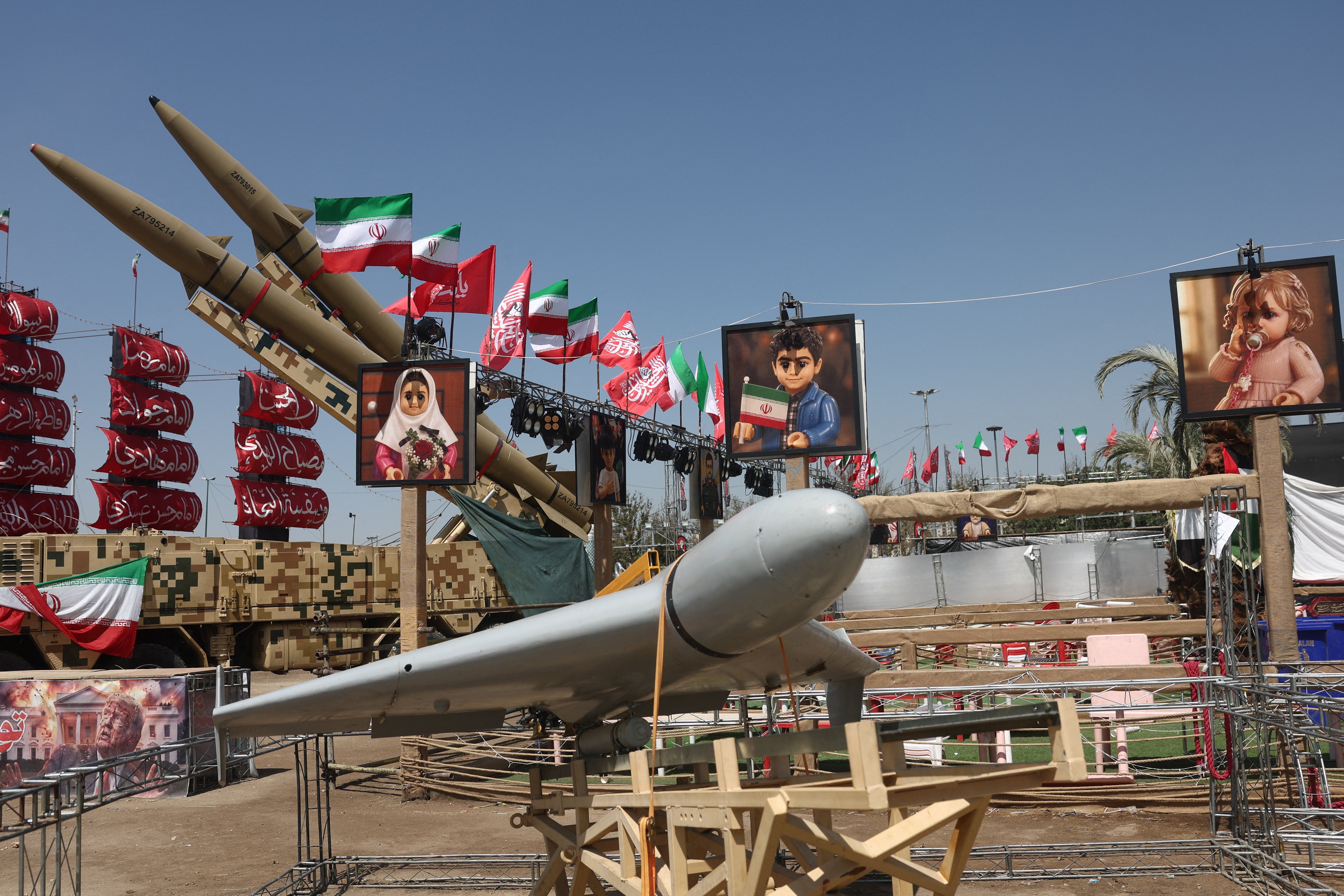
PHOTO CAPTION: FILE PHOTO: An Iranian drone and an Iranian missile system are displayed in Azadi Square in Tehran, Iran, July 30, 2026. Majid Asgaripour/WANA (West Asia News Agency) via REUTERS/ File Photo
DUBAI, Aug. 11 — The Strait of Hormuz will remain closed unless the United States changes its behavior and accepts Iran’s conditions for ending the war, the newly appointed secretary of Iran’s Supreme National Security Council said Tuesday.
Mohsen Rezaei’s comments were the clearest indication yet that a possible agreement between Iran and Oman over transit through the waterway would not by itself lead to an immediate reopening. Iran also wants Washington to meet commitments tied to a June memorandum of understanding aimed at ending the conflict.
“As long as America does not change its behaviour and does not accept Iran’s conditions, the Strait of Hormuz will not be opened,” Rezaei, a close ally of Supreme Leader Ayatollah Mojtaba Khamenei, was quoted by the semi-official Tasnim news agency as saying.
“America must end the war, pay Iran’s frozen assets, the war must end throughout the region, including in Lebanon and Gaza,” he said. Rezaei added that any agreement between Iran and Oman over a transit route through Hormuz would be separate from the broader question of reopening the strait.
Rezaei, appointed Sunday as second-in-command of the body that coordinates Iran’s security and foreign policy, said Tehran’s conditions had been relayed to the United States through mediators. Mohammad Mokhber, an adviser to Khamenei, also said Tuesday that “the punishment of the aggressor continues, and the Strait of Hormuz will not be opened until Iran’s conditions are met.”
Oil futures extended gains as concerns grew over the future of the waterway.
Trump raises compensation demand
Washington did not immediately comment on Iran’s latest statements, but President Donald Trump had already raised a new U.S. demand of his own, saying Iran should pay compensation for people killed in wars, attacks and protests.
“We’re going to ask for money for the damage they’ve done over a 50-year period,” Trump said at the White House on Monday.
In a separate interview released late Monday, Trump described his options in the war as continuing current economic pressure or hitting Iran “really, really hard.” “I’m sort of negotiating,” Trump told Real America’s Voice. “They’re very devious negotiators.”
Trump has repeatedly shifted between threats of escalation and statements that a peace agreement is close.
Before the rhetoric intensified again, Pakistan and Qatar, two of the main mediators, had raised hopes that Washington and Tehran could be nearing an arrangement that would effectively reopen the strategically important waterway. Before the war, about one-fifth of global oil and liquefied natural gas supplies passed through the Strait of Hormuz.
“The signals in the last two, three days are that we are close to some sort of an arrangement,” Pakistani Defence Minister Khawaja Asif told Bloomberg News.
Thousands of people, mainly in Iran and Lebanon, have been killed since the United States and Israel began attacks on Iran on Feb. 28. Iran has retaliated with strikes against U.S. assets and infrastructure in Oman, Jordan, Kuwait, Israel, the United Arab Emirates and Saudi Arabia.
Shipping attacks add to tensions
Reports of fresh attacks on shipping in the Gulf of Oman and Red Sea added to concerns over maritime trade.
Yemen’s Transport Ministry said four crew members were killed Tuesday in a suspected attack by Iran-backed Houthis on the Egyptian-owned cargo vessel Tihamah in the Bab el-Mandeb Strait. If confirmed, the fatalities would be the first deaths in a Houthi strike on shipping since the Iran war began. The Houthis had not claimed responsibility.
A container ship was also struck by a missile off Pakistan while sailing through the Gulf of Oman in what sources described as a suspected U.S. attack. The Wall Street Journal cited a U.S. official as saying a U.S. military helicopter struck the vessel after its crew ignored warnings from personnel enforcing a naval blockade on Iranian ports.
The United States first announced a blockade of shipping trying to reach Iranian ports in April and reimposed it in July after the June peace agreement broke down.
The Houthis separately declared a maritime embargo against Saudi Arabia in the Red Sea on July 20 in response to what they described as a Saudi siege. Riyadh denies that Yemen is under siege.
(Source: Reuters)