Five U.S. Tankers Hit in Saudi Arabia
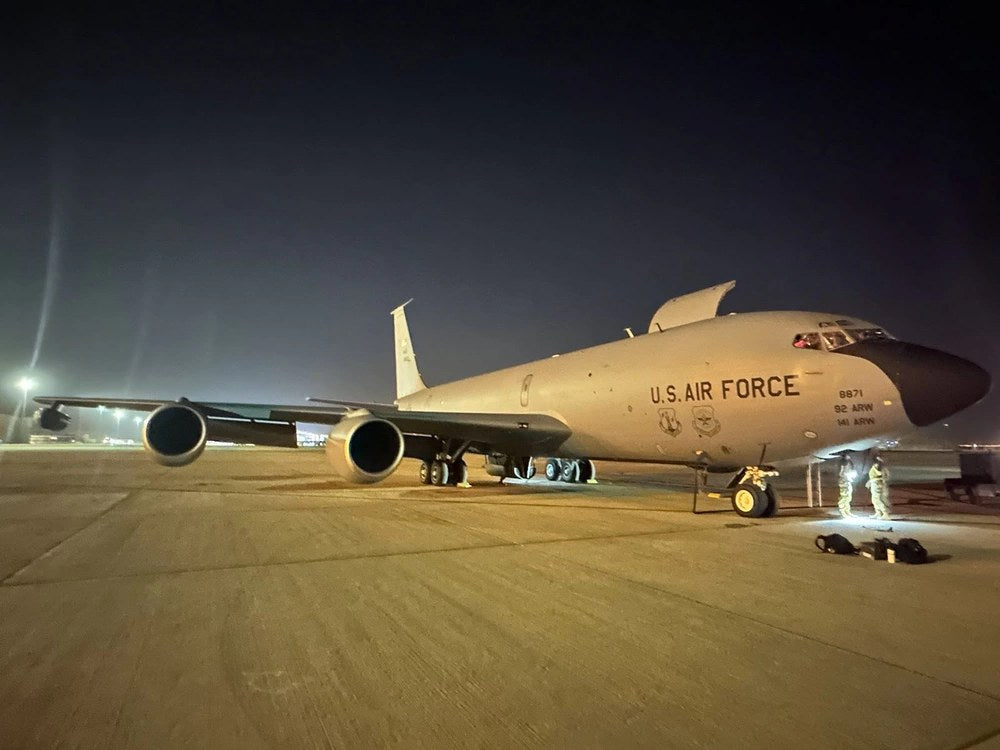
PHOTO CAPTION: A U.S. Air Force KC-135 Stratotanker sits on the tarmac at Prince Sultan Air Base, Saudi Arabia, in October 2023. A newly released watchdog report says five U.S. KC-135s were struck by Iranian munitions while on the ground in Saudi Arabia during the Iran war. (U.S. Air Force photo by Tech. Sgt. Alexander Frank)
Five U.S. Air Force Tankers Were Hit on the Ground in Saudi Arabia, New Watchdog Report Reveals
A newly released government watchdog report is providing the fullest official look yet at the damage Iranian attacks inflicted on U.S. military forces during the war — including a detail that stands out even among months of strikes across the Middle East.
Five U.S. Air Force KC-135 Stratotankers were struck by Iranian munitions while sitting on the ground in Saudi Arabia.
The disclosure appears in the first Lead Inspector General report covering Operation Epic Fury, released Sept. 14.
According to the report, seven KC-135 aerial refueling aircraft were damaged or destroyed during the conflict. Five of those aircraft were hit by Iranian munitions while they were on the ground in Saudi Arabia.
The report does not establish that the aircraft losses resulted from negligence or identify a specific command failure. But the revelation raises an obvious operational question: how did five of the Air Force's aerial refueling aircraft get caught on the ground during a war in which American bases across the region were under Iranian attack?
KC-135s are not just another aircraft on the flight line.
The Stratotanker is one of the aircraft the U.S. military relies on to keep fighters, bombers and other aircraft airborne over long distances. Tankers extend the range and endurance of combat aircraft by refueling them in flight, making them a critical part of American air operations.
The damage to the KC-135 fleet was only one part of a much larger toll documented by the watchdog.
Iranian strikes damaged or destroyed hundreds of buildings and other structures at U.S. facilities across Kuwait, Bahrain, Qatar, the United Arab Emirates, Saudi Arabia, Iraq, Oman and Jordan.
American aircraft and unmanned systems were also hit.
The report said as many as 30 MQ-9 Reaper drones were destroyed during the conflict. Those aircraft cost roughly $30 million each.
Another KC-135 was involved in a separate non-hostile incident in Iraq, where it collided with another tanker and crashed, killing six U.S. service members.
Iranian attacks also disrupted the logistics network supporting American forces throughout the region.
The U.S. naval base in Bahrain, a major Navy logistics hub, was targeted by Iranian drones and ballistic missiles. U.S. Central Command was forced to shift some supply operations to locations farther away, including Diego Garcia in the Indian Ocean.
According to the watchdog, those changes resulted in logistics cycles lasting between 14 and 18 days to support forces operating in the Middle East.
The report covers the period through June 30, meaning it does not represent a final accounting of everything damaged or lost during the conflict.
But it gives the public its clearest official picture so far of what Iranian attacks were actually able to hit.
For the Air Force, perhaps the most striking number is five.
Five KC-135 Stratotankers.
All struck by Iranian munitions while they were still on the ground in Saudi Arabia.
(Source: OAF Nation)