Article: DOJ Won't Reconsider Lejeune Claims
DOJ Won't Reconsider Lejeune Claims
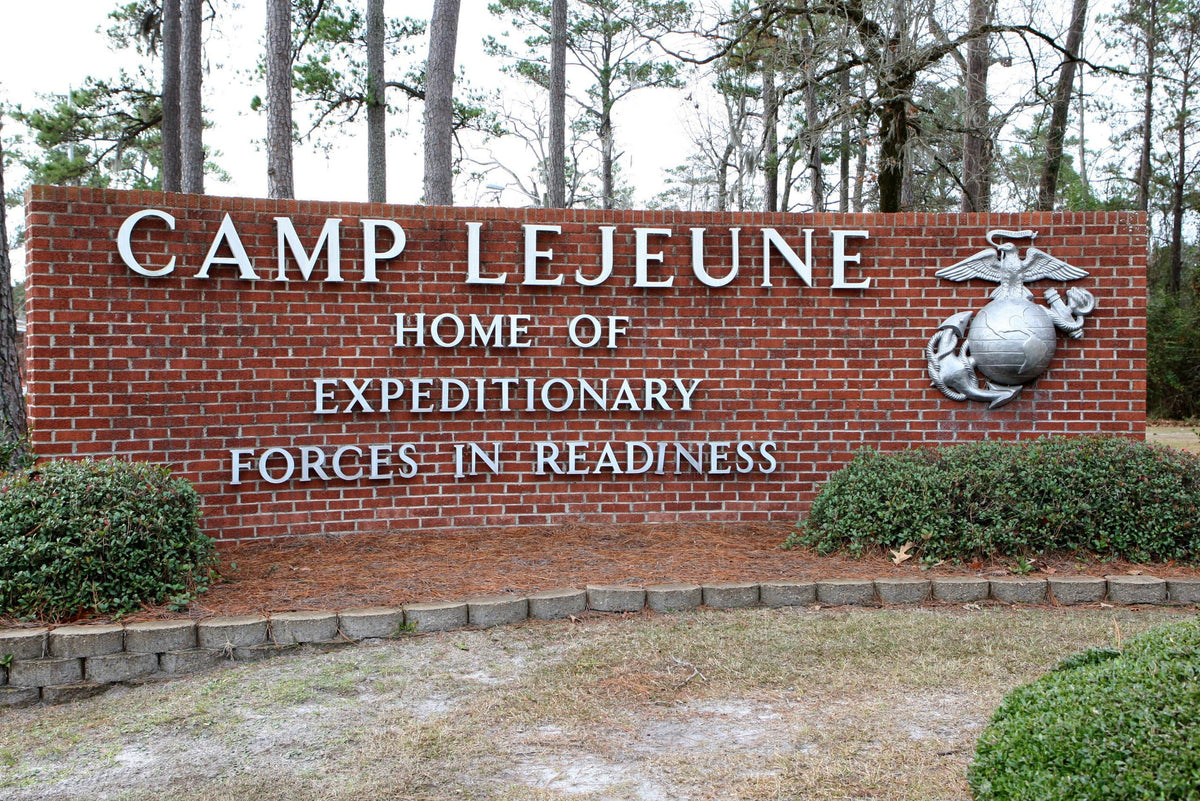
PHOTO CAPTION: A welcome sign stands outside the Holcomb Gate at Marine Corps Base Camp Lejeune, North Carolina, on January 8, 2008. The Justice Department says it will no longer reconsider determinations or accept additional documentation under its Camp Lejeune Elective Option settlement process, raising concerns among claimants who say military records support different compensation amounts. (U.S. Marine Corps courtesy photo / DVIDS. File photo.)
Some Camp Lejeune claimants say they have official military records proving the government underestimated how long they were exposed to contaminated water. That difference could mean thousands of dollars in additional compensation.
But the Justice Department is now publicly stating that it will not reconsider determinations or accept additional documentation under a program designed to settle Camp Lejeune contamination claims more quickly.
The statement, appearing on a DOJ webpage updated Monday, November 23, has raised concerns among attorneys and families who say they are still trying to correct errors in their settlement calculations.
The dispute comes as the government reports paying more than $1 billion through the program, while more than 400,000 administrative claims have been filed under the Camp Lejeune Justice Act.
The Problem With the Government's Calculations
The dispute centers on the Elective Option, an expedited settlement process introduced in September 2023.
The program allows certain people who developed qualifying illnesses after exposure to contaminated water at Camp Lejeune to receive predetermined settlement amounts without going through a full trial.
Compensation depends on two major factors: the qualifying medical condition and the length of time the person lived or worked at the base during the covered period.
That makes accurate military service and housing records especially important.
A claimant credited with a shorter period at Camp Lejeune could qualify for a smaller settlement than someone whose records establish a longer exposure period.
Attorney James Foster represents claimants who dispute the government's calculations.
He told Public Radio East that some of his clients possess certified military records showing they spent more time at Camp Lejeune than federal officials credited them with.
Those claimants want the government to consider the records and correct their determinations.
But the Justice Department's website now states that it is not reconsidering Elective Option determinations or accepting additional documentation for that process.
The Navy's Own Guidance Still Describes Reconsideration
The situation is complicated by another set of government instructions.
The Department of the Navy's published Elective Option guidance describes a process for requesting reconsideration when the government incorrectly calculates a claimant's time at Camp Lejeune.
Foster said one of his clients received a settlement offer just last week that still included instructions explaining how to seek reconsideration.
The discrepancy has left attorneys uncertain about which procedures remain available.
The Justice Department handles Camp Lejeune cases that have entered federal litigation, while the Department of the Navy handles administrative claims.
It remains unclear whether the DOJ's statement applies only to the cases it manages or reflects a broader change affecting Navy-administered claims.
The department also has not publicly explained when its no-reconsideration position took effect, whether exceptions exist, or what will happen to requests already submitted.
Public Radio East requested clarification from DOJ but received no response before publishing its November 25 report.
More Than $1 Billion Paid, but Hundreds of Thousands of Claims Filed
The Justice Department reports that, as of November 20, more than $1 billion had been paid through Elective Option settlements.
That is a significant milestone for a compensation effort involving decades-old contamination.
But the overall volume of claims remains enormous.
More than 400,000 administrative claims have been filed under the Camp Lejeune Justice Act, which Congress enacted in 2022.
The law created a route for people harmed by contaminated drinking water at the North Carolina Marine Corps installation to seek compensation from the federal government.
The contamination involved chemicals including industrial solvents and benzene in drinking-water systems that served portions of the base for decades.
Many affected families are now trying to reconstruct military assignments, housing arrangements and medical histories dating back to the 1950s, 1960s, 1970s and 1980s.
Some are pursuing claims for relatives who died years ago.
That can mean finding old duty records, medical documents and proof of residence before the government will consider a claim eligible for payment.
Advocates Question Why Correcting Errors Is So Difficult
Longtime Camp Lejeune contamination advocate Mike Partain questioned why the government would refuse to reconsider a determination when a claimant can provide records demonstrating an error.
Partain, who was born at Camp Lejeune and later developed breast cancer, has advocated for greater access to the government's historical records.
He believes claimants should be able to examine the records used to determine their exposure periods and identify discrepancies.
Retired Marine Master Sgt. Jerry Ensminger, whose daughter Janey died of leukemia, also emphasized the importance of claimants and their attorneys assembling complete documentation.
The concern isn't simply that people disagree with the amount offered.
It is that some claimants say they have evidence the government used the wrong information.
The Justice Department has not publicly provided a detailed explanation for why it is declining further review under the Elective Option.
Does This Mean Camp Lejeune Claims Are Closed?
No.
The DOJ's statement concerns Elective Option determinations and additional documentation submitted for that particular settlement process.
It does not announce the closure of all Camp Lejeune claims, the termination of pending federal lawsuits, or an end to the broader compensation program.
Claimants who do not qualify for an Elective Option settlement may still have other avenues available, depending on the status of their claims and the applicable legal requirements.
Litigation also remains active in federal court in North Carolina.
Attorneys involved in those proceedings have been discussing the possibility of a broader settlement framework, although no final agreement has been publicly announced.
For families who spent years waiting for compensation, the immediate concern is narrower and more personal.
If government records establish that someone spent longer at Camp Lejeune than the settlement calculation recognizes, will officials consider that evidence?
The Navy's published instructions still contemplate correcting certain mistakes. The Justice Department's latest public position says it is not reconsidering Elective Option determinations.
Until the government explains how those rules operate together, some claimants remain uncertain whether the records they spent years locating can still make a difference.
(Source: OAF Nation)