DOJ Won’t Appeal Gun Ruling
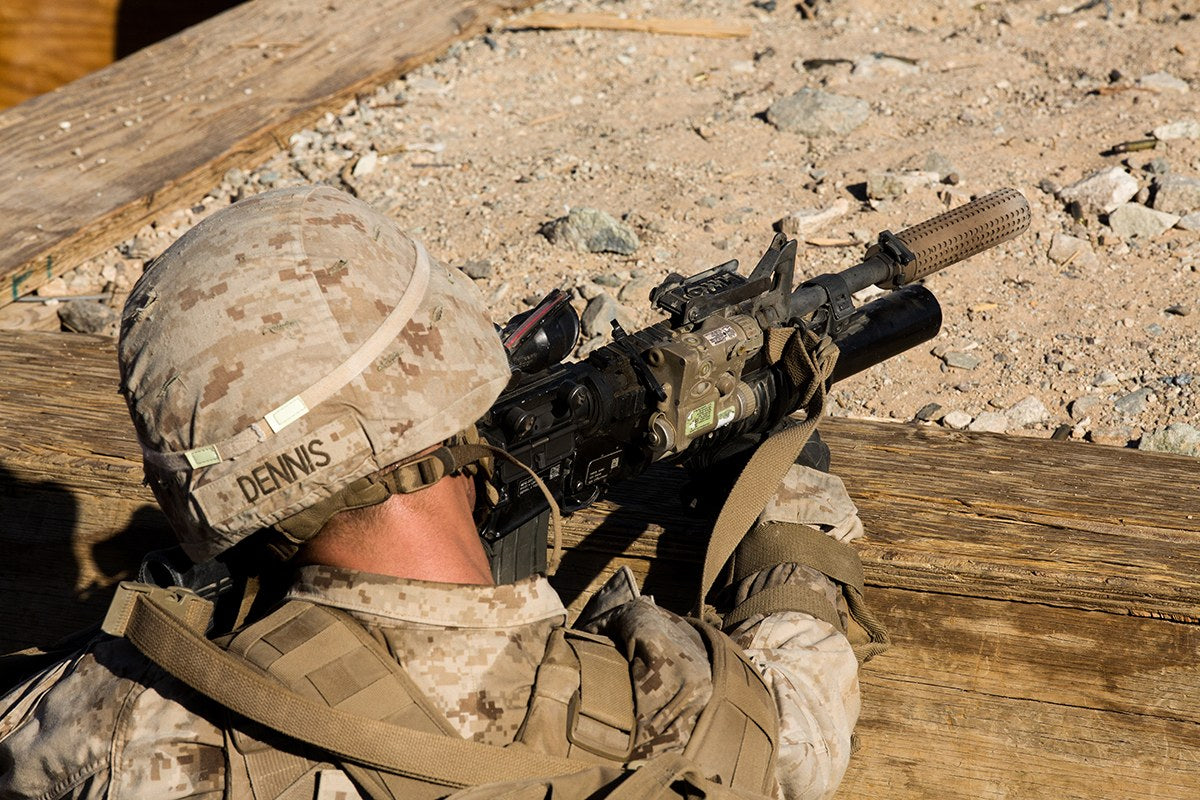
PHOTO CAPTION: A U.S. Marine fires an M4-style rifle equipped with a suppressor during training at Marine Corps Air Ground Combat Center Twentynine Palms, California, in October 2020. The Trump administration reportedly will not appeal a federal ruling loosening some National Firearms Act restrictions on suppressors and certain short-barreled firearms. (U.S. Marine Corps photo by Lance Cpl. Sarah Petrock)
The Justice Department does not plan to appeal a federal court ruling that loosened enforcement of National Firearms Act restrictions on suppressors, short-barreled rifles and short-barreled shotguns, according to CBS News.
CBS reported Thursday night that President Donald Trump directed the Justice Department not to challenge the ruling. A Justice Department official told the outlet that the department intends to notify Congress that it will not appeal, while a DOJ spokesperson said the Bureau of Alcohol, Tobacco, Firearms and Explosives will issue guidance to implement the court’s order.
The development is significant because the government’s deadline to appeal is Oct. 5.
The underlying court decision itself is not new.
In August, U.S. District Judge James Wesley Hendrix in the Northern District of Texas ruled that the federal government could not enforce several challenged National Firearms Act provisions involving suppressors, short-barreled rifles and short-barreled shotguns against the parties covered by the case.
For decades, weapons and devices covered by the National Firearms Act have faced stricter federal controls than ordinary firearms. Those requirements have included an ATF application, fingerprints and federal registration.
But the Texas ruling does not simply eliminate those restrictions for every gun owner nationwide.
The injunction applies to the parties involved in the lawsuit and extends to current and future members or customers of the gun-rights organizations that challenged the law.
The ruling also does not cover machine guns or destructive devices, and it does not eliminate other federal laws prohibiting certain people, including convicted felons, from possessing firearms.
Hendrix’s decision followed a change Congress made last year eliminating the $200 tax previously imposed when many National Firearms Act weapons and devices were made or transferred.
The judge concluded that because the challenged portions of the law no longer generated tax revenue, those regulatory provisions could not continue to be justified under Congress’s taxing power.
Justice Department attorneys had argued that Congress still possesses authority to regulate the firearms through its constitutional power over interstate commerce.
The ruling has already begun affecting federal firearms prosecutions.
In one recent Alabama case, prosecutors dropped a charge involving receipt of an unserialized silencer after the defendant argued that he had joined one of the gun-rights organizations covered by the Texas injunction after the ruling was issued.
That defendant still faces other charges, including an allegation involving illegal possession of a machine gun, which is not covered by the Texas ruling.
The administration’s decision not to appeal means the Justice Department will not ask a higher court to reverse Hendrix’s ruling before the appeal deadline.
Gun-control advocates have criticized the decision, arguing that the longstanding federal restrictions serve a public-safety purpose. Gun-rights groups, meanwhile, have argued that the National Firearms Act imposes unconstitutional restrictions on weapons protected by the Second Amendment.
Other legal challenges could still change the landscape. States or other interested parties could seek to intervene, Congress could change the law, and similar cases are being litigated elsewhere.
For now, however, the Justice Department reportedly intends to let the Texas ruling stand rather than appeal it.
That leaves a significant portion of the decades-old federal regulatory system for suppressors and certain short-barreled firearms facing an uncertain future.
(Source: OAF Nation)