DOJ Sues Glendale Over Gun Permit Fees
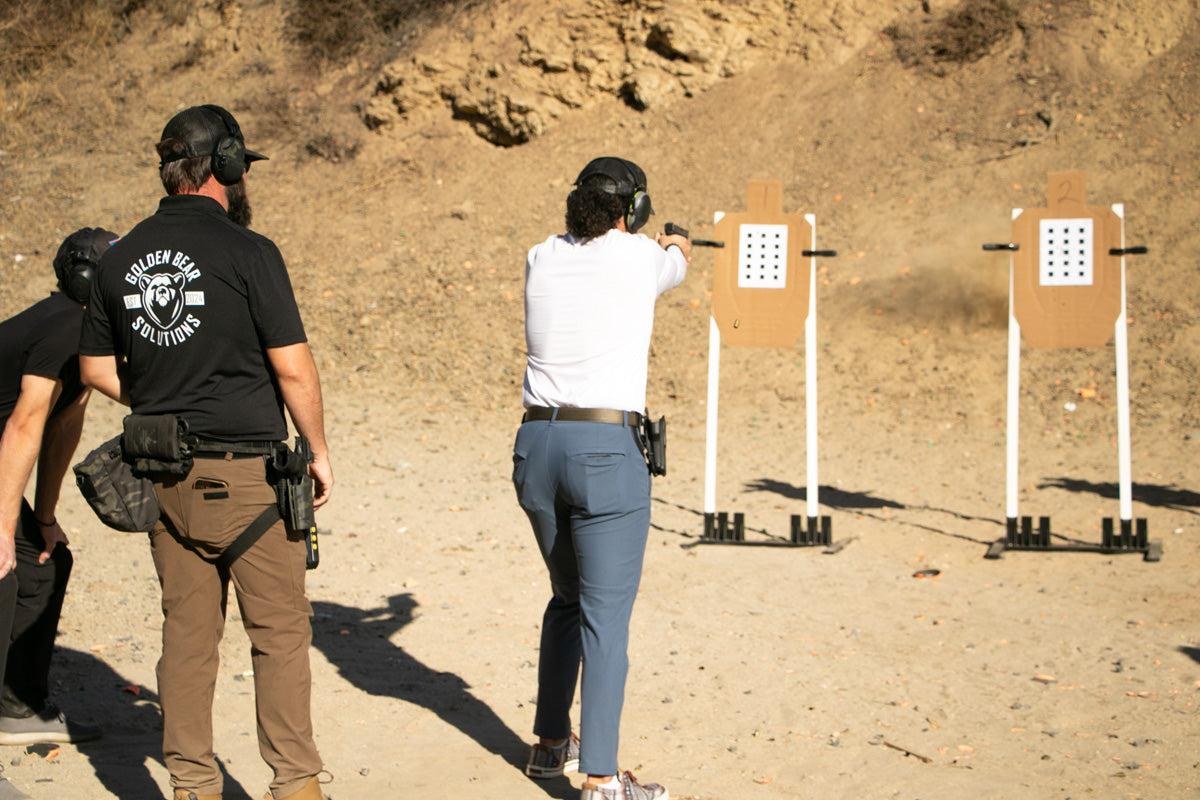
PHOTO CAPTION: A participant completes a concealed-carry firearms qualification exercise at a California shooting range. The Justice Department sued Glendale, California, on November 9, 2026, alleging that concealed-carry permit costs reaching $2,106, including required expenses, and additional screening procedures violate Second Amendment protections. (Illustrative file photo: Golden Bear Solutions.)
The U.S. Department of Justice has filed a federal lawsuit against Glendale, California, accusing the city of violating the Second Amendment by imposing concealed carry permit requirements that can cost applicants more than $2,000.
The lawsuit, filed November 9 in federal court in Los Angeles, challenges a licensing system that federal officials say imposes excessive financial burdens and gives police officials too much discretion over who can legally carry a concealed firearm.
According to the Justice Department, a new concealed carry permit in Glendale costs between $1,971 and $2,106 when required expenses are included.
Renewals cost between $1,271 and $1,406.
Applicants must also complete psychological evaluations, interviews and reference checks. Police review applicants' public statements, including social media activity.
Federal prosecutors argue that the combination of high costs and subjective screening requirements creates unconstitutional barriers to exercising a protected right.
Glendale has not been found liable. The allegations will now be considered through the federal legal process.
From a $100 Application Fee to More Than $2,000 in Total Costs
The Justice Department says Glendale's basic concealed carry application fee was $100 during the previous fiscal year.
The city subsequently raised that fee to approximately $1,078 for new applicants, according to reporting on the lawsuit.
The basic renewal fee also increased substantially, to approximately $826.
But the amounts charged by the police department are only part of the expense.
Applicants must also pay for required services that can include firearms training, fingerprinting and psychological testing.
When those additional costs are included, the Justice Department calculates that new applicants face a total expense of $1,971 to $2,106.
Renewal costs are estimated at $1,271 to $1,406.
The DOJ says renewal applications must be completed every two years.
The distinction between the city's application fees and the overall cost is important. Glendale does not directly collect every dollar included in the federal government's estimates.
Nevertheless, those additional expenses are part of the process applicants must complete to obtain or renew a concealed carry license.
The California Rifle & Pistol Association raised concerns about the fees months before the federal lawsuit, arguing that the combined expenses could place permits beyond the financial reach of ordinary residents.
Police Also Review Applicants' Social Media
The Justice Department's complaint goes beyond licensing costs.
Glendale's permitting system includes several screening requirements intended to assess applicants before they receive authorization to carry concealed firearms.
These include interviews with applicants, reference interviews and psychological evaluations.
Officials also examine public statements, including material posted on social media.
The DOJ alleges that Glendale does not publish sufficiently objective standards explaining how information gathered through those procedures affects the licensing decision.
That raises a separate constitutional dispute.
A government agency may conduct lawful background checks and assess whether an applicant meets established eligibility requirements.
But federal prosecutors argue that licensing officials cannot exercise unrestricted personal judgment when deciding whether someone may exercise a constitutional right.
In the Justice Department's view, Glendale's system gives police too much discretion and does not adequately inform applicants what standards they must satisfy.
The city has not yet presented a substantive public response to those allegations in the reporting reviewed.
Supreme Court Decision Is Central to the Case
The lawsuit relies heavily on the U.S. Supreme Court's 2022 decision in New York State Rifle & Pistol Association v. Bruen.
In that case, the Court struck down New York's requirement that applicants demonstrate a special need for carrying a firearm in public.
The ruling recognized that the Second Amendment protects the right of ordinary, law-abiding citizens to carry handguns publicly for self-defense, subject to constitutional restrictions.
However, the Court did not prohibit all firearm permitting systems.
It distinguished licensing procedures based on objective eligibility requirements from systems that allow authorities broad discretion to reject otherwise qualified applicants.
The majority opinion also warned that permitting systems could face constitutional challenges if excessive fees or prolonged delays effectively prevented ordinary citizens from exercising their rights.
That warning is central to the federal government's case against Glendale.
The Justice Department argues that the city's costs and discretionary screening procedures violate the principles established by the Supreme Court.
Whether Glendale's specific requirements cross that constitutional line has not yet been decided.
Gun-Rights Organization Challenged Fees Before DOJ Lawsuit
The federal action follows months of complaints about Glendale's licensing practices.
On August 27, attorneys representing the California Rifle & Pistol Association sent a formal demand letter to the Glendale Police Department and city attorney.
The organization challenged both the fees and the city's use of mandatory psychological evaluations.
CRPA argued that California law permits psychological testing under certain circumstances but does not authorize automatically imposing the same requirement on every applicant in the manner Glendale allegedly does.
The organization also questioned the legality of requiring additional psychological assessments for renewals without evidence of a public safety concern.
In September, CRPA publicly renewed its objections, describing Glendale's overall permit costs as exceeding $2,000 when required services were included.
The Justice Department subsequently intervened.
An October 28 letter from federal civil rights officials warned Glendale that the government was prepared to file a lawsuit unless the city agreed to address the concerns.
The federal government formally filed suit on November 9.
DOJ Says the Fees Interfere With a Constitutional Right
Acting Assistant Attorney General for Civil Rights Jesus Osete said the federal government considers Glendale's requirements an unlawful burden on Second Amendment rights.
First Assistant U.S. Attorney Bill Essayli for the Central District of California likewise criticized the city's licensing costs.
Their position is that residents should not face unreasonable financial obstacles when seeking legal authorization to carry firearms for self-defense.
Supporters of concealed carry licensing requirements generally argue that background investigations, firearms training and other screening measures help ensure applicants are qualified and can carry safely.
California law continues to require applicants to satisfy eligibility standards, and the Supreme Court has not declared all such screening unconstitutional.
The legal dispute is therefore not simply whether cities can require permits.
It is whether Glendale's particular fees and procedures exceed what the Constitution allows.
How Glendale Compares With Other California Agencies
The costs identified in the lawsuit are considerably higher than basic licensing fees reported for some other Southern California law enforcement agencies.
According to MyNewsLA, the Los Angeles County Sheriff's Department charges approximately $175 for an initial concealed carry permit, while the Los Angeles Police Department charges approximately $325.
Those figures exclude certain additional expenses, such as fingerprinting and required training, so they are not directly comparable to Glendale's total estimated costs.
Still, the differences help explain why Glendale has attracted attention from gun-rights advocates and federal officials.
The Justice Department has also pursued other Southern California concealed carry disputes.
In August 2026, DOJ announced a settlement with the Los Angeles County Sheriff's Department concerning lengthy permit processing times.
That case focused on delays rather than the fee structure now being challenged in Glendale.
Together, the cases show that federal officials are scrutinizing both the financial and administrative obstacles associated with obtaining legal carry permits.
What Happens Next?
The Glendale lawsuit is now a federal civil rights case.
The city will have an opportunity to respond to the allegations and defend its licensing practices.
The court may be asked to determine whether the application costs are excessive and whether the city's screening procedures provide sufficiently clear and objective criteria.
No final ruling has been issued, and the Justice Department's complaint does not automatically eliminate Glendale's fees or other requirements.
The outcome could influence how other local governments evaluate the cost and administration of concealed carry permits.
For now, the dispute centers on a basic legal question: how much may a government require citizens to pay, and what screening discretion may officials exercise, before granting a permit to carry a firearm under the Second Amendment?
(Source: OAF Nation)