Article: Court Says Switchblade Ban Violates 2A
Court Says Switchblade Ban Violates 2A
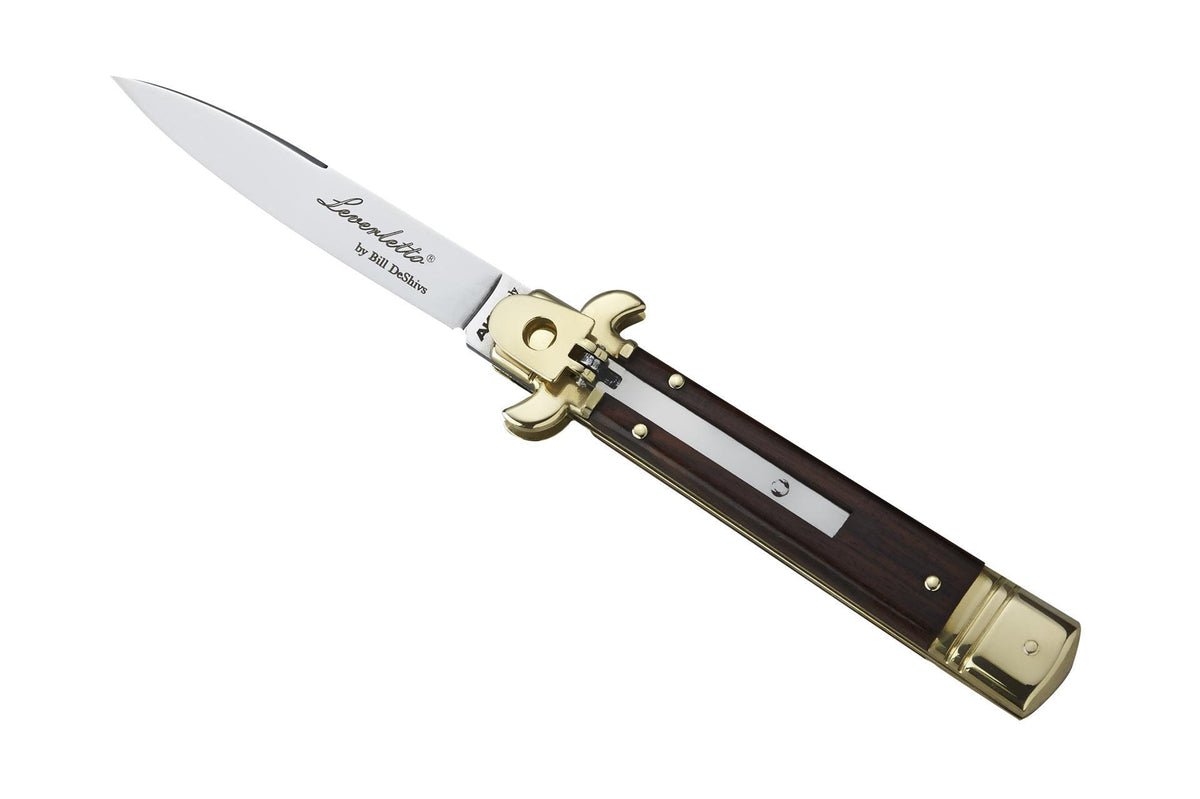
PHOTO CAPTION: An AKC Leverletto switchblade is shown in a 2017 photograph. On October 21, 2026, the U.S. Court of Appeals for the Fifth Circuit ruled that switchblades are protected under the Second Amendment and found federal restrictions on their interstate manufacture, transportation and distribution unconstitutional. Other federal restrictions and state knife laws remain unaffected by the decision. (Photo by Jacek Halicki, CC BY-SA 4.0)
A federal appeals court has ruled that switchblade knives are protected by the Second Amendment, finding that a decades-old federal law restricting their manufacture, transportation and distribution across state lines violates constitutional protections.
The U.S. Court of Appeals for the Fifth Circuit issued its decision Wednesday, October 21, in Knife Rights v. Blanche, reversing a lower court ruling that had rejected the constitutional challenge.
The three-judge panel determined that switchblades qualify as protected arms and that the federal government failed to establish sufficient historical justification for its interstate-commerce restrictions.
The ruling does not automatically eliminate every federal restriction on switchblades or override state laws regulating their sale, possession or carrying.
Federal Switchblade Law Dates to 1958
Congress enacted the Federal Switchblade Act in 1958 amid widespread concern about juvenile delinquency, street gangs and crimes involving automatic-opening knives.
The legislation targeted the commercial distribution of switchblades, rather than establishing a universal federal prohibition on possessing them.
Under 15 U.S.C. § 1242, knowingly introducing switchblades into interstate commerce, manufacturing them for that purpose, or transporting or distributing them across state lines could result in criminal penalties.
The statute provided exceptions for certain knives and circumstances.
The law remained in place for nearly seven decades, even as many states revised their own restrictions on automatic knives.
Court Says Switchblades Qualify as Protected Arms
Chief Judge Jennifer Walker Elrod, writing for the Fifth Circuit panel, concluded that switchblade knives fall within the Second Amendment's protection.
The court relied on the constitutional framework established in the Supreme Court's 2022 decision in New York State Rifle & Pistol Association v. Bruen.
Under that framework, when conduct falls within the Second Amendment's protection, the government must establish that restrictions are consistent with the nation's historical tradition of arms regulation.
The Fifth Circuit concluded that switchblades qualify as arms and that the right to keep and bear arms extends to activities necessary to obtain them.
That includes the manufacture, transportation and distribution of weapons in commerce.
The judges rejected the idea that the federal restrictions could survive constitutional scrutiny simply because they did not directly prohibit every person from possessing a switchblade.
Government Failed to Justify Interstate Restrictions
Federal attorneys defended the law partly by pointing to historical restrictions on concealable weapons.
They argued that governments have traditionally regulated weapons considered especially dangerous because they can be carried discreetly.
The appeals court distinguished restrictions on how people carry weapons from restrictions on manufacturing, transporting and distributing those weapons.
The historical laws cited by the government primarily involved concealed carrying.
The judges concluded that those examples did not establish a sufficiently comparable tradition of broadly restricting the supply and distribution of switchblades.
Even if the government had a historically recognized reason for regulating concealable weapons, the court found that its method of regulation went beyond what the cited historical precedents supported.
The panel therefore determined that Section 1242 of the Federal Switchblade Act violates the Second Amendment.
Court Leaves Other Federal Restrictions in Place
The plaintiffs also challenged Section 1243, a separate federal provision governing switchblades in certain federal jurisdictions, including U.S. territories, Indian country and areas under special federal jurisdiction.
That challenge was unsuccessful.
The appeals court found that the plaintiffs had not met the demanding legal standard required to invalidate the provision in every possible application.
Federal attorneys identified locations such as courthouses, military installations and federal prisons where restrictions on weapons could lawfully apply.
The court did not decide that every application of Section 1243 is constitutional. It ruled that the plaintiffs had failed to demonstrate that the entire provision was unconstitutional in all circumstances.
As a result, the dismissal of that part of the lawsuit was upheld.
The decision also does not invalidate state laws that separately regulate automatic knives.
Lawsuit Returns to Lower Court
Knife Rights, a national organization advocating for fewer restrictions on bladed weapons, brought the challenge alongside individual plaintiffs and businesses that wanted to acquire, transport or sell switchblade knives.
The plaintiffs argued that federal law prevented them from exercising rights protected under the Second Amendment.
A federal district court in Texas had previously dismissed their challenge to the interstate-commerce restrictions.
The Fifth Circuit reversed that portion of the dismissal and returned the case to the district court for additional proceedings.
The appellate opinion establishes the panel's constitutional conclusion, but further court proceedings remain necessary. The ruling does not itself announce a nationwide elimination of every federal knife restriction.
Another Significant Second Amendment Decision
The ruling comes one day after a federal district judge in New York declared that body armor falls within the Second Amendment's protections and struck down the state's broad restrictions on civilian purchases.
Although the two cases involve different laws and legal questions, both address whether constitutional protections extend beyond firearms to other equipment traditionally associated with arms and self-defense.
The Fifth Circuit's switchblade ruling could also influence future legal challenges involving restrictions on the acquisition and commercial distribution of weapons.
For now, the decision represents a significant appellate ruling against the federal government's longstanding interstate switchblade restrictions, while leaving other federal provisions and state laws unresolved or intact.
(Source: OAF Nation)