Army Tests AI for Suicide Risk
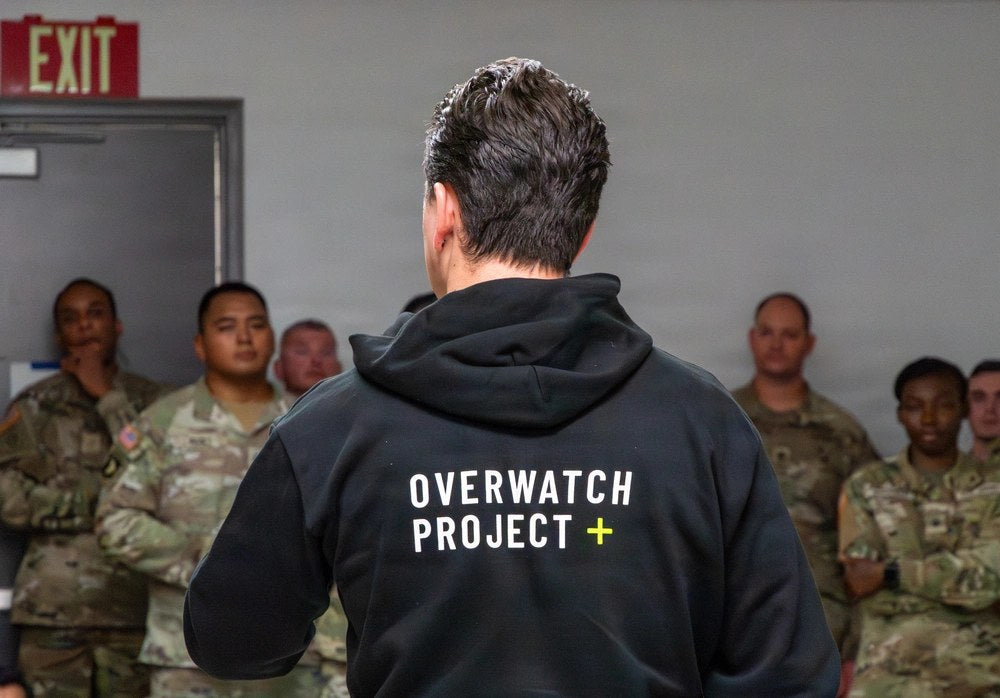
PHOTO CAPTION: Soldiers participate in suicide-prevention training with the Overwatch Project at Fort Hood, Texas, on Jan. 7, 2026. The Army is separately testing SAFEGUARD, a machine-learning initiative designed to identify soldiers at elevated suicide risk and connect them with targeted support. (U.S. Army photo by Sgt. Lyca Williams)
The Army is testing a machine-learning system designed to identify soldiers at elevated risk for suicide after research found that 95% of suicide attempts within six months of an annual health assessment occurred among soldiers who had denied having suicidal thoughts on that assessment.
The Uniformed Services University is leading the effort, called SAFEGUARD — Suicide Avoidance Focused Enhanced Group Using Algorithm Risk Detection. Controlled trials with soldiers began in January 2026, according to the Military Health System.
The system is intended to supplement traditional suicide screening by using medical and personnel information to identify soldiers who may benefit from additional prevention programs.
The approach grew out of research examining more than 1 million Periodic Health Assessments completed by 452,473 Regular Army soldiers between 2014 and 2019.
Researchers found that soldiers reported suicidal thoughts on very few of those assessments.
In 99.8% of the PHAs studied, soldiers denied having suicidal thoughts. Yet 95.2% of the suicide attempts recorded during the following six months occurred among soldiers who had denied suicidality on their assessment.
Researchers have previously noted that service members may be less likely to report mental health symptoms or suicidal thoughts when they believe their responses can be seen by the military.
The machine-learning model looked beyond soldiers' answers to suicide-screening questions and incorporated administrative medical, personnel and service-related information already available to the Army.
The results were considerably more effective at concentrating risk.
The 25% of soldiers identified by the preferred model as having the highest predicted risk accounted for approximately 70% of the suicide attempts that occurred within six months of their health assessments.
That does not mean the system can determine which individual soldier will attempt suicide. Researchers emphasize that suicide remains a rare event that is difficult to predict.
Instead, SAFEGUARD is being tested as a way to identify groups at elevated risk and connect them with additional support before a crisis develops.
The initiative currently consists of three programs aimed at different points in a soldier's career.
Level Up targets soldiers arriving at their first duty assignments and teaches practical skills involving stress, emotional regulation, decision-making and relationships.
Operation Life Force provides virtual group interventions, skills training and suicide-safety planning for soldiers identified as having elevated predicted risk.
Fort Hood is currently enrolling soldiers in controlled trials involving both Level Up and Operation Life Force.
A third program, Pathfinding, is recruiting soldiers nationwide following inpatient psychiatric treatment at military hospitals.
Participants in that program either receive normal treatment or normal treatment combined with an intensive six-month telehealth case-management program intended to connect them with additional resources and support.
SAFEGUARD's prediction models are based on work from the Army Study to Assess Risk and Resilience in Servicemembers, or Army STARRS, which integrated information from more than 50 Army administrative data systems.
Researchers are now updating those historical models using current medical and personnel information as they test whether targeted interventions can reduce suicidal behavior.
If the controlled trials prove successful, researchers say similar systems could eventually be developed for the other military services, although each service would require its own data and model testing.
The effort represents a shift from relying heavily on what a service member reports during a screening toward using additional information already available to identify who may need help.
Sources: Military Health System; Uniformed Services University; Army STARRS research
(Source: OAF Nation)