Army Expands Fitness Beyond PT
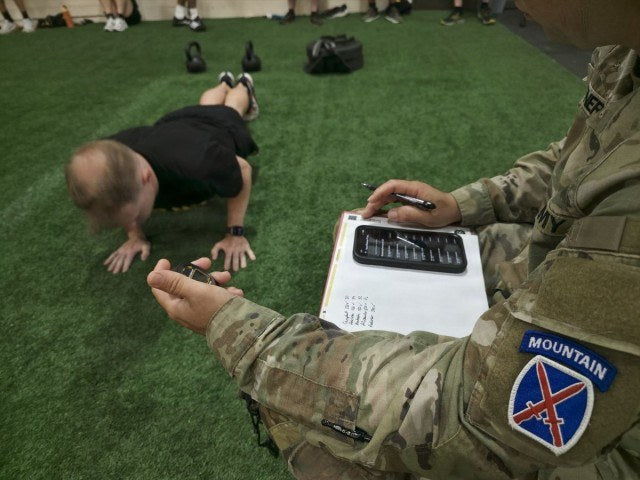
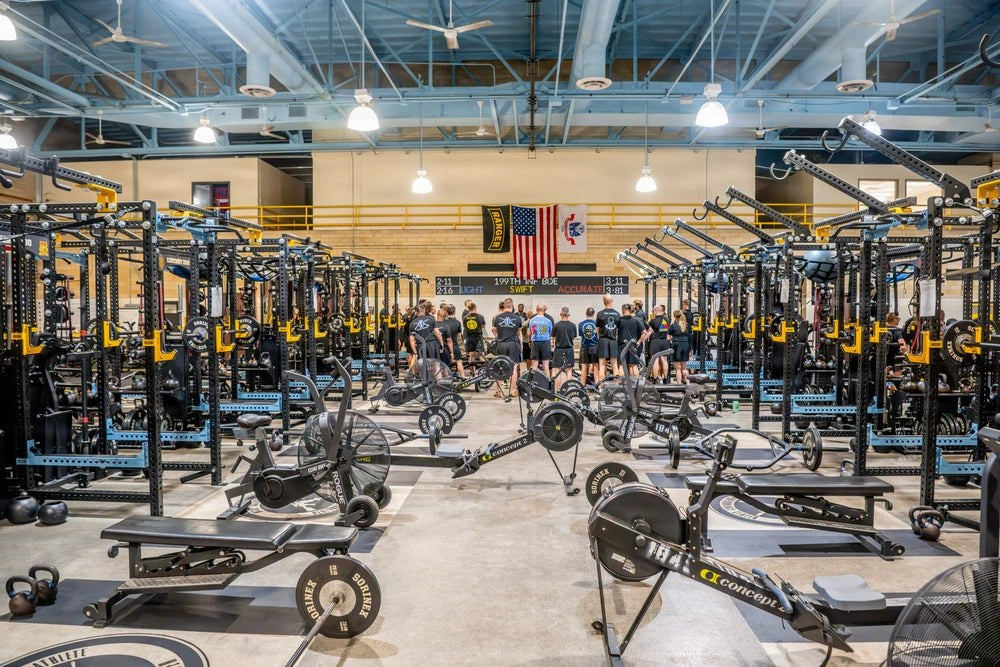
PHOTO CAPTION: Army senior leaders participate in a physical fitness event at the Tactical Athlete Performance Center during the Maneuver Warfighter Conference at Fort Benning, Georgia, Sept. 16, 2026. U.S. Army photo by Patrick A. Albright.
The Army says keeping Soldiers ready for combat requires more than physical training.
Officials with the service’s Holistic Health and Fitness program highlighted five areas of readiness during the Maneuver Warfighter Conference at Fort Benning: physical, mental, spiritual, nutritional and sleep readiness.
The presentations, held Sept. 16 and 17, focused on using the H2F system to keep Soldiers healthy, reduce injuries and return injured personnel to duty faster.
Army officials said musculoskeletal injuries cost the service more than 10 million duty days every year.
According to data presented at the conference, Soldiers participating in H2F programs spend an average of roughly five to six fewer days on medical profiles for each musculoskeletal injury.
The Army argues that even relatively small reductions in recovery time can add up across the force when millions of duty days are being lost annually.
H2F is also designed to go beyond injury rehabilitation.
Army officials said the program focuses on building healthier relationships with sleep, nutrition and mental health while helping Soldiers develop the physical and psychological readiness needed for demanding missions.
Lt. Col. Gary Helton, director of the H2F Academy, said the spiritual component is focused partly on a Soldier’s motivation and sense of purpose.
The Army’s current H2F framework lists physical, mental, nutritional, sleep and spiritual readiness as its five domains.
The service has also reported results among pregnant and postpartum Soldiers.
Army researchers found that Soldiers assigned to H2F resourced brigades regained their previous physical fitness scores about two months faster following pregnancy than Soldiers without the same level of H2F support.
The program is also reaching new Soldiers.
H2F specialists are working with drill sergeants during the first weeks of initial entry training, teaching movement, conditioning and injury prevention before trainees move deeper into basic combat training.
Army leaders say the objective is not simply improving fitness test scores.
The broader goal is keeping more Soldiers healthy, available for training and ready to deploy when needed.
Col. Marcus Wright, the Army’s H2F director, told conference attendees that the program is intended to optimize human performance across the force rather than wait until Soldiers are injured and then try to repair the damage.
(Source: OAF Nation)