Army Closes Afghan Shooting Case
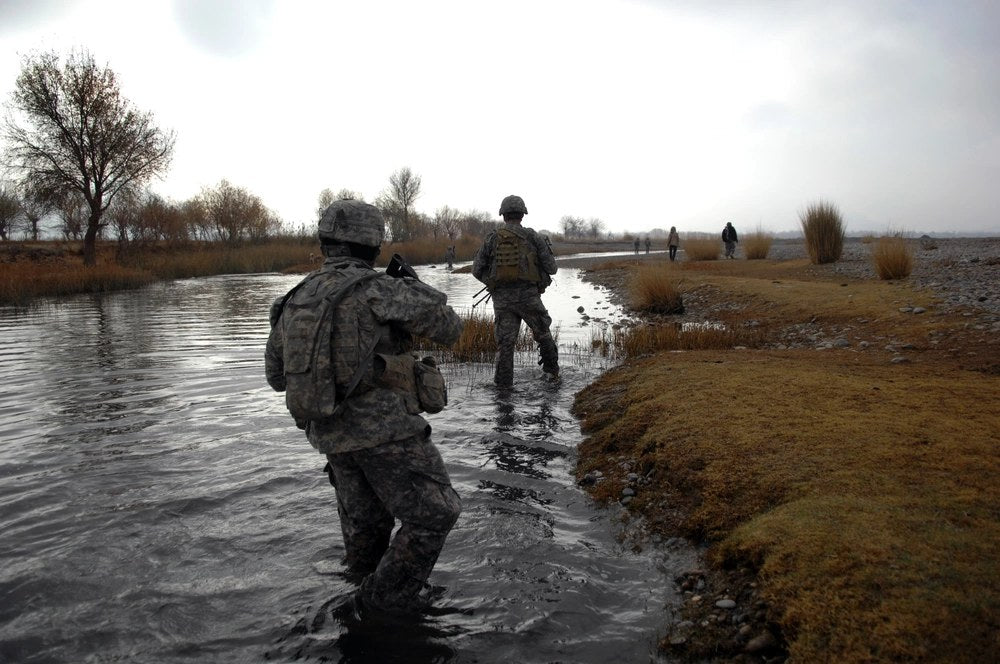
PHOTO CAPTION: American soldiers, including members of the 82nd Airborne Division's 2nd Battalion, 508th Parachute Infantry Regiment, patrol Afghanistan's Arghandab River Valley in December 2009. Newly disclosed Army records describe an unrelated 2010 shooting investigated by CID. U.S. Air Force photo by Master Sgt. Juan Valdes.
A former 82nd Airborne Division soldier voluntarily confessed to shooting an unarmed Afghan man during a 2010 deployment, telling Army investigators he believed he had committed a war crime and needed to be held accountable.
But despite his signed statement, the Army's Criminal Investigation Division closed the case within approximately six weeks, concluding there was insufficient probable cause to believe any soldier had committed murder.
The previously undisclosed investigation was detailed October 7 by The Intercept, which obtained Army CID records documenting the confession, witness interviews and the military's decision not to pursue charges.
The incident occurred during the Afghanistan War in the Arghandab River Valley, a heavily contested area of Kandahar province where American troops regularly encountered Taliban fighters, roadside bombs and insurgent attacks.
According to the records, the soldier was a former specialist assigned to the 2nd Battalion, 508th Parachute Infantry Regiment, 82nd Airborne Division.
On March 28, 2023, roughly 13 years after the incident, he met with an Army CID special agent at a police station in Banning, California.
He waived his rights, signed a sworn statement and described a shooting that had occurred during his deployment in April or May 2010.
The former soldier told investigators that his unit, consisting of approximately 20 mortarmen and scouts, had received information from a translator about a suspected insurgent riding a motorcycle and transporting rocket-propelled grenades.
The soldiers were reportedly authorized to engage the suspected threat.
According to the veteran's account, approximately 20 soldiers raised their weapons, and he and other members of the unit opened fire.
When the soldiers approached the motorcycle, they discovered the man had been killed.
The former soldier said the victim had suffered multiple gunshot wounds to his face and body.
No rocket-propelled grenades were found.
He also described a wounded woman crawling on the ground near the scene. Portions of the investigative records were redacted, leaving uncertainty about whether a child was also present.
During his confession, the veteran characterized his actions as a war crime and told investigators he believed he should be held accountable.
The statements prompted an Army CID investigation into the incident.
Investigators interviewed other members of the unit, including a former soldier who had become a warrant officer.
That witness reportedly recalled that a woman was on the motorcycle and acknowledged that no rocket-propelled grenades had been recovered.
However, he maintained that the engagement had been handled properly because the soldiers had received authorization to fire.
The investigation encountered other difficulties.
An Army historian was unable to locate an official unit record documenting the shooting.
The company's former commander told investigators he could not recall the engagement.
The unit's former first sergeant also did not remember the incident but said the details sounded plausible.
According to The Intercept's examination of the records, CID did not identify or interview relatives of the dead Afghan man, the wounded woman or anyone potentially connected to the incident in Afghanistan.
Investigators also did not obtain additional evidence beyond the accounts provided by members of the American military unit.
Within approximately six weeks of receiving the veteran's confession, CID closed the investigation.
The agency concluded there was no probable cause to believe that any soldier had committed murder.
The decision was reached in consultation with the 82nd Airborne Division's chief of military justice, according to the reporting.
The distinction between a civilian being killed and an unlawful killing is important under the laws of armed conflict.
A mistaken battlefield identification does not automatically establish that a war crime occurred. Investigators must consider the information available to soldiers at the time, applicable rules of engagement and whether their actions were legally justified.
The former soldier's belief that he had committed a war crime did not, by itself, establish criminal liability.
However, the newly disclosed records raise questions about how thoroughly investigators examined the circumstances surrounding the death and whether the available evidence was sufficient to justify ending the investigation.
The identities of the former soldier and other members of the unit were redacted from the records reviewed by The Intercept.
Army CID declined the publication's request to interview the special agent who led the investigation and did not provide substantive answers to subsequent follow-up questions.
No criminal charges resulted from the investigation, according to the newly published records.
More than 16 years after the shooting, the identities of the dead Afghan man and wounded woman remain unknown in the publicly disclosed account.
The October 7 investigation represents the first public disclosure of the veteran's confession and the Army's handling of the case, bringing renewed attention to an incident that had previously received no public scrutiny.
(Source: OAF Nation)